For senior event and exhibition leaders, the search for the "best virtual event platform" has become a routine, yet deceptively complex, annual exercise. The common approach is logical: compare feature lists, evaluate user interfaces, and negotiate pricing. This process is based on a widely accepted belief that the right platform—with the right set of features—will solve the core challenges of attendee engagement, sponsor ROI, and digital monetization.
This belief, however, is a strategic misdirection. It treats the platform as the solution when it is merely a venue. The real challenge is not a lack of features but a structural inability to connect the data generated within these platforms to the revenue outcomes they are supposed to drive. The industry has become exceptionally skilled at collecting event data but remains fundamentally challenged in using it for high-stakes business decisions. This creates a critical gap between operational visibility and strategic clarity, a gap where revenue potential is systematically lost.
The consequence is a cycle of recurring investment in technology without a corresponding increase in strategic capability. Event leaders are armed with dashboards showing session attendance and poll responses but are often unable to answer foundational business questions: Which attendee cohorts are most profitable? Which sponsorship packages truly influence pipeline? How does event engagement correlate with customer retention? Answering these requires moving beyond the platform itself and addressing the fragmented data landscape it creates.
This article reframes the platform selection problem. It challenges the feature-centric evaluation model and proposes a decision framework that prioritizes strategic alignment and revenue impact over tactical execution. The goal is to move beyond choosing a tool and toward architecting a system for decision clarity—an infrastructure that transforms fragmented event activity into a unified engine for commercial growth.
The Flaw in the Feature-Comparison Model
The standard process for evaluating event technology is built around a tactical checklist. Does the platform support multi-track agendas? Does it have virtual expo booths? What are its networking capabilities? While necessary, these questions focus on what the platform does rather than what decisions it enables. This leads to a selection based on operational capabilities, inadvertently creating strategic blind spots.
For example, a platform may offer sophisticated networking tools that generate thousands of interactions. The platform’s dashboard will report this as a success. However, without connecting this data to a CRM, it's impossible to know if these interactions occurred between high-value prospects and the sales team, or simply between existing customers. The platform provides a metric—"connections made"—but offers no insight into its commercial value. The operational data is present, but the strategic context is missing.
This disconnect is where revenue leakage occurs. An exhibition organizer might choose a platform for its immersive 3D booths, believing it will drive sponsor value. Sponsors are sold on visibility, and the platform delivers impressions and booth traffic. But if the sponsor’s sales team cannot see which specific leads from that booth converted to sales six months later, the ROI remains a matter of faith, not data. This makes renewing sponsorships at a higher value a difficult conversation, constraining long-term revenue growth. The feature-driven choice optimized for the event experience but failed to provide the necessary infrastructure for proving its business impact.
The Strategic Arc: From Visibility to Revenue Consequences
A more robust approach reframes the evaluation process around a strategic arc that moves logically from data visibility to decision-making to revenue consequences. This framework assumes that senior leaders already have access to analytics; the problem is not a lack of data but a lack of reconciled data that can power strategic decisions.
Reconciling Fragmented Data: The first step is to acknowledge that no single event platform will be a single source of truth for the business. Attendee data originates in a registration system, engagement data is generated within the virtual event platform, and sales data resides in the CRM. The primary challenge is not to find a platform that does everything, but to architect a system that unifies this data. The strategic question is: "How will this platform’s data integrate with our existing technology stack to create a single, coherent view of our audience and their journey?"
Enabling Cohort-Level Visibility: Once data is reconciled, the next step is to gain clarity on specific audience segments or cohorts. A platform might report 10,000 attendees, but a strategic leader needs to know the breakdown: How many are new prospects from a target industry? How many are existing high-value customers? How many are at-risk accounts? Answering these questions requires connecting platform data with business data. Evaluating a platform should therefore include a rigorous assessment of its API and integration capabilities, not as a technical afterthought, but as a primary strategic requirement.
Connecting Decisions to Revenue Outcomes: With a unified, cohort-aware view, decision-making becomes evidence-based. Instead of generic post-event surveys, you can analyze the specific content consumed by your most profitable customer segment. Instead of assuming sponsor value, you can track the journey from a booth interaction to a closed deal in Salesforce. This is the final and most critical step. The right technology infrastructure makes the link between event activity and revenue impact explicit and undeniable. It transforms the event from a cost center with ambiguous ROI into a measurable engine for growth, retention, and monetization.
This strategic arc shifts the evaluation criteria. The "best" platform is no longer the one with the longest feature list, but the one that best facilitates this flow from fragmented data to profitable decisions.
Re-evaluating the "Best" Platforms Through a Strategic Lens
Applying this decision framework changes how we perceive the leading platforms in the market. Instead of a simple list of tools, they become components within a larger strategic infrastructure. The question shifts from "What can this platform do?" to "How does this platform contribute to our decision-making clarity and revenue goals?"
For Large-Scale Conferences and Exhibitions
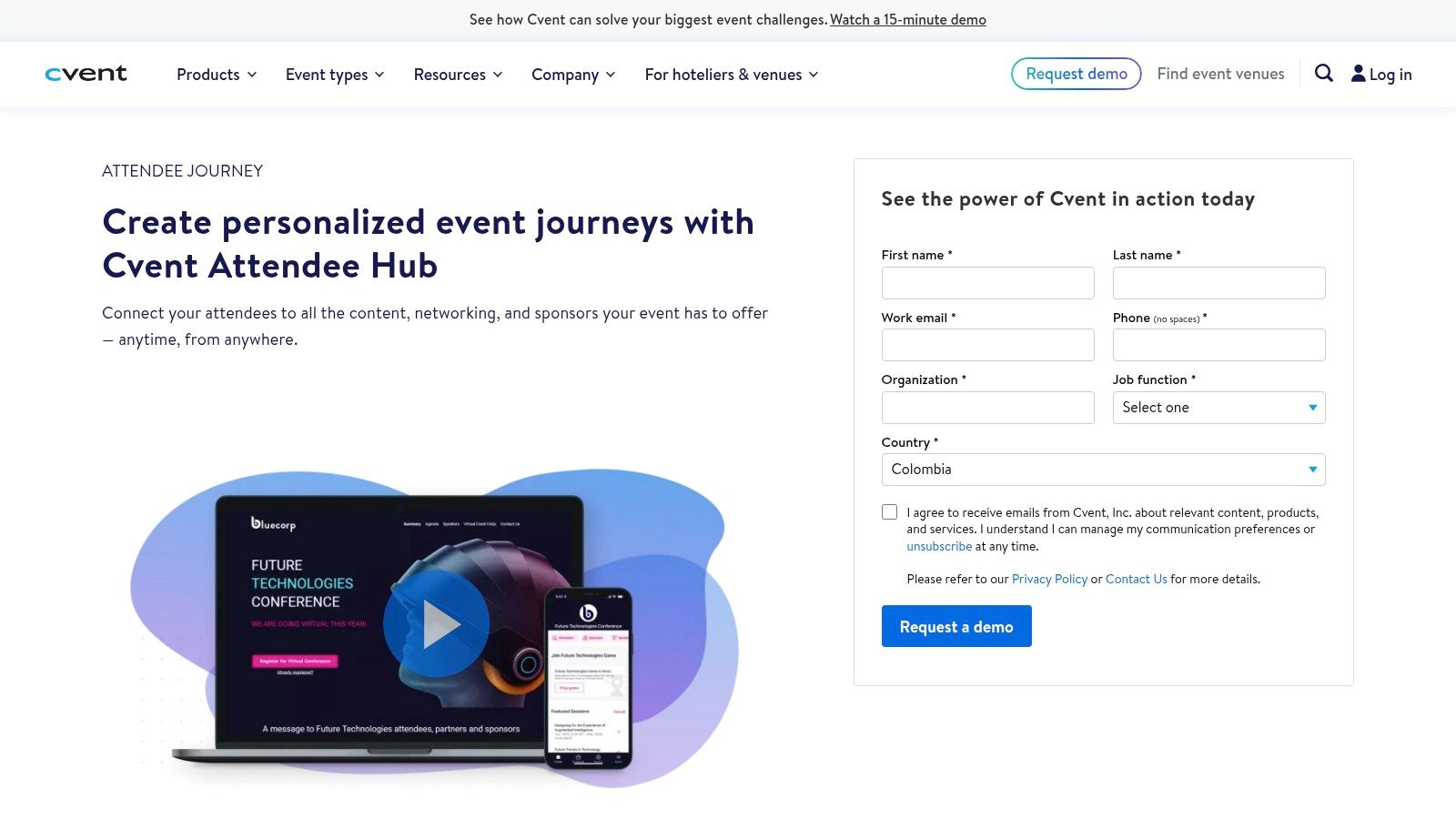
Platforms like RingCentral Events (formerly Hopin) and Cvent Attendee Hub are built for complexity. The standard evaluation focuses on their ability to manage multi-stage agendas and large numbers of attendees. A strategic evaluation, however, would prioritize their ability to export granular data. For Cvent, its strength is its integration within a larger event management ecosystem. For RingCentral, it's the maturity of its architecture. The key question is not just whether they can host a virtual expo, but how effectively the lead data from that expo can be reconciled with CRM data to prove sponsor ROI.
RingCentral Events: Known for robust networking. Strategic insight comes from mapping those networking interactions to specific customer segments in your CRM.
Cvent Attendee Hub: A unified system. Its value is maximized when the data flowing from registration through the virtual experience is used to analyze the entire attendee lifecycle.
For Marketing-Driven and B2B Events
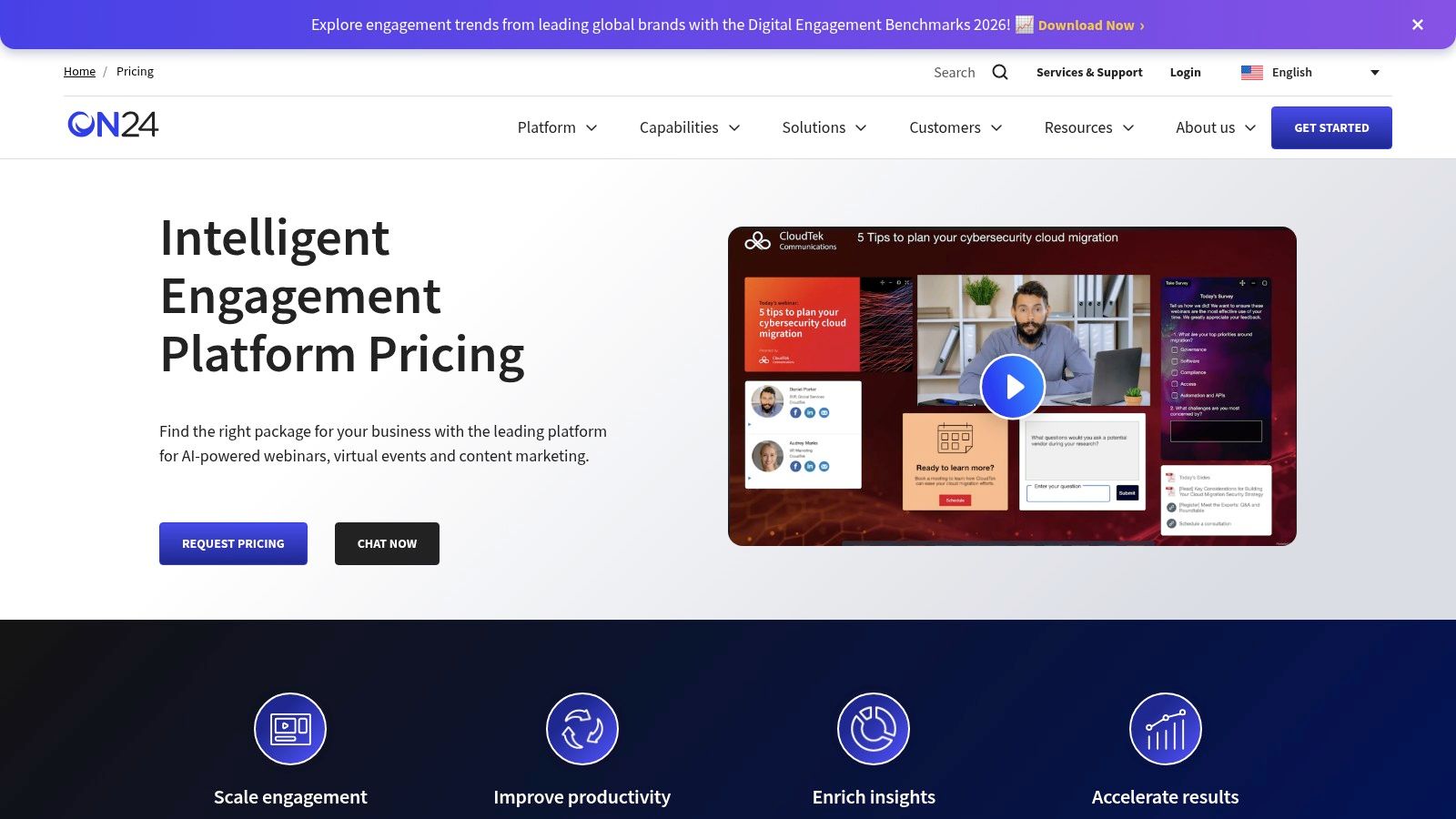
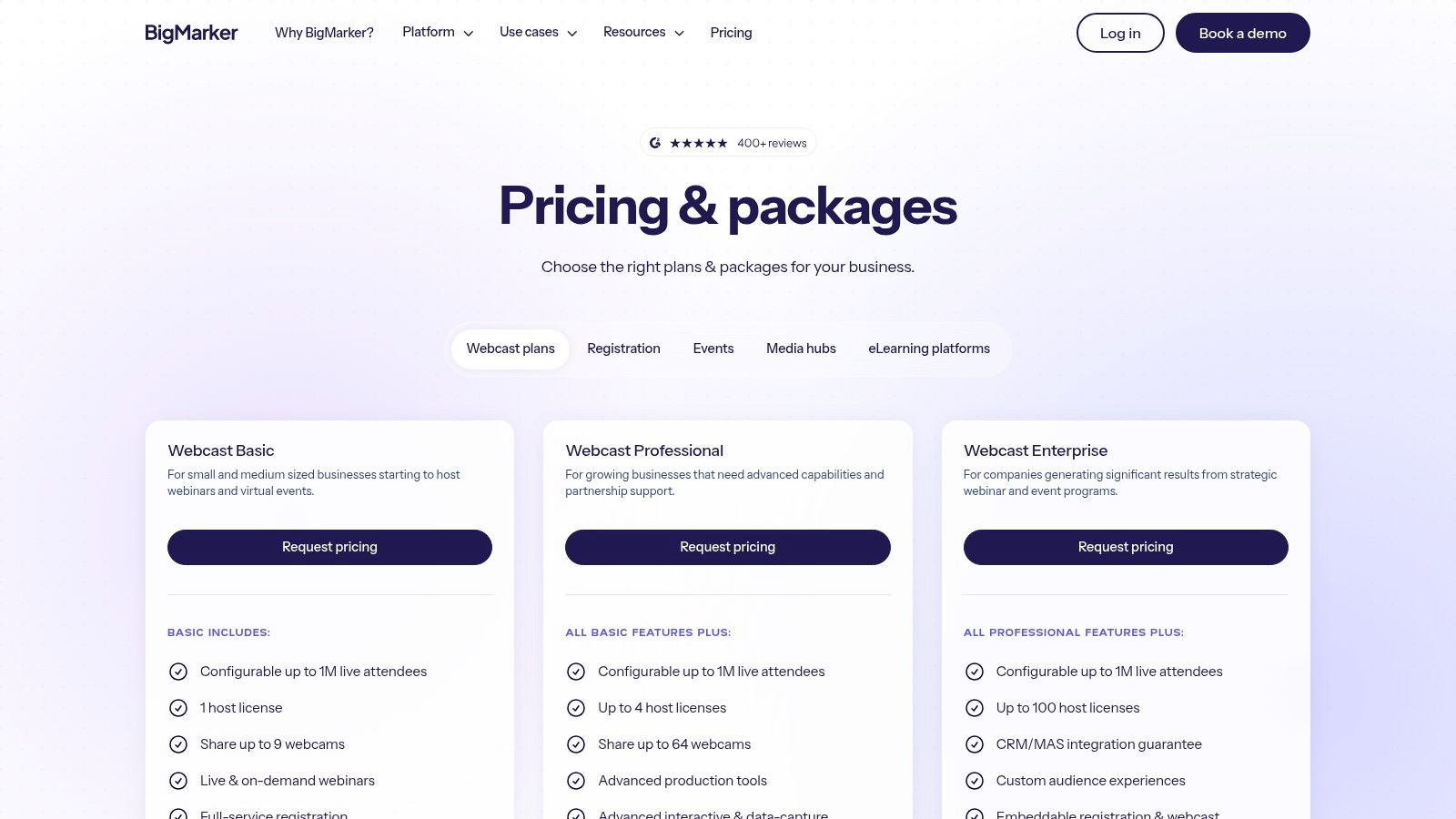
Platforms like ON24, Goldcast, and BigMarker are explicitly designed for B2B marketers. They excel at capturing engagement data. The common pitfall is treating this data as the end goal. A high "engagement score" within ON24 is operationally useful but strategically inert until it's connected to a lead scoring model in Marketo or HubSpot.
ON24: Provides deep, first-party engagement data. Its strategic power is unlocked when this data is used to trigger automated, personalized follow-up sequences in a marketing automation platform.
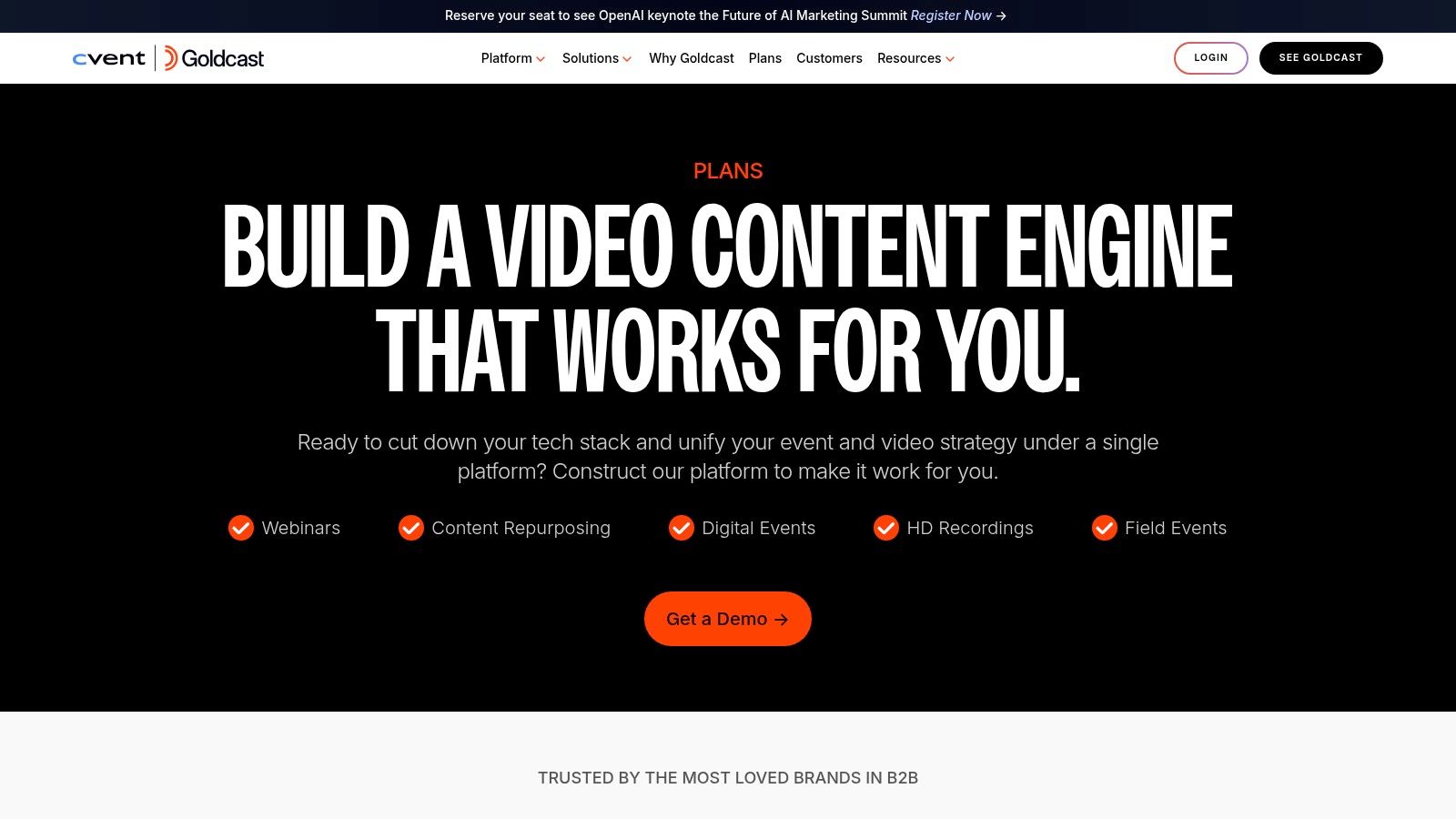
Goldcast: Focuses on content repurposing and pipeline influence. It moves from a tactical tool to a strategic asset when its analytics are used to demonstrate how event-generated content influenced deal acceleration.
For Enterprise and Community-Focused Events
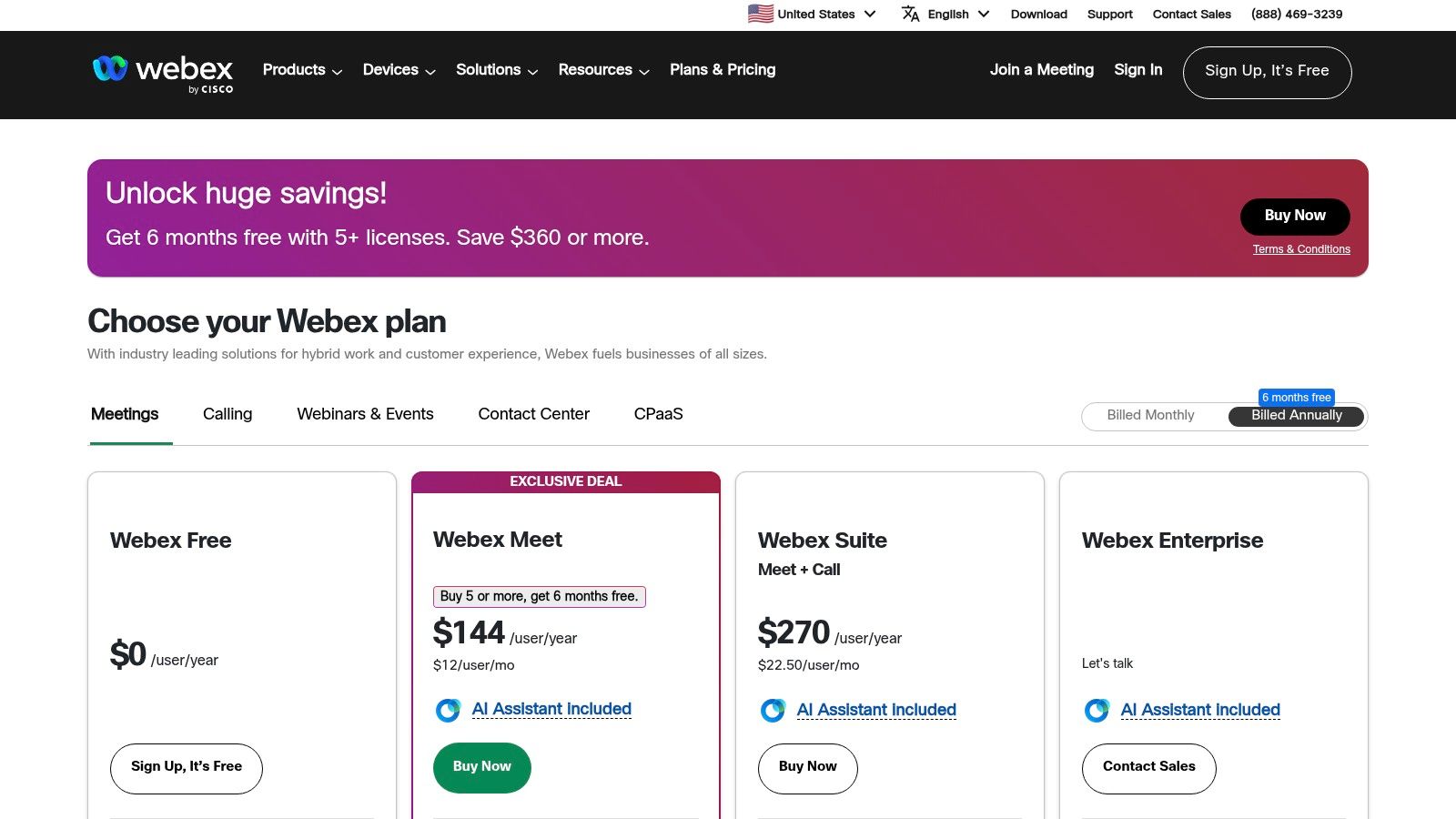
Solutions such as Webex Events (formerly Socio) and Bizzabo cater to enterprise needs, emphasizing security, scalability, and a unified portfolio view. The strategic imperative here is to use their integrated nature to analyze behavior across an entire series of events, not just a single one.
Webex Events: Prioritizes security and enterprise integration. Its strategic value is in providing a secure, compliant environment where data from global internal and external events can be consolidated for analysis.
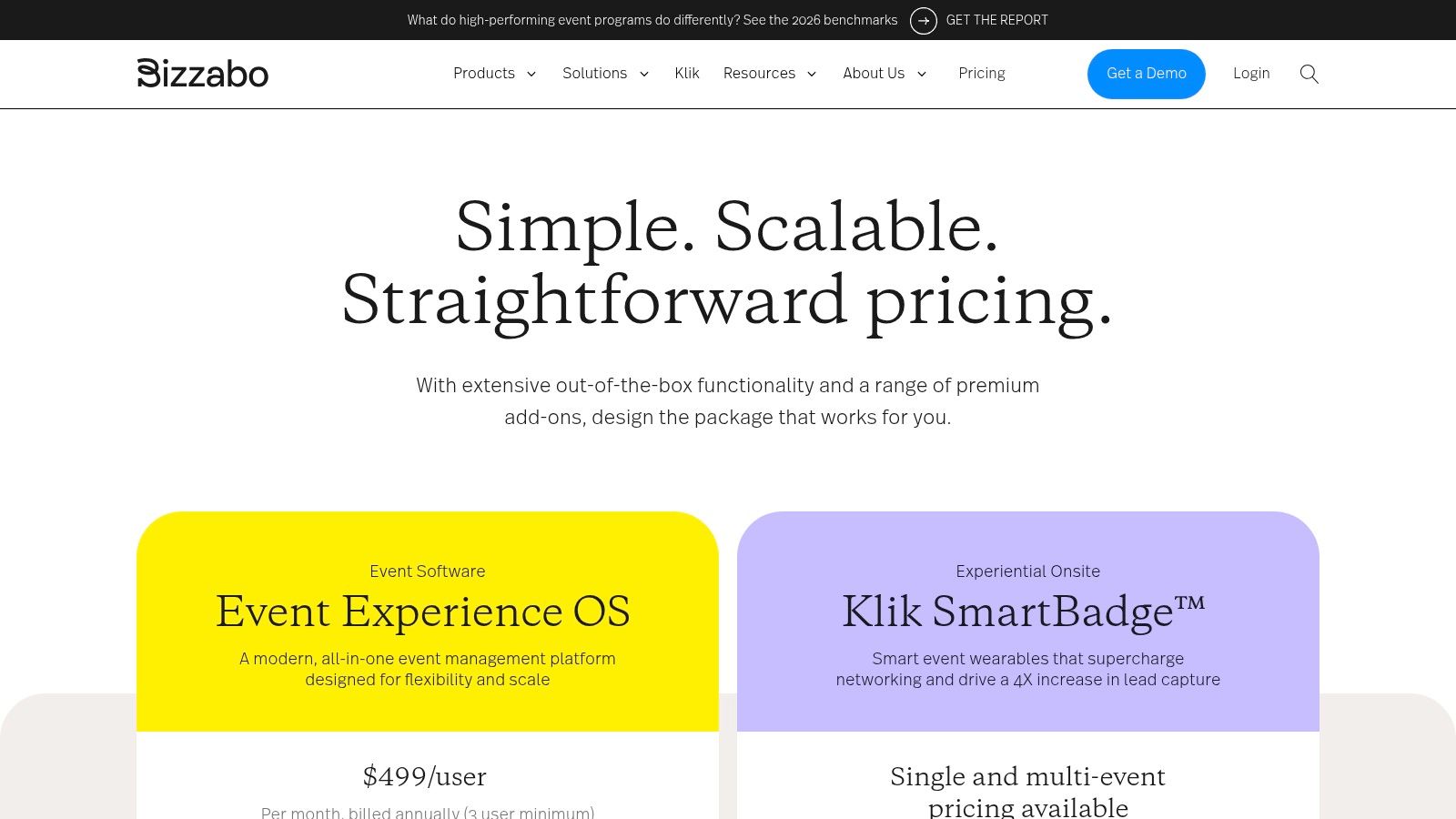
Bizzabo: Positions itself as an "Event Experience OS." It proves its strategic worth when it provides analytics that reveal long-term trends in attendee behavior and content preferences across a multi-year event calendar.
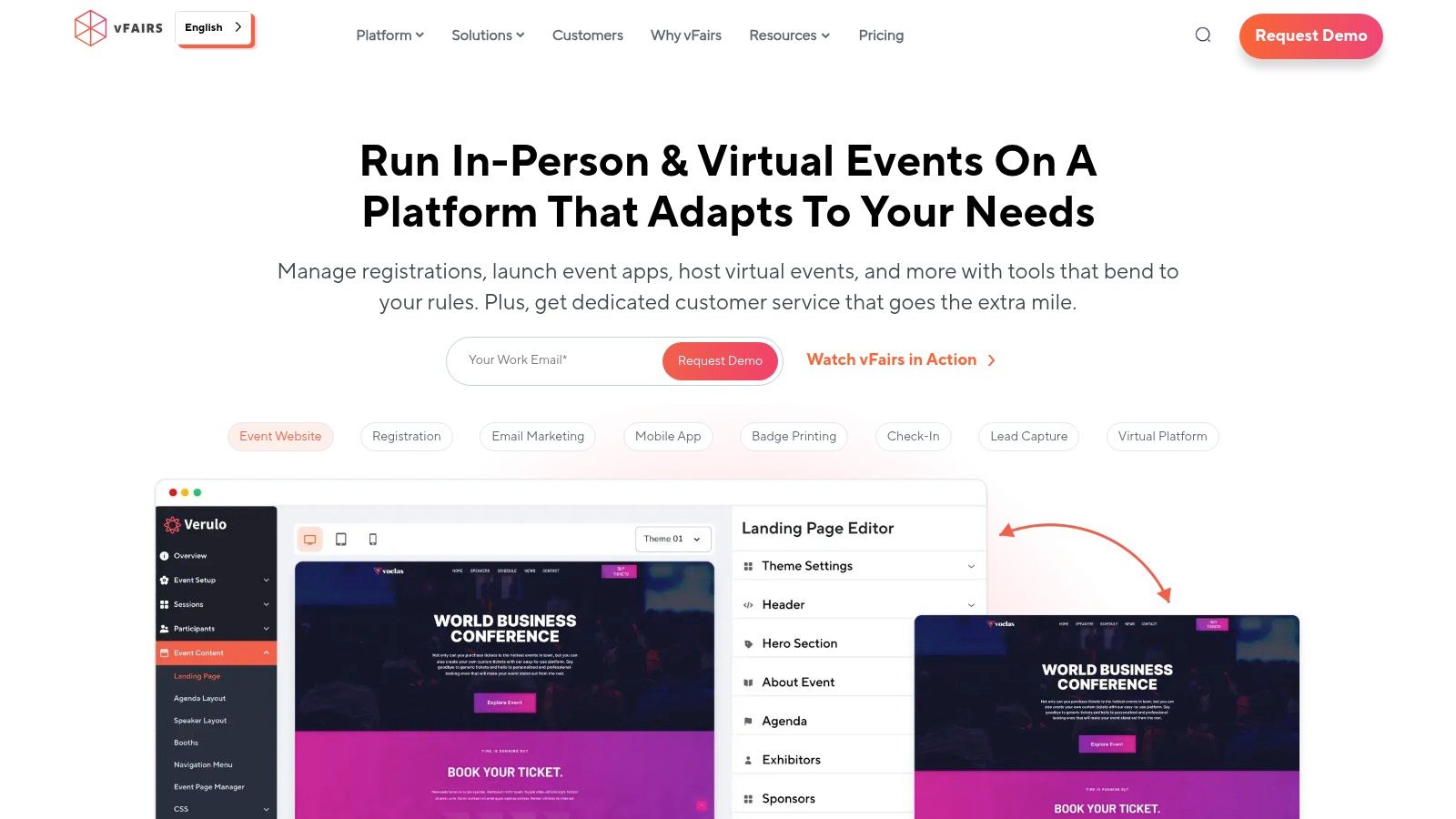
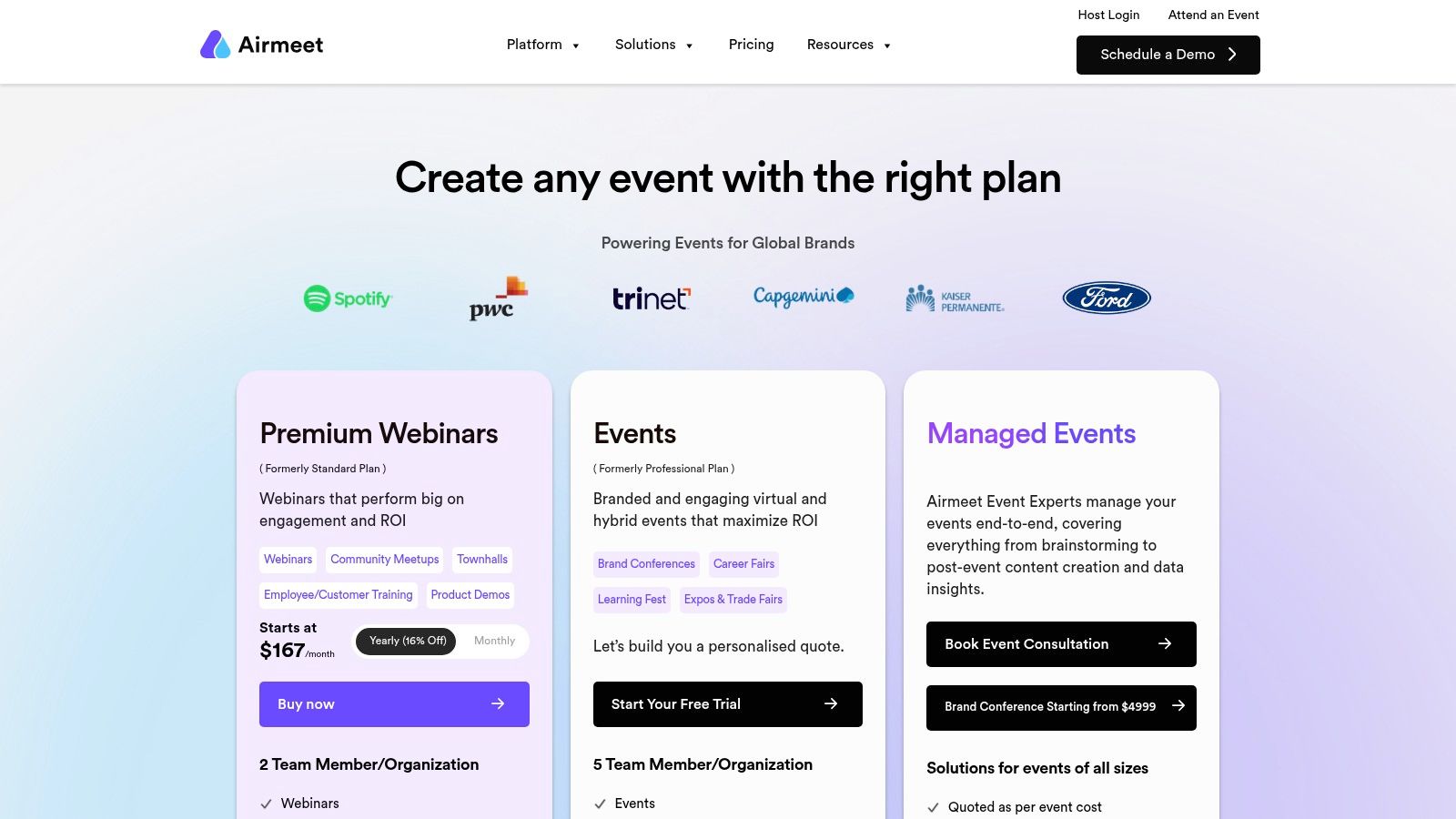
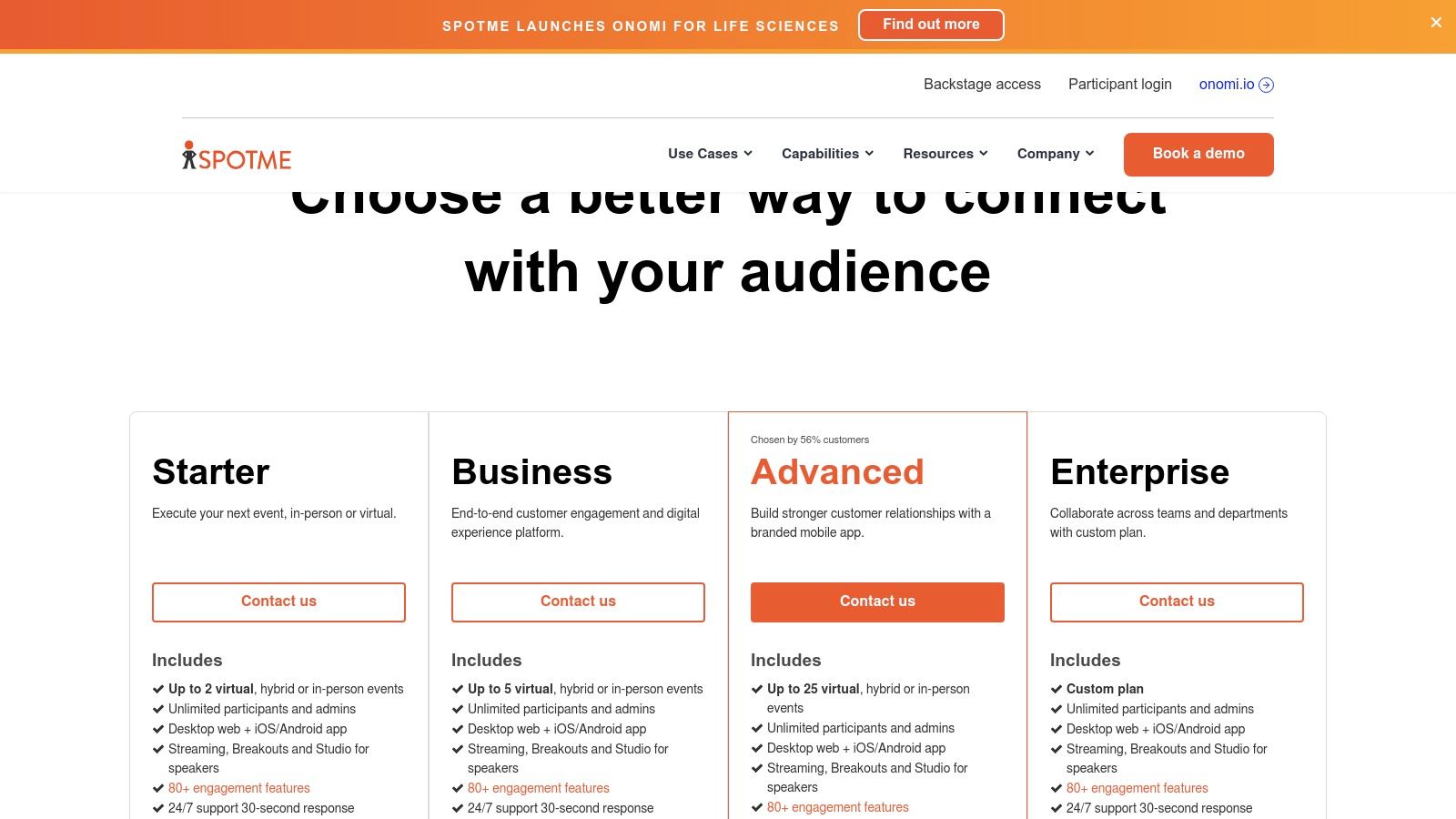
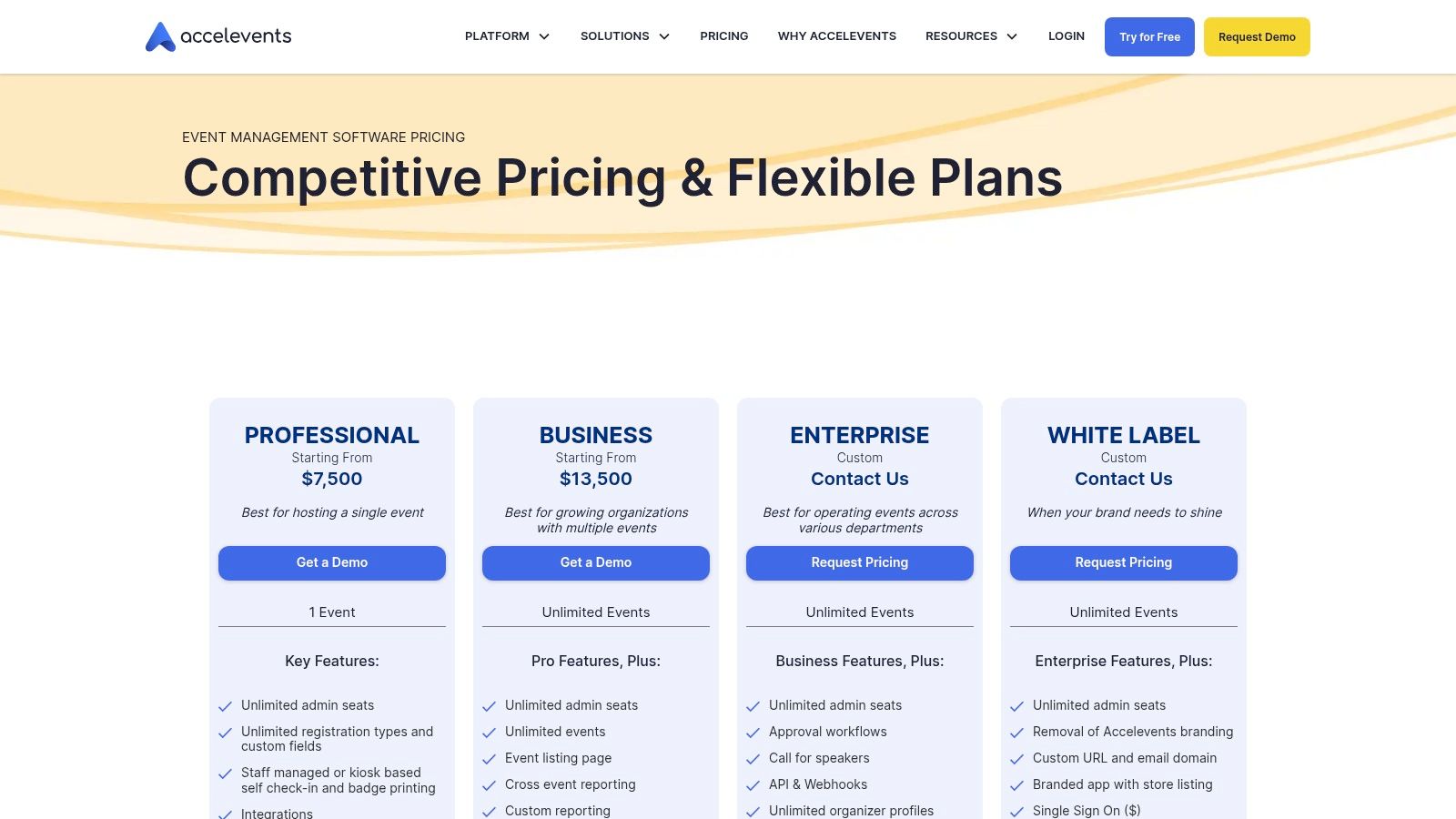
The platforms listed—including others like vFairs, Airmeet, SpotMe, and Accelevents—all offer powerful features. However, without a deliberate strategy to unify the data they produce, they risk becoming isolated islands of information, rich in operational metrics but poor in strategic insight. The real work is not in selecting the best island, but in building the bridges between them.
Technical Platform Details for Reference
RingCentral Events: https://www.ringcentral.com/rc-events
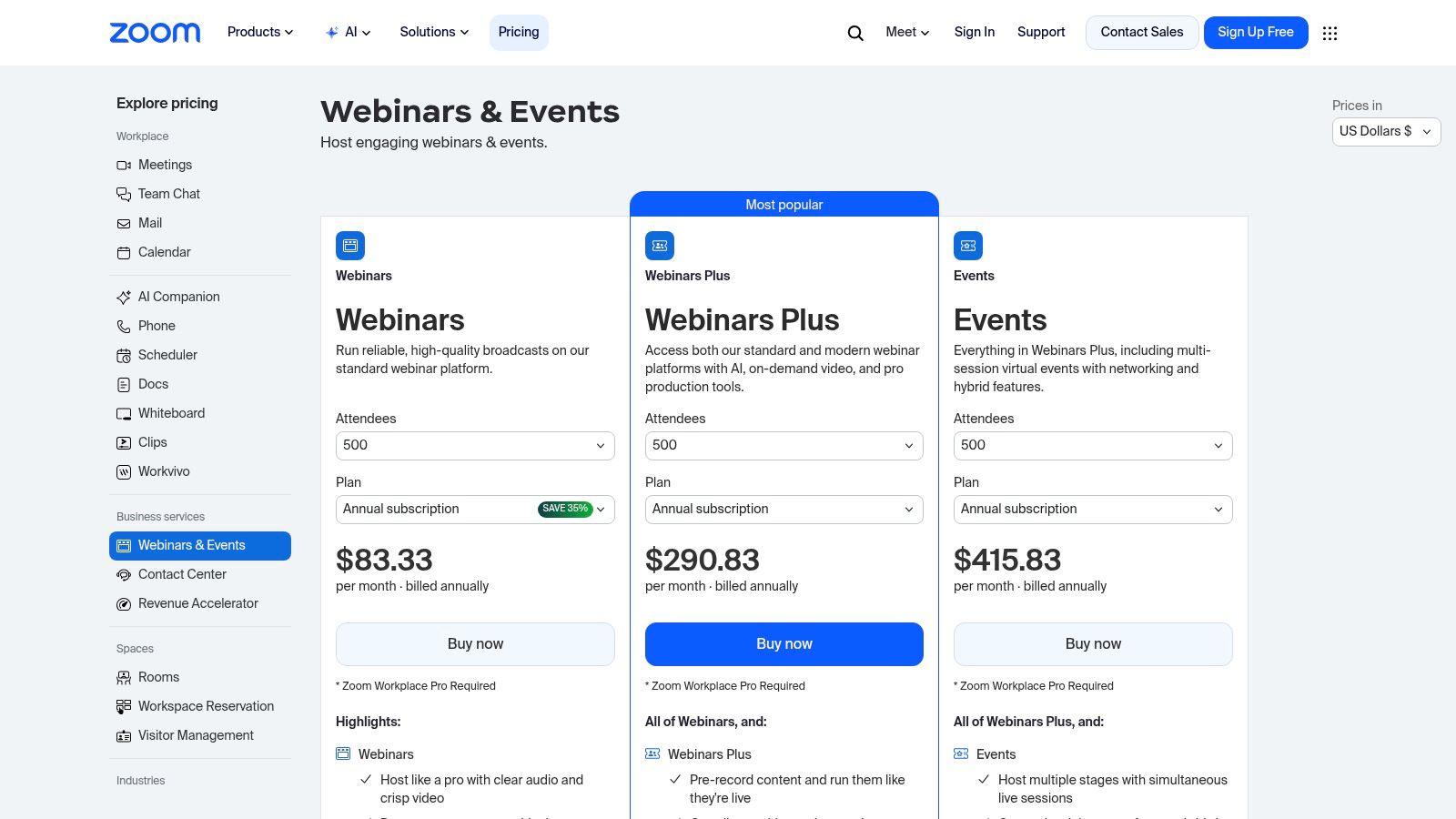
Zoom Events: https://zoom.us/pricing/events
Webex Events: https://pricing.webex.com
Cvent Attendee Hub: https://www.cvent.com/en/event-marketing-management/virtual-attendee-hub
vFairs: https://www.vfairs.com/
Airmeet: https://www.airmeet.com/hub/pricing/?utm_source=openai
BigMarker: https://get.bigmarker.com/pricing-plans?utm_source=openai
Accelevents: https://www.accelevents.com/pricing?utm_source=openai
From Platform Selection to a Unified Growth Engine
The journey through the modern event technology landscape reveals a marketplace rich with functionality but fraught with fragmentation. The analysis of leading platforms confirms that while features for engagement, networking, and sponsor visibility are abundant, the core challenge remains unresolved: translating the activity within these powerful tools into a coherent, measurable source of business growth.
Choosing a platform is merely the first step. The true strategic imperative is to move beyond the platform itself and architect a decision-making infrastructure. This requires a shift in focus from evaluating standalone features to designing a system that unifies data from multiple sources—the event platform, the CRM, the marketing automation system—into a single, reconciled view. Without this unification, strategic blind spots persist. You may know that a session was popular, but you won't know if it was attended by a high-value customer cohort now at risk of churn. You may know a sponsor's booth had traffic, but you cannot definitively prove its impact on the sales pipeline.
The ultimate goal is to evolve the event program from a series of well-executed but disconnected activities into a predictable growth engine. This requires seeing technology not as a collection of tools, but as a strategic infrastructure. The "best" platform is not the one with the most features, but the one that fits most seamlessly into this larger infrastructure for data unification and strategic clarity. By focusing on this unified structure, you move from simply managing events to orchestrating a system that drives attendee retention, demonstrates undeniable sponsor ROI, and directly contributes to your organization’s revenue goals.
Selecting from the best virtual event platforms is only half the battle. TalkValue provides the strategic infrastructure to unify data from any event tool, turning fragmented attendee activity into a clear, revenue-focused picture. Connect your Cvent, Zoom Events, or Hopin data to your CRM and finally see which sessions, sponsors, and interactions drive measurable growth. Explore how TalkValue creates a single engine for event-driven revenue.


FAQ