For decades, the event industry has operated on a foundational belief: more connections equal more value. We measure success by the volume of interactions—more handshakes, more badge scans, more conversations. This logic has driven billions in investment toward larger show floors, elaborate happy hours, and networking lounges, all under the assumption that proximity naturally translates to opportunity. But this assumption, while widely accepted, is deeply flawed. The true bottleneck to event ROI is not a lack of interaction; it is the structural inability to see and shape the quality of those interactions.
We have become masters of measuring presence but remain blind to purpose. Senior event leaders, portfolio directors, and revenue-focused marketing teams operate under immense pressure to prove ROI, yet they rely on proxy metrics that tell an incomplete story. We count the attendees without understanding their intent, track sponsor visibility without quantifying lead quality, and facilitate thousands of conversations without knowing if a single one advanced a strategic objective. This is the critical visibility gap that prevents events from transitioning from a significant cost center to a predictable revenue engine. The most pressing question is no longer, "How many people met?" but rather, "Did the right people meet, and did those meetings generate measurable business outcomes?"
This analysis moves beyond a tactical list of business networking event ideas. Instead, it offers a strategic framework for reframing the problem. We will deconstruct the conventional approach to networking, expose the structural weaknesses that suppress revenue, and present a new model for architecting high-value interactions that directly fuel monetization, retention, and long-term community growth.
1. Re-engineering Connection: From Volume to Value with AI-Powered Matchmaking
The traditional networking floor is an exercise in hope-based marketing. We assemble a critical mass of professionals and trust that serendipity will deliver value. This unstructured approach is inefficient and creates a significant risk for both attendees and sponsors, whose ROI depends on making relevant connections. The strategic alternative is to engineer connections through data-informed, structured sessions. AI-Powered Matchmaking Roundtables dismantle the "hope and see" model by using pre-event data—such as attendee objectives, target customer profiles, and strategic challenges—to curate small-group discussions.
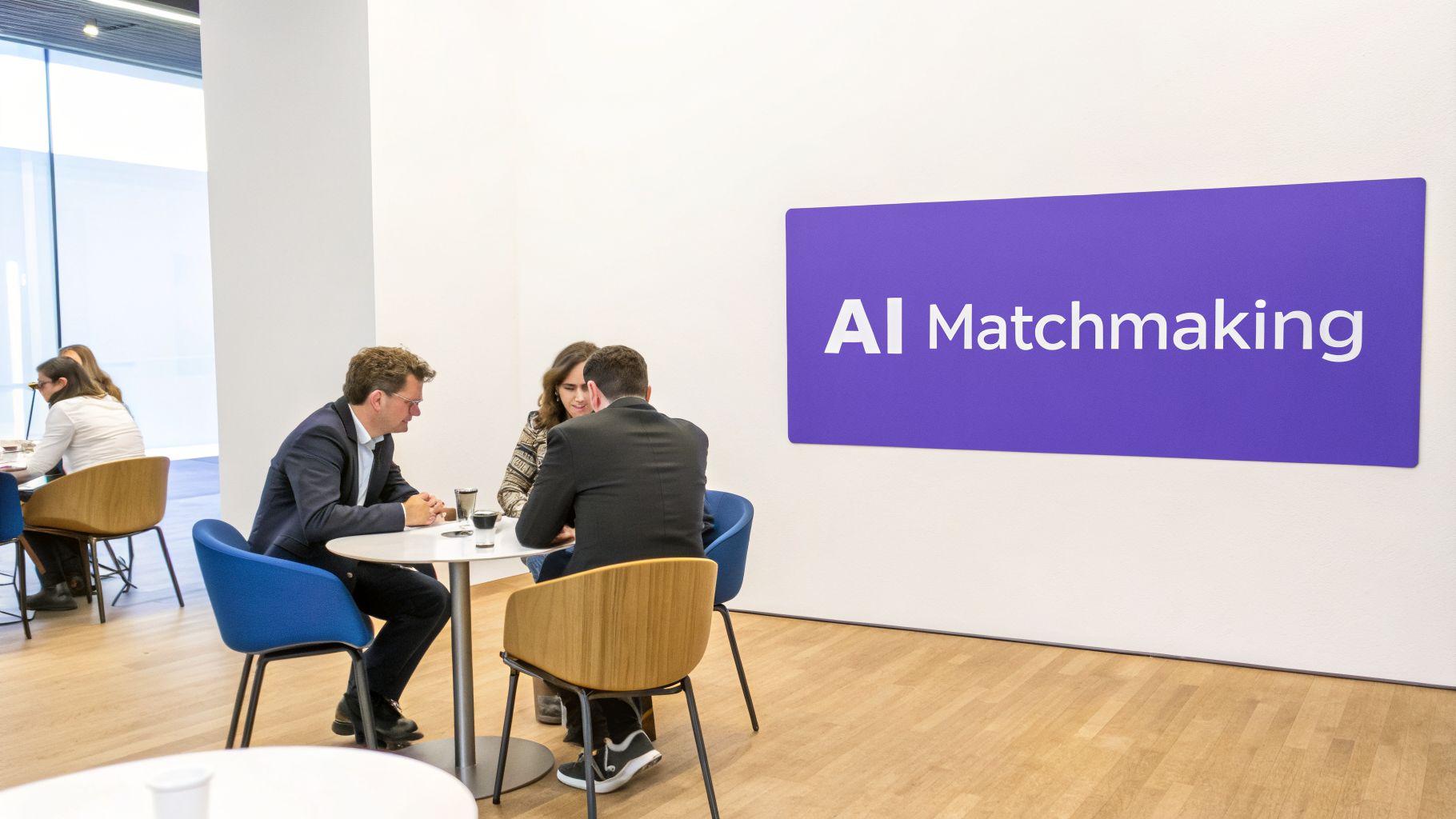
This model addresses a core structural flaw: the asymmetry of information. Attendees arrive without knowing who in the room can solve their problem or become their next client. By using an algorithmic framework to pre-qualify and group participants, you de-risk their time investment. The revenue implication is direct: when attendees are guaranteed to meet relevant contacts, their perceived value of the event increases, justifying higher ticket prices and boosting re-attendance rates. For sponsors, this data-driven approach allows for targeted placements in roundtables filled with their ideal customer profile, transforming a speculative investment into a predictable lead-generation channel. The focus shifts from counting conversations to architecting valuable alignment.
Strategic Implementation:
Pre-Event Intelligence Gathering: Deploy comprehensive intake forms that move beyond titles to capture intent, challenges, and desired outcomes. This data is not for demographic analysis; it is the raw material for building high-value interaction cohorts.
Algorithmic Curation: Utilize a decision engine to analyze the data and construct roundtable groups where participants have a high probability of mutual interest. Each table is assigned a specific theme, ensuring every conversation starts with a foundation of shared context.
Facilitated Execution: While technology provides the match, human facilitators are crucial for guiding the conversation. Their role is to ensure all participants contribute and to maintain focus on the intended outcomes, preventing the discussion from devolving into unstructured small talk.
Revenue Impact Measurement: The success of this model is not measured by the number of roundtables but by the post-event outcomes. Track the rate of follow-up meetings scheduled and, ultimately, the pipeline generated from these curated interactions, linking networking activity directly to revenue.
2. Monetizing Expertise: Sponsor-Led Educational Frameworks
Sponsorship models are often built on the fragile premise of brand exposure, a metric that is difficult to connect to tangible business outcomes. The result is a perpetual cycle of negotiation and a constant need to justify value. A more sustainable model transforms sponsors from advertisers into strategic partners in content delivery. Sponsor-Led Micro-Content Sessions reframe the sponsor booth from a sales kiosk into an intimate educational hub, where small groups of pre-qualified attendees engage in expert-led workshops on specific business challenges.
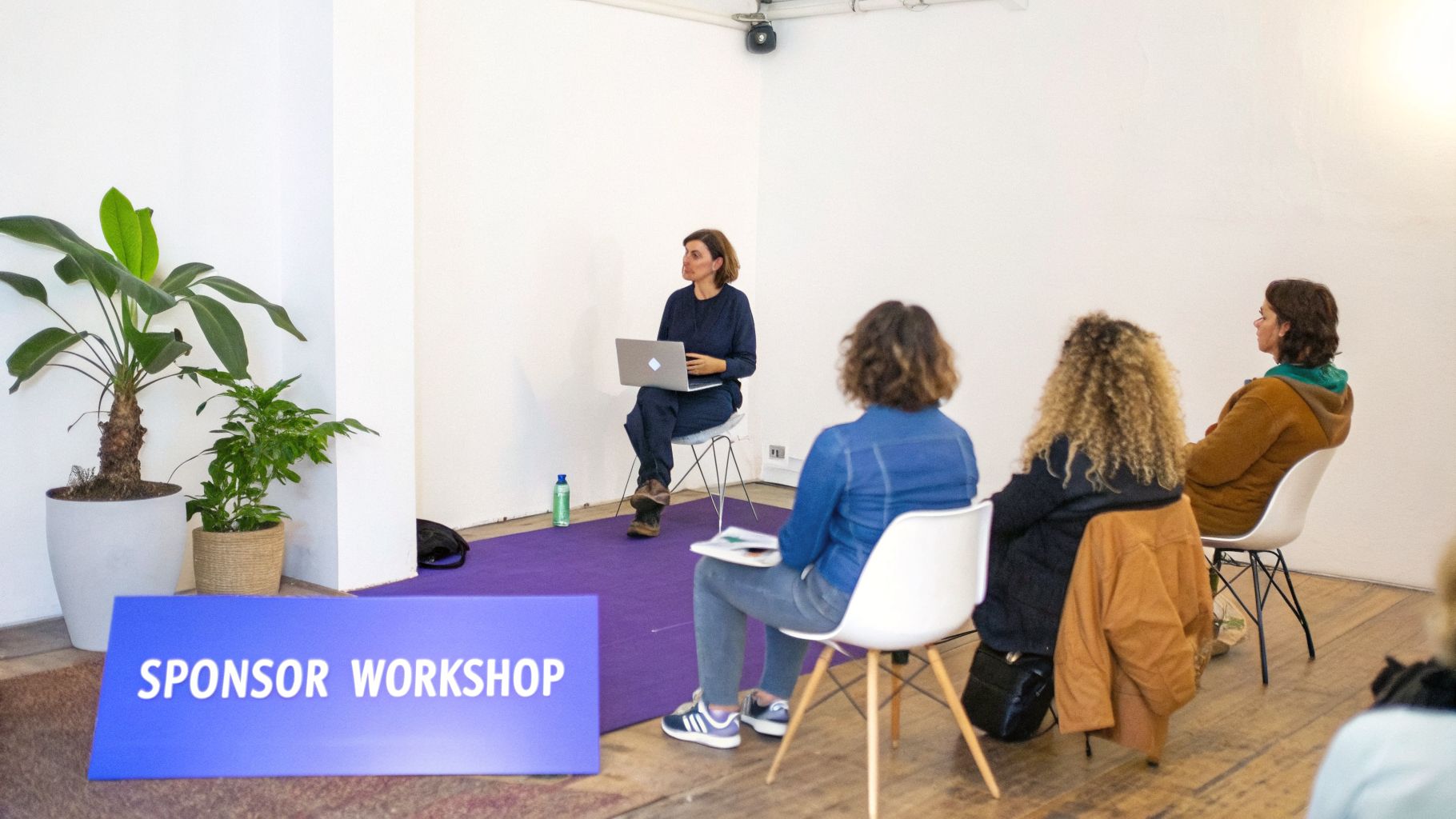
This approach creates a powerful monetization structure rooted in value exchange. Instead of selling space and visibility, you are selling access to qualified, high-intent audiences. Attendees self-select into these sessions based on interest in the topic, effectively raising their hands as potential leads. This solves a primary pain point for sponsors: lead quality. The revenue consequence is a more resilient sponsorship program. When sponsors can draw a straight line from their session to a list of engaged, self-qualified prospects, renewal rates increase, and you unlock the ability to create premium, high-margin sponsorship tiers based on guaranteed access to specific attendee cohorts.
Strategic Implementation:
Content Curation, Not Sales Pitches: Mandate that all sponsor-led content is educational and problem-oriented. Vet session outlines to ensure they deliver genuine value, positioning the sponsor as a thought leader, not a vendor.
Audience Segmentation and Pre-Registration: Use event data to promote sessions to the most relevant attendee segments. A pre-registration system not only guarantees an audience for the sponsor but also provides them with a lead list before the session even begins.
Lead Capture and Qualification Infrastructure: The session itself is a lead-qualification mechanism. By tracking attendance and engagement, you provide sponsors with a clear view of who is most interested in their solution, enabling more effective post-event follow-up.
ROI Reporting: Provide sponsors with a post-event report that goes beyond attendance numbers. Include metrics on audience demographics, engagement levels, and the number of leads who requested follow-up, making their return on investment tangible and defensible.
3. The First Five Minutes: From Operational Friction to Data Activation
The check-in process is typically viewed as a purely operational necessity—a logistical hurdle to be cleared as quickly as possible. This perspective overlooks a critical strategic opportunity. The moment an attendee arrives is the first point of data activation in their event journey. An AI-Driven Badging & Check-In process transforms this moment from a point of friction into a powerful engine for personalization and connection. By using seamless technology, you not only eliminate queues but also capture real-time data that can immediately shape the attendee’s experience.
This is not about operational efficiency for its own sake; it is about using the arrival process as a strategic lever. For instance, the system can recognize an attendee’s pre-stated networking goals and, via the event app, immediately suggest three relevant people who have also just checked in. This turns the dead time of arrival into an active networking opportunity. The revenue impact is subtle but significant. A frictionless, intelligent arrival experience sets a positive tone that increases overall satisfaction and engagement. For organizers, the real-time attendance data provides a clear view of traffic flow, enabling dynamic adjustments to staffing and session access, optimizing resource allocation and preventing costly bottlenecks.
Strategic Implementation:
Frictionless Entry Points: Implement a multi-channel check-in system that includes pre-event mobile check-in, on-site self-service kiosks, and staffed assistance desks. The goal is to make the process invisible to the attendee.
Real-Time Data Integration: Ensure the check-in system is fully integrated with your central event database or CRM. Each scan should trigger a cascade of personalized actions, such as welcome notifications or contextual recommendations.
Dynamic Journey Shaping: Use the arrival data to power a recommendation engine. Suggest relevant sessions starting soon, highlight nearby exhibitors aligned with the attendee’s interests, or facilitate introductions to other attendees with complementary profiles.
Operational Intelligence: Leverage a central dashboard to monitor attendee flow and wait times in real time. This allows for proactive resource management, ensuring a smooth experience for all participants and optimizing staff deployment.
4. Architecting Trust: The Strategic Power of Peer-to-Peer Masterminds
The most valuable professional relationships are not built on transactional exchanges but on shared vulnerability and collaborative problem-solving. Yet, most event networking formats encourage the former. Peer-to-Peer Learning Circles and Mastermind Groups offer a structural solution. These are not informal meetups; they are curated, facilitated sessions where small groups of non-competing professionals convene to tackle their most pressing business challenges. This format deliberately shifts the dynamic from "What can you sell me?" to "How can we help each other succeed?"
This model directly addresses the need for psychological safety in networking, creating an environment where senior leaders can speak openly about their challenges without the fear of being sold to. The revenue implication is tied to long-term value and community loyalty. When an event becomes the place where attendees forge genuine advisory relationships, its value transcends the content on stage. This creates a powerful moat around your event, driving extremely high retention rates and justifying premium pricing. It also opens new monetization opportunities, such as year-round paid mastermind communities that extend the event’s revenue stream far beyond the live dates.
Strategic Implementation:
Challenge-Based Curation: Group participants based on the specific business challenges they identify during registration. This ensures immediate relevance and a shared sense of purpose within each group.
Structured Facilitation: Provide a clear framework for each mastermind session, such as a "round robin" format where each member gets a dedicated time to present their challenge and receive feedback. A trained facilitator is key to keeping the discussion focused and productive.
Building Pre-Event Rapport: Create private communication channels for each group before the event. This allows members to introduce themselves and establish a baseline of trust, making the in-person session more effective from the start.
Post-Event Continuity: The value of these groups should not expire with the event. Maintain the private channels and facilitate periodic virtual check-ins to nurture the relationships, transforming a one-time event feature into a continuous community asset.
5. Converting Conversations to Pipeline: The Post-Event Automation Bridge
One of the most significant points of value leakage in the event lifecycle occurs in the days immediately following the event. Promising conversations are lost to generic, uninspired follow-ups or, worse, to silence. The connections made on the show floor fail to translate into business pipeline, severely diminishing the event’s ROI. LinkedIn-Native Post-Event Automation provides a structural bridge to close this gap. It uses data captured during the event—such as conversation notes, session attendance, and mutual interests—to trigger timely, context-aware outreach that feels personal, not automated.
Instead of a generic "It was great to meet you," an attendee receives a LinkedIn connection request that references the specific topic they discussed. This simple act of contextualization dramatically increases acceptance and reply rates, turning a cold list of badge scans into a series of warm, ongoing conversations. The revenue impact is direct and measurable. By implementing a systematic, data-driven follow-up process, you can directly attribute a percentage of new sales pipeline to the event’s networking activities. This provides a clear, defensible metric for calculating event ROI and demonstrates undeniable value to both internal stakeholders and sponsors.
Strategic Implementation:
Context Capture During the Event: Equip your team and your sponsors with tools to capture key conversation details in real time. This context is the fuel that powers personalized follow-up.
Segmented Outreach Cadences: Develop different follow-up sequences for different attendee cohorts (e.g., prospective customers, potential partners, VIPs). The messaging and call-to-action should be tailored to the nature of the relationship.
Timely and Multi-Channel Automation: The first touchpoint should occur within 24 hours of the event. A well-designed cadence might include a personalized LinkedIn request, followed by an email with relevant resources, and a final, gentle nudge a week later.
Pipeline Tracking and Attribution: Use UTM parameters and CRM integration to track how connections made at the event progress through the sales funnel. This closes the loop between event activity and revenue, providing the data needed to prove ROI.
6. The Inner Circle: Monetizing Exclusivity and High-Value Access
Not all connections are created equal. For your most important stakeholders—C-suite attendees, keynote speakers, and top-tier sponsors—the chaotic energy of the main event floor is often more of a distraction than an opportunity. Executive Breakfasts and VIP Intimate Dinners provide a controlled, high-value environment for these individuals to connect. These are not simply social gatherings; they are strategically orchestrated forums for peer-to-peer exchange among a highly curated group.
The power of this format lies in its exclusivity. By creating a space where top-level decision-makers can engage in substantive conversations, you deliver a level of value that cannot be replicated in any other setting. The revenue model for this is twofold. First, access to these exclusive gatherings can be packaged into premium sponsorship tiers, commanding a significant price premium. Second, by facilitating connections that lead to major strategic partnerships or deals, you solidify your event’s reputation as an indispensable part of the industry’s business development calendar. The long-term loyalty and advocacy generated from these high-touch experiences are invaluable.
Strategic Implementation:
Proactive Curation: The guest list is the most critical element. It should be built proactively based on strategic alignment, influence, and the potential for mutual value among the attendees.
Personalized, High-Touch Invitations: Invitations should come from a senior executive at your organization, not an automated system. The tone and format should reflect the exclusive nature of the event.
Strategic Seating and Facilitation: Design the seating chart to spark productive conversations. A senior host should guide the discussion around a single, compelling theme, ensuring that the conversation remains focused and valuable.
Sustaining the Connection: The relationship-building should not end when the dinner does. Create a private communication channel for the group to continue their conversations and send a personal follow-up from the host to reinforce the value of their participation.
From Tactical Activities to Strategic Infrastructure
The six frameworks explored—from AI-powered matchmaking to exclusive VIP dinners—all point to a single, unifying conclusion. The future of successful events lies in moving away from a reliance on serendipity and toward a deliberate, data-driven strategy of architecting value. The business networking event ideas that will define the next decade are not isolated tactics; they are interconnected components of a single strategic infrastructure designed for one purpose: to generate measurable business outcomes.
This requires a fundamental shift in mindset for event leaders. We must see ourselves not as logistical managers but as architects of a community and drivers of revenue. Our primary asset is not the physical space we rent but the data we collect and the connections we facilitate.
The Path to Decision Clarity and Revenue Growth
The core challenge is to move from a state of data blindness to one of decision clarity. This means unifying disparate data sources—registration information, CRM data, on-site behavioral analytics—into a single, coherent view of your attendee base. When you can see who is in the room, what they want to achieve, and how they are interacting, you gain the ability to make strategic interventions that enhance value.
Intentional Design: Use data to design experiences that cater to the specific needs of different attendee cohorts. Instead of a one-size-fits-all approach, create targeted networking formats for different segments.
Data as a Product: The insights generated from your unified data platform become a valuable product in themselves. You can use them to provide sponsors with unparalleled access to their target audience and to prove the ROI of your event with concrete, defensible metrics.
Continuous Value Loop: The event is no longer a singular point in time but a catalyst for an ongoing cycle of engagement. By extending the conversation before and after the live event, you build a stronger, more loyal community and create new, year-round monetization opportunities.
Ultimately, the transition from running events based on assumption to architecting them based on intelligence is the most critical strategic imperative facing the industry today. It is the key to unlocking new revenue streams, delivering undeniable value to attendees and sponsors, and securing the long-term viability and growth of your event portfolio.
Ready to move beyond tactical ideas and build a strategic infrastructure for event-led growth? See how the TalkValue AI-native platform unifies your data to provide the decision clarity needed to turn every handshake into a measurable outcome. Explore a new way to architect your events at TalkValue.
FAQ