
Three pieces of standard marketing advice were measured properly this year and all three failed. Power words, ALL CAPS and follower count turned out to do the opposite of what conference stages have been recommending for a decade. The pattern matters more than any individual finding.
Every industry accumulates advice that nobody has checked.
It gets repeated from stages, written into templates, taught to junior marketers as settled fact, and cited in meetings as the reason a decision was made. It becomes a best practice, which is a phrase that means widely believed rather than demonstrated.
Three pieces of it were measured properly this year. All three failed, and the pattern is more useful than any of the individual results.
Power words, measured at scale
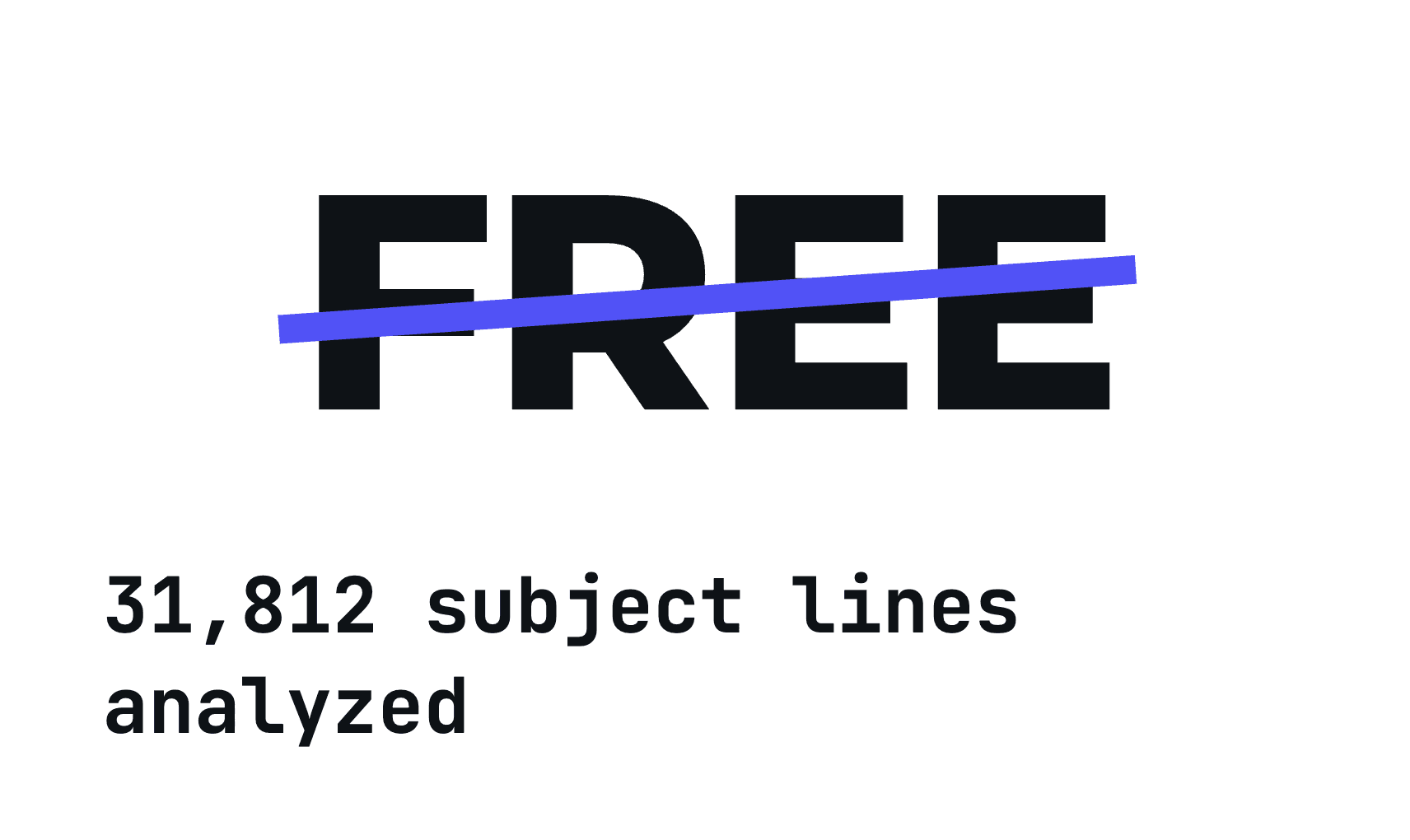
Use urgency. Use "free". Use "exclusive". Capitalise for emphasis. This has been standard email advice for as long as marketing email has existed.
University of Helsinki research, reported by MarTech, measured it across 31,812 subject lines sent 4.6 billion times. Power words like "free" and "exclusive" lower open rates. ALL CAPS costs roughly 3.3%.
Not "have no effect". Lower.
The sample size is the thing to notice. This is not a vendor blog post drawing a conclusion from one campaign. It is a large enough measurement that the effect is unlikely to be noise, and it directly contradicts advice that has been given confidently for two decades.
The likely explanation is that these signals used to work and then taught their audience what they meant. A subject line shouting FREE was once a differentiator and is now a reliable indicator of a message not worth opening. Readers learned the pattern faster than marketers stopped using it.
For events this lands squarely on the registration push, which is where urgency language concentrates. Last chance. Final days. Exclusive rate. Those campaigns are usually the highest-stakes sends of the year, and they are the ones most likely to be built entirely from the language that measured badly.
Follower count is not the driver
The second finding attacks a metric that has survived almost entirely on intuition.
One marketer averaged 51% sales lifts for brands including The Ordinary and CeraVe while arguing that 3% of a market is enough to work with.
The claim underneath is that reach and effect are much less correlated than the industry assumes, and that a small, correctly-composed audience outperforms a large, loosely-composed one by a margin large enough to make the headline follower number close to meaningless as a planning input.
Events have an unusually clear version of this. A conference with 400 attendees who are all budget holders in one category is commercially stronger than one with 4,000 attendees of whom most are suppliers to each other. Everyone in the industry knows this. Almost every event still leads its sponsor prospectus with the total attendance figure, because that is the number that has always gone at the top.
The gap between what organisers know and what they publish is worth closing, and the finding gives a defensible reason to do it.
Emotional intensity beats volume
The third finding is about advertising and generalises further than it looks.
DAIVID's analysis found the ad that drove the most search interest scored 56.1% intense positive emotion against a 48.7% industry average.
Seven and a half points of difference in emotional intensity, associated with the strongest downstream behavioural response. The interesting part is which variable that is. Not spend. Not frequency. Not reach. The strength of the feeling produced.
This is directly relevant to how events market themselves, because event marketing is unusually prone to a specific hedge. The safe brochure, the balanced description, the list of tracks and speakers that offends nobody and moves nobody. It is a defensible choice in a committee, and it is measurably the wrong one.
MarTech's related argument that teams should stop treating search and video as separate teams points at the structural version of the same problem. The organisational habit of splitting channels into separate ownerships produces internally consistent, individually unobjectionable, collectively flat campaigns.
Why bad advice survives especially well in events
It is worth asking why these beliefs persist, because the answer explains how to avoid the next batch.
Events have three conditions that preserve unverified advice unusually well.
Low frequency. Most organisers run a show once a year. That is one data point per annum, with a different economy, a different competitive landscape and often a different team each time. Learning from experience requires repetition, and the format does not provide it.
Confounded outcomes. When a show goes well, dozens of things were different. Attributing the result to any one of them is guesswork, and the guess usually flatters whoever is making it.
Strong oral culture. This is a relationship industry that transmits knowledge through conversation and conference stages. That is a genuine strength, and it is also an efficient distribution system for confident claims that have never been tested. A well-delivered assertion from a respected practitioner spreads faster than a measured result.
None of those are fixable. Which means the discipline has to come from somewhere else.
The event metrics nobody has checked
The three findings above are borrowed from adjacent marketing disciplines. It is worth asking which beliefs specific to events would fail the same treatment, because they are rarely put to it.
Total attendance as the headline number. Already discussed, and the weakest of the commonly cited figures. It survives because it is easy to count and has always been at the top of the prospectus, not because anyone demonstrated it predicts exhibitor outcomes.
Session feedback scores. Collected diligently, averaged, and reported. The scores are gathered from the subset of attendees willing to fill in a form after a session, which is a group systematically different from the room. A session that provoked half the audience may score lower than one nobody objected to, and provoking half the audience is sometimes the better outcome. The campaign-level version of measuring what actually works is covered in how to organize a marketing event that actually drives results.
Net promoter score for a conference. Widely collected, rarely interrogated. It measures willingness to recommend at a moment of post-event goodwill, which correlates with the closing party more reliably than with whether anyone got commercial value. The number that matters is whether they came back and whether they brought a colleague, and that is knowable from your own registration records without asking anyone anything.
Lead counts from badge scans. The most quoted exhibitor metric and among the least examined. A scan records proximity and a willingness to be scanned. Whether it corresponds to a real opportunity is a question the exhibitor's CRM can answer and the organiser almost never asks, despite the answer being the single most persuasive renewal argument available.
The common thread is that each of these is easy to measure and loosely connected to the outcome anyone actually cares about. That combination is exactly what produces a durable industry metric, because the ease of collection guarantees it will be collected forever and the loose connection guarantees nobody will ever be clearly proven wrong.
The only rule that survives contact
The honest conclusion from these three studies is not "the advice was wrong, here is the new advice". Replacing one unexamined rule with another is the same mistake with updated content.
The conclusion is that inherited defaults should be held loosely and your own data should outrank all of them.
What your list does is the only rule that survives contact. If your registration audience opens urgent subject lines at a higher rate, that is true for your audience regardless of what 31,812 other subject lines did. If your smaller segment converts better, that is a fact about your market.
The barrier to working this way has never been philosophical. Everyone agrees testing is good. The barrier was that setting up a clean test, keeping the segments straight and analysing the result honestly took more time than most teams had, especially for an annual event where the sample is small and the deadline is fixed.
That constraint is what actually changed. Assembling the data, segmenting it consistently and analysing what happened is now within reach of a team that decides to do it. Not because a tool produces the answer, but because the tedious middle portion of the work no longer needs a person doing it by hand.
Building the habit of counting
Four practices, none of which require new software.
Write down the belief before you act on it. "We think urgency language lifts registration in the final fortnight." A prediction stated in advance can be checked. A rationale constructed afterwards cannot.
Test the highest-stakes assumption, not the easiest one. Button colours are easy to test and rarely matter. The final registration push is hard to test and is frequently the largest single driver of the year.
Keep the comparison windows honest. Comparing this year through August against last year in full is not a comparison. This is the most common analytical error in event reporting and it usually flatters the current year. We wrote about the wider version of this problem in why most event analytics don't change decisions and in event industry trends 2026.
Record what you learned somewhere the next person will find it. In an annual-cycle business with staff turnover, undocumented learning is lost learning, and the industry's oral culture will happily refill the gap with whatever was said most confidently from a stage.
Every rule in this article was a best practice before somebody counted. The useful posture is not cynicism about advice. It is a standing assumption that anything you believe about your audience which you have not personally measured is a hypothesis, including the things in this article.
If you want help testing what your own list and your own floor actually do, rather than what the advice says, book a call with TalkValue.


FAQ