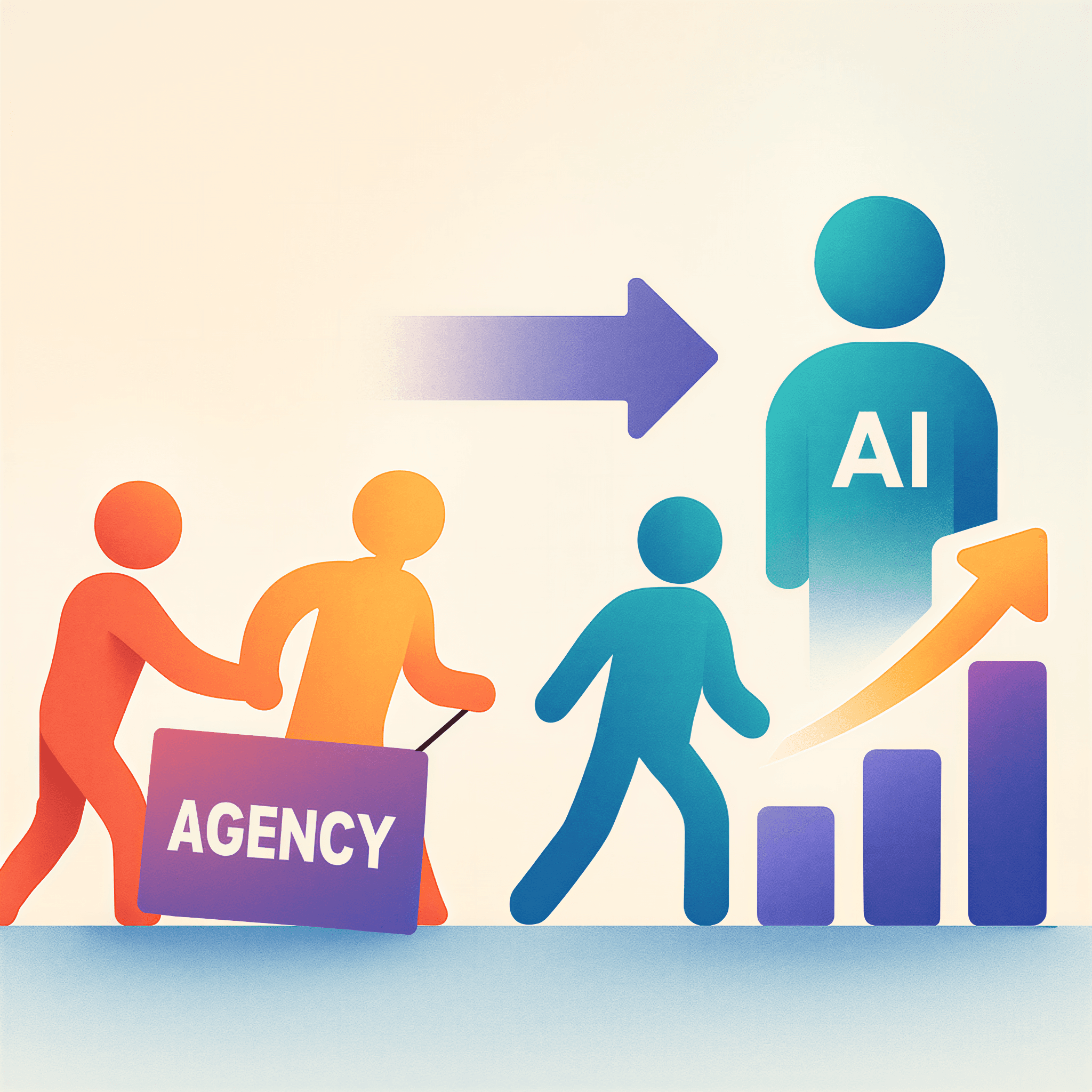
The traditional B2B event marketing agency model is being replaced by AI-driven, system-based platforms. Discover how TalkValue delivers faster execution, scalable growth, and measurable ROI for modern B2B events.
For a long time, companies treated a B2B event marketing agency as an essential partner. Agencies took care of branding, logistics, communication flows, and the dozens of tasks needed to run a successful conference or roadshow. They handled the heavy lifting, and businesses relied on them because events were complicated, time-consuming, and required specialized experience.
But the event landscape has shifted faster than anyone expected. AI has changed how teams operate, budgets are tightening, and companies expect faster results with clearer ROI. Growth cycles are shorter, global audiences are broader, and the old agency model starts to feel like it’s standing still while the market moves.
That’s exactly where TalkValue steps in. Not as another agency, but as a system built for a new era of B2B events.
And this shift isn’t subtle.
It’s foundational.
It’s changing what businesses should expect from event marketing altogether.
1. Events are no longer just branding tools. They’re growth infrastructure.
Traditional agencies were built for a world where events were mostly about exposure. Companies wanted visibility, a polished booth, a beautiful landing page, and a well-executed show. It was about presence, not performance.
Today, events have a different role:
They generate qualified leads.
They fuel partnerships and collaborations.
They strengthen communities and product ecosystems.
They bridge offline connections with online demand.
They operate as repeatable revenue channels, not one-off moments.
This means events aren’t “projects” anymore. They’re growth engines.
And most agencies weren’t designed for that shift. Their structures still revolve around deliverables, hours, and task lists. They manage the event, but they rarely optimize it as a long-term strategic asset.
TalkValue approaches events from a completely different angle. It treats the entire event lifecycle—before, during, and after—as a system designed to create compounding value. Not just a booth. Not just a schedule. Not just a show. But a long tail of leads, attention, and influence.
That’s the first sign it’s replacing the old model. Not because agencies failed, but because the world changed.
2. AI-first operations make traditional agency workflows look slow
Speed is one of the biggest advantages of any AI-driven operation, and it’s where TalkValue stands apart.
Agencies operate with layered communication: briefing, feedback, revisions, approvals, coordination, handoffs.
Even the most talented agency still follows a human-based workflow.
But B2B events today don’t wait for slow cycles.
Speaker confirmations happen quickly.
Sponsorship windows close fast.
Competitors move even faster.
And audiences expect content updated in real time.
TalkValue’s AI-first approach removes the natural friction that agencies can’t avoid. It makes decision-making faster. Campaigns launch quicker. Messaging adapts instantly. Teams scale without adding additional headcount. And businesses spend less time waiting and more time moving.
This kind of speed isn’t about convenience.
It’s a competitive advantage.
If the market is changing daily, your event strategy should too—something traditional agencies simply aren’t built to support.
3. Cost structures favor systems, not headcount
A conventional B2B event marketing agency charges for time, deliverables, and expertise.
The more help you need, the more expensive it becomes.
The more your event grows, the more budget you must allocate.
But modern B2B growth isn’t linear.
Companies expect scale without proportionate cost increases.
They want consistency, predictability, and measurable ROI.
TalkValue fits that expectation perfectly.
Because it’s system-driven, cost does not scale with complexity.
Whether you run one event or ten, the internal mechanics stay efficient.
And this matters because:
Event budgets are under more scrutiny than ever.
Leadership teams want clear impact metrics.
Growth teams need repeatable, cost-effective execution.
TalkValue gives companies the ability to expand their event footprint without expanding their spend.
Agencies can’t offer that.
Their model depends on more people doing more work.
The future, however, rewards companies who do more with less.
And TalkValue aligns with that future, not the past.
4. Scalability has become a business requirement, not a luxury
Most agencies can run a great event.
Some can manage multiple events.
Very few can scale fast without hiring more people or stretching their team thin.
And none of them can scale on demand.
But companies today don’t operate on long timelines.
Markets shift overnight.
Leadership decisions change quarterly.
Teams experiment more often with event-led growth.
New regions open, and global audiences expand.
TalkValue’s system-based model is built for that kind of volatility.
It allows businesses to:
expand their event calendar quickly
test new formats without high upfront cost
grow regionally without onboarding new vendors
build repeatable event frameworks
reuse successful structures across multiple markets
Traditional agencies evolve slowly because people evolve slowly.
Systems evolve instantly.
That’s a decisive difference—and one that’s already reshaping the industry.
5. B2B events now require precision, not guesswork
Events used to be about creativity, presentation, and execution.
Those elements still matter, but modern B2B events require something more: clarity, data, and direction.
Companies want to know:
What kind of attendees they’re attracting
Why certain topics outperform
How speaker choices influence registration
Which audience segments convert
What narrative builds long-term demand
Which parts of the event drive the most revenue
Agencies can deliver reports, but they’re rarely built around actionable patterns.
Their insights depend on experience—not always on data.
TalkValue approaches events with structured intelligence.
It focuses on identifying patterns, understanding incentives, and designing events that don’t just look good—they perform.
And performance is the expectation now.
No company wants an event that ends when the lights turn off.
They want momentum. They want visibility. They want revenue impact.
TalkValue is built around that outcome.
Conclusion: TalkValue isn’t another event marketing agency. It’s the next phase of the industry.
The traditional B2B event marketing agency model isn’t disappearing, but it’s no longer the default choice for companies that want to grow fast, operate efficiently, and scale globally.
The future belongs to models that can:
move quicker
cost less
adapt faster
produce consistent output
scale without friction
deliver measurable growth impact
That’s why TalkValue isn’t competing with agencies.
It’s replacing the model they were built on.
Events have entered a new era.
They demand a new kind of partner—one that operates with precision, speed, and intelligence.
TalkValue is that partner. And for companies ready to modernize how they run events, it’s not just an option. It’s the upgrade the industry has been waiting for.


FAQ