The event industry has largely treated hybrid models as a logistical problem to be solved with better streaming and digital feature parity. This tactical focus has led many organizations to a frustrating reality: operational complexity has soared, but revenue, retention, and strategic clarity have not kept pace. The accepted belief is that a successful hybrid event is a matter of technical execution. This view is fundamentally incomplete.
The true structural gap preventing progress is not a lack of technology but a failure of strategic reconciliation. Disconnected data, siloed workflows, and fragmented audience experiences prevent a unified view of performance, obscuring ROI and limiting monetization potential. Running two parallel event experiences doubles the operational burden without creating a commensurate increase in value. This is an unsustainable model for any revenue-focused organization.
This article challenges the execution-first mindset by reframing the hybrid challenge as a problem of decision infrastructure. We will move beyond tactical checklists to address the underlying structural issues that prevent exhibition organizers, association leaders, and event portfolio directors from turning hybrid complexity into a strategic advantage. The focus is on connecting operational decisions to revenue outcomes, sponsor value, and long-term business growth. For leaders operating under ROI pressure, this is not a tactical guide but a strategic framework for building a clarity engine that drives predictable growth.
1. The Challenge of Fragmented Visibility
A persistent challenge for event leaders is the inability to see a complete picture of attendee and sponsor engagement across both physical and digital environments. Data remains siloed in registration platforms, mobile apps, virtual event portals, and CRM systems. This fragmentation makes it impossible to answer fundamental business questions with confidence. Without a single, reconciled view, decision-makers are forced to rely on incomplete metrics and intuition, a high-risk approach in a revenue-driven landscape.
The Revenue Consequence of Siloed Data
This lack of a unified data model is not a technical inconvenience; it is a direct impediment to revenue growth. When an attendee's digital and physical interactions are not linked to a single profile, their full engagement journey is invisible. You cannot accurately measure the total impact of a sponsorship that spans a physical booth and a virtual session. You cannot identify your most engaged attendee cohort when their behavior is split across systems. This obscurity prevents effective personalization, undermines ROI calculations, and makes it difficult to design monetization strategies that reflect true audience value.
A unified data infrastructure moves an organization beyond simple attendance metrics. It enables the mapping of complex engagement journeys, providing the visibility needed to connect event activities to business outcomes and optimize future investments.
Building a Foundation for Clarity
Audit for Reconciliation: Begin by mapping every system that captures or stores participant data. The objective is not just to list platforms but to identify the critical data points—such as registration type, session interest, and sponsor interactions—that must be reconciled.
Establish a Single Source of Truth: Prioritize the integration of data fields that directly inform key performance indicators (KPIs), such as lead qualification or attendee retention. This may involve consolidating information into a centralized data warehouse or a dedicated event analytics platform.
Maintain Data Integrity: Implement governance rules to standardize data formats across all systems. Consistent formatting for fields like "job function" or "country" is essential for accurate segmentation and reporting. For instance, the Knowledge Graph Conference successfully managed this by consolidating diverse check-in data into a single dashboard, enabling real-time attendance tracking and a seamless experience for all participants. You can see how they achieved this complex data reconciliation.
2. Re-evaluating the Attendee Experience as a Single Journey
The common approach of designing separate experiences for in-person and virtual audiences creates a fundamental divide that limits engagement and value. The strategic imperative is to design one cohesive experience accessible from multiple entry points. This requires a shift in mindset from feature parity—providing equivalent tools—to experiential parity, where all attendees feel equally included in a single, unified community.
The Monetization Impact of a Fractured Experience
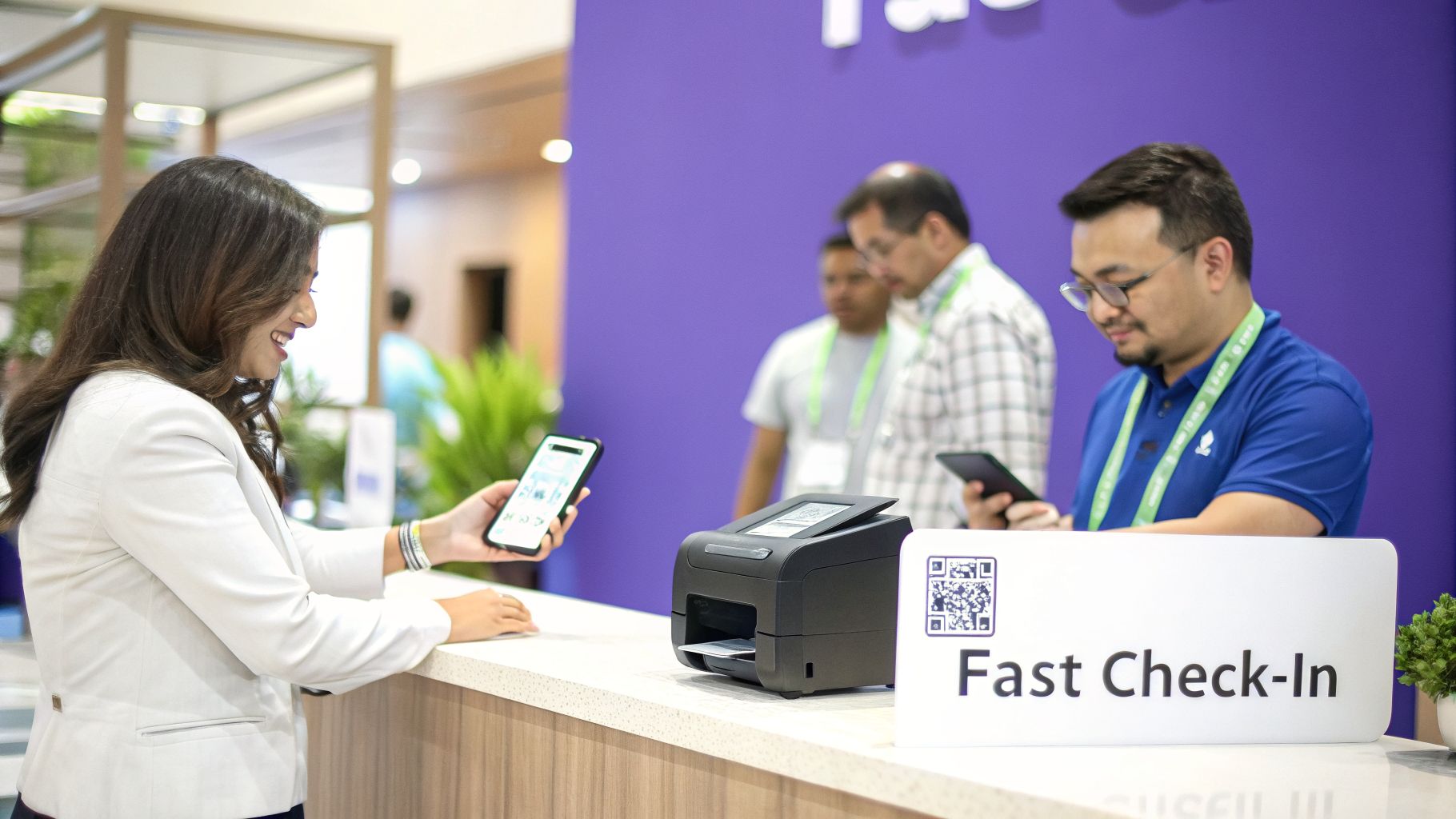
When the in-person and virtual experiences are disconnected, monetization opportunities are constrained. Sponsors are forced to purchase fragmented packages that limit their reach, making it harder to justify their investment. Attendees who feel like passive observers are less likely to engage, return for future events, or convert into members or customers. A seamless experience, however, unlocks new value. For example, a frictionless, automated check-in process for on-site attendees improves satisfaction and frees up staff for higher-value interactions, directly enhancing the perceived quality of the event.
By automating transactional elements like check-in, organizers can reallocate resources from administrative tasks to strategic hospitality. This focus on experience quality, for both audiences, is what builds brand loyalty and long-term value.
Designing a Unified Experience Framework
Prioritize Integration: Select a core technology stack where the virtual platform, mobile app, and registration system are deeply integrated. This ensures that data flows seamlessly and interactive features like Q&A and polling are accessible to all participants.
Automate Friction Points: Identify and automate operational bottlenecks that detract from the experience. Automated check-in and badge printing, for example, eliminate queues and improve the initial on-site impression, a critical touchpoint in the overall journey. A video demonstration of such a system highlights the operational efficiency gained.
Bridge the Communication Gap: Ensure moderators and speakers are trained to actively engage both audiences. A question from a virtual attendee should be given the same prominence as one from the physical audience, reinforcing the sense of a single, shared conversation.
3. Redefining Sponsor Value Beyond Logo Placement
A frequent strategic oversight is treating event sponsorship as a bifurcated offering with separate packages for in-person and virtual participation. This model fails to deliver cohesive value and makes it nearly impossible for sponsors to measure their total return on investment. The necessary shift is toward integrated sponsorship opportunities that provide measurable engagement and quantifiable ROI across the entire hybrid ecosystem.
The Revenue Imperative of Demonstrable ROI
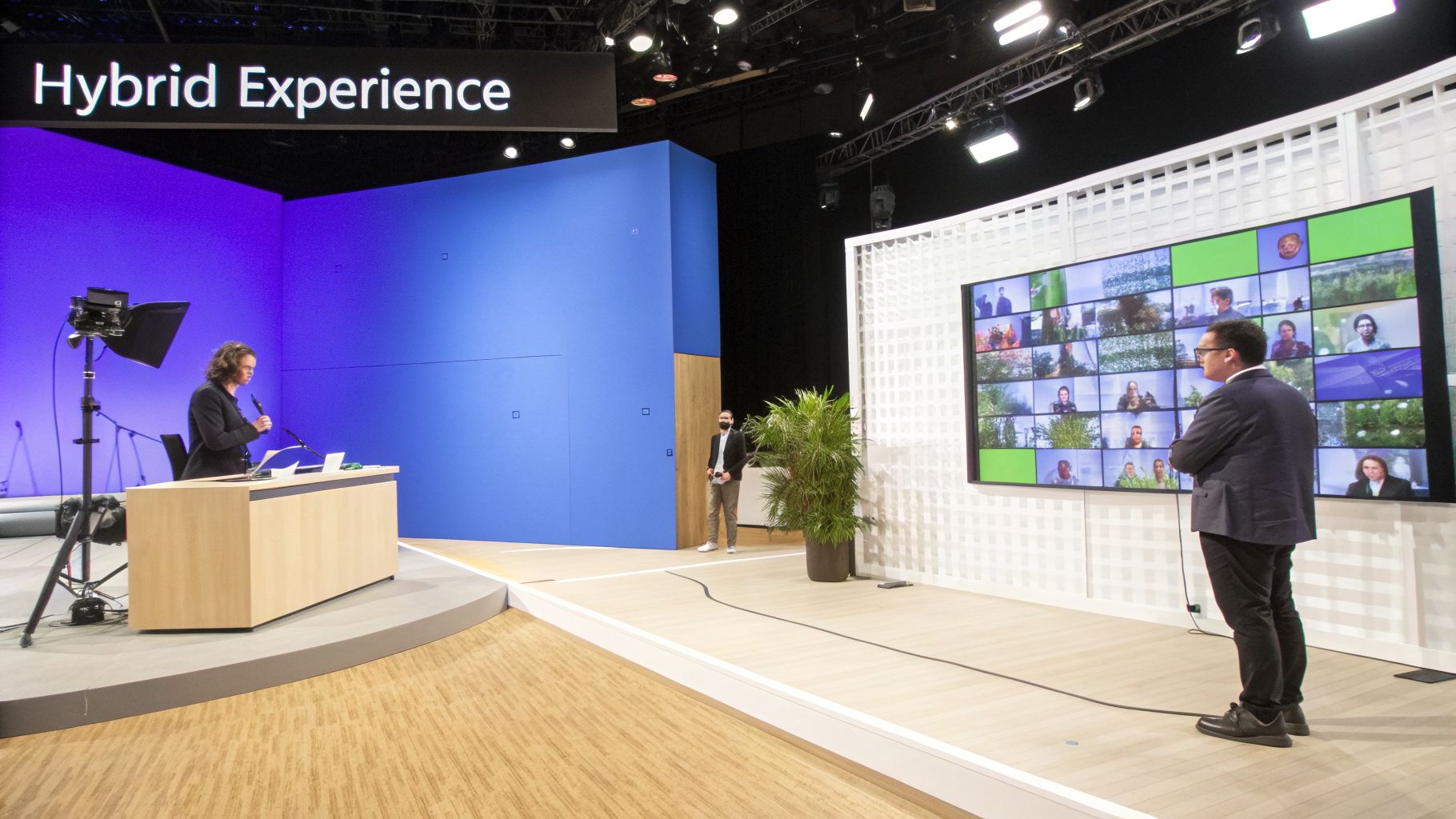
Sponsors invest in events to generate qualified leads and build brand equity. A disconnected hybrid model dilutes their impact and obscures the data needed to prove value. By creating integrated packages, organizers can provide sponsors with a holistic view of their performance, tracking every interaction from a physical badge scan to a virtual content download. This complete data picture is no longer a "nice-to-have"; it is essential for securing higher-value, multi-year sponsorship commitments.
When sponsorship packages are designed around measurable touchpoints, the conversation shifts from cost to investment. Organizers can directly tie a sponsor's spend to business outcomes, transforming them into data-informed partners focused on mutual growth.
Implementing a Value-Based Sponsorship Framework
Develop Integrated Tiers: Structure sponsorship packages to include benefits that span both physical and digital environments. A premium tier might combine a physical booth with a sponsored virtual session, branded push notifications, and a unified lead capture mechanism.
Provide Sponsor-Centric Dashboards: Offer sponsors access to a dedicated dashboard that consolidates real-time engagement metrics. This should include data like physical booth traffic, virtual booth visits, session attendance, and lead data in a single, coherent view.
Establish Transparent Lead Sharing: Define clear protocols for how leads are captured, qualified, and delivered. Integrating lead capture forms directly with a sponsor's CRM, for example, ensures rapid follow-up and provides a transparent data trail. This approach helped the Knowledge Graph Conference increase its average revenue per loyal attendee by 40% and is a key trend among leading exhibition organizers. You can learn more about this shift in monetization strategy.
4. Activating Post-Event Intelligence for Growth
The true ROI of an event often materializes in the weeks and months that follow, yet most post-event strategies rely on generic, one-size-fits-all follow-ups. This approach fails to capitalize on the rich behavioral data collected during the event. A strategic framework requires intelligent, automated nurturing workflows that translate specific attendee engagements into measurable business outcomes, such as qualified leads, membership conversions, or repeat attendance.
The Revenue Impact of Personalized Follow-Up
A generic "thank you" email ignores valuable intent signals. An attendee who watched three sessions on a specific topic has demonstrated a clear interest that should trigger a tailored response. Intelligent automation enables the segmentation of audiences based on this engagement data, allowing for highly relevant follow-up that dramatically increases response rates and accelerates the conversion cycle. This is how event engagement is translated directly into pipeline and revenue.
By automating post-event outreach with personalization at its core, organizations can scale meaningful conversations. Every high-intent signal receives a timely, relevant response that moves the relationship forward, ensuring no opportunity is left behind.
Structuring an Intelligent Nurturing System
Segment by Behavioral Cohorts: Create audience segments based on engagement patterns. Categories might include "High-Intent Leads" (attended multiple product sessions), "Topic-Specific Interest" (viewed all content on a single theme), or "Community-Ready" (active in networking sessions).
Automate Based on Triggers: Design workflows where specific actions initiate personalized sequences. For example, attendance in a sponsored session could trigger an email with a relevant case study, while a download of a technical paper could initiate a LinkedIn connection request from a subject matter expert.
Connect Engagement to Sales Enablement: The goal is not just to capture leads but to qualify and enrich them with context. An automated lead management workflow ensures that high-intent behaviors immediately trigger a qualification process, delivering leads to sales teams with the full story of their engagement. This is central to organizing a marketing event that actually drives results by closing the loop between attendance and revenue. Such a system is not just a tool, but a core part of the event's decision infrastructure, as demonstrated by firms that specialize in this complex orchestration. You can see how an AI-native agency structure supports this.
5. From Episodic Events to Continuous Community
The traditional model of a one-off event leaves significant value unrealized. The energy and connections generated fade, and the relationship with attendees goes dormant until the next event cycle. A more strategic approach transforms the temporary event into a sustained, year-round community. This builds loyalty, increases attendee lifetime value, and creates a powerful feedback loop for future programming and monetization.
The Long-Term Revenue of Community Building
Shifting from a model of periodic events to one of a continuous community fundamentally alters the financial calculus. It creates recurring revenue opportunities through memberships, exclusive content, or year-round sponsorships. More importantly, it builds a defensive moat around your brand, making it harder for competitors to attract your core audience. A thriving community turns attendees into advocates who are more deeply invested in the ecosystem's success.
A continuous community model transforms an attendee's lifetime value. It provides a platform for ongoing engagement, turning a single transaction into a long-term relationship with multiple revenue touchpoints. As you learn how complex data can be managed effectively, this becomes easier.
Fostering a Year-Round Engagement Model
Capitalize on Post-Event Momentum: Launch a community platform or engagement program immediately following the event to capture the initial enthusiasm. Share exclusive content, session recordings, and facilitate ongoing discussions.
Establish a Cadence of Value: Maintain engagement with a predictable schedule of touchpoints, such as monthly expert webinars, themed networking meetups, or Q&A sessions with popular speakers.
Measure Community ROI: Track key metrics like repeat attendance rates, participation in premium offerings, and membership renewals. The Knowledge Graph Conference team, for example, identified a core group of loyalists in their community who demonstrated a 40% higher average revenue per person (ARPP), proving the direct financial benefit of continuous engagement.
Building Your Event Portfolio's Decision Infrastructure
Mastering the hybrid model is not about executing a series of disconnected tactical best practices. It is about building a cohesive, intelligent system—a decision infrastructure for your entire event portfolio. The principles discussed, from unified data to continuous community, are the interconnected pillars of this framework. They move an organization from a state of reactive event management to one of proactive, strategic oversight.
This requires treating your events as a continuous, data-rich ecosystem. By reconciling disparate systems, you create a single source of truth that illuminates attendee behavior and sponsor ROI. By automating workflows, you free your team to focus on high-value activities. The ultimate goal is to build an operational and analytical backbone that provides clear visibility into distinct attendee and sponsor cohorts, allowing you to answer critical business questions with confidence.
From Tactical Complexity to Strategic Clarity
Answering questions like, "What was the true ROI for a sponsor across both physical and digital touchpoints?" or "Which marketing channels delivered the most engaged virtual attendees?" requires more than good intentions. It requires a decision infrastructure designed for clarity. This is the fundamental shift: moving from collecting fragmented data to activating reconciled intelligence for measurable growth. When you can draw a direct line from an integrated lead capture tool to accelerated sales cycles, you are no longer just running events. You are building a predictable revenue engine.
The most impactful strategies are those that break down silos. A successful event portfolio is not a collection of well-executed parts; it is a single, unified system where every component informs and strengthens the others. This interconnectedness is what separates good event businesses from great ones. The path forward is one of strategic reconciliation, intelligent automation, and data-driven decision-making.
Ready to move beyond tactical checklists and build a true decision infrastructure for your events? TalkValue is an AI-native agency and toolkit that reconciles fragmented data into a unified growth engine, turning strategic principles into measurable revenue outcomes. Explore how our framework can deliver clarity and control over your event portfolio by booking a conversation with our team at TalkValue.

FAQ