Senior event leaders operate in a state of paradox. Armed with an unprecedented array of CRM systems, analytics tools, and dashboards, they are drowning in data yet starved for clarity. The prevailing industry belief is that more data automatically translates to better decisions and, consequently, superior performance. This article challenges that foundational assumption. The real inhibitor of growth is not a scarcity of information but a systemic failure to reconcile disparate data into a coherent decision-making framework.
This fragmentation creates a critical 'visibility gap'—a disconnect between operational activities and strategic outcomes. Leaders can see every metric in isolation but struggle to connect them to revenue, retention, and long-term business value. The result is a cycle of tactical execution without strategic progress. This is not a tactical how-to guide; it is an executive-level blueprint for transforming an event portfolio from a cost center into a predictable, revenue-generating engine by closing this structural gap.
The Reconciliation Imperative: Beyond Disconnected Dashboards
For decades, the event industry has pursued operational excellence through specialization. We have separate tools for registration, mobile apps, marketing automation, and lead capture. Each system generates its own data, creating siloed views of the attendee journey. While each dashboard offers a granular look at its specific function—ticketing revenue, app engagement, email open rates—it fails to provide a unified narrative of performance. This is the heart of the visibility gap.
Without a reconciled view, strategic questions become impossible to answer with confidence. How did pre-event marketing engagement influence on-site session attendance? Which attendee cohorts generated the most value for sponsors? How does a seamless check-in experience correlate with post-event community retention? Answering these requires a system of record that connects cause and effect across the entire event lifecycle. The absence of this connective tissue forces leaders to rely on intuition and incomplete data, undermining their ability to make strategic, revenue-focused decisions. This structural problem directly impacts monetization strategy, sponsor retention, and the ability to forecast growth.
From Data Silos to a Decision-Making Infrastructure
The solution is not another dashboard. It is a fundamental shift in perspective: from collecting data to building a decision-making infrastructure. This means architecting a system that unifies information from all touchpoints—pre-event, on-site, and post-event—into a single, coherent source of truth. Such an infrastructure does more than just aggregate data; it contextualizes it, revealing the relationships between different activities and their ultimate impact on revenue.
This reconciled view provides the clarity needed for strategic leadership. It allows event portfolio directors to see not just what happened, but why it happened and how to replicate success. It transforms sponsor conversations from a defense of cost to a collaborative discussion about measurable ROI, backed by integrated engagement data. For association leaders, it connects member engagement patterns to long-term loyalty and renewal rates. This strategic infrastructure is the engine that converts operational data into business intelligence, enabling teams to move from reactive management to proactive, value-driven optimization.

The Impact on Revenue and Monetization
A unified decision framework has immediate and profound consequences for revenue. When the Knowledge Graph Conference integrated its disparate data streams, it gained a holistic view of attendee behavior. This clarity allowed them to identify and nurture high-value cohorts, leading to a 40% increase in average revenue per person (ARPP). This was not the result of a single new feature, but of a strategic ability to connect engagement to monetization. You can see how they connected data points to drive revenue outcomes in this case study.
This reconciled view also unlocks new monetization models. By precisely tracking engagement across sponsored sessions, digital ads, and networking interactions, organizers can offer performance-based sponsorship packages. Sponsors are no longer buying impressions; they are investing in attributable pipeline influence. This level of transparency strengthens partnerships and justifies premium pricing, turning sponsorship from a speculative marketing expense into a predictable driver of sales. A deep dive on this topic can be found in our insight on how to organize a marketing event that actually drives results.
Cohort Visibility: The Key to Scalable Personalization and Engagement
Generic event experiences yield generic results. In a world of increasing specialization, attendees and sponsors expect tailored value. However, meaningful personalization at scale is impossible without a deep, dynamic understanding of attendee cohorts. Manual segmentation based on static registration data is too slow and superficial to meet this demand. The visibility gap prevents organizations from seeing beyond basic demographics to understand intent, behavior, and evolving needs.
A strategic infrastructure solves this by enabling AI-powered cohort analysis. By reconciling registration data with real-time behavioral inputs—such as session check-ins, dwell time at exhibitor zones, and networking activity—the system can identify and group attendees into meaningful, dynamic segments. These are not just lists; they are living profiles of "high-intent prospects," "first-time attendees interested in advanced topics," or "lapsed members re-engaging with the community."
From Personalization to Profitability
This level of cohort clarity allows for precision-guided engagement that directly impacts revenue. Instead of mass-emailing all attendees, organizers can send targeted session recommendations to specific cohorts, increasing relevance and attendance. Sponsors can be armed with real-time data on which cohorts are engaging with their content, allowing for targeted follow-up and demonstrating clear ROI. This moves the value proposition from passive brand exposure to active lead generation.
Furthermore, this intelligence extends far beyond the event itself. By tracking cohort behavior over a multi-year portfolio, leaders can identify patterns that predict loyalty, map customer lifetime value, and build data-driven strategies for long-term community growth. The right framework, like an explore an AI toolkit designed for this purpose, provides the engine for this analysis. The Knowledge Graph Conference leveraged this exact approach to integrate behavioral data, which was crucial to fueling its successful post-event retention and monetization strategy. You can see how they integrated behavioral data to fuel their post-event strategy here.
Strategic Alignment: Connecting Operations to Executive-Level KPIs
The ultimate function of an event portfolio is to advance the organization's strategic objectives. Yet, for many senior leaders, the connection between the frenetic activity on the show floor and the metrics in the boardroom—like customer acquisition cost (CAC), lifetime value (LTV), and market penetration—remains tenuous. The visibility gap makes it difficult to articulate the business impact of events in a language that resonates with the C-suite and board.
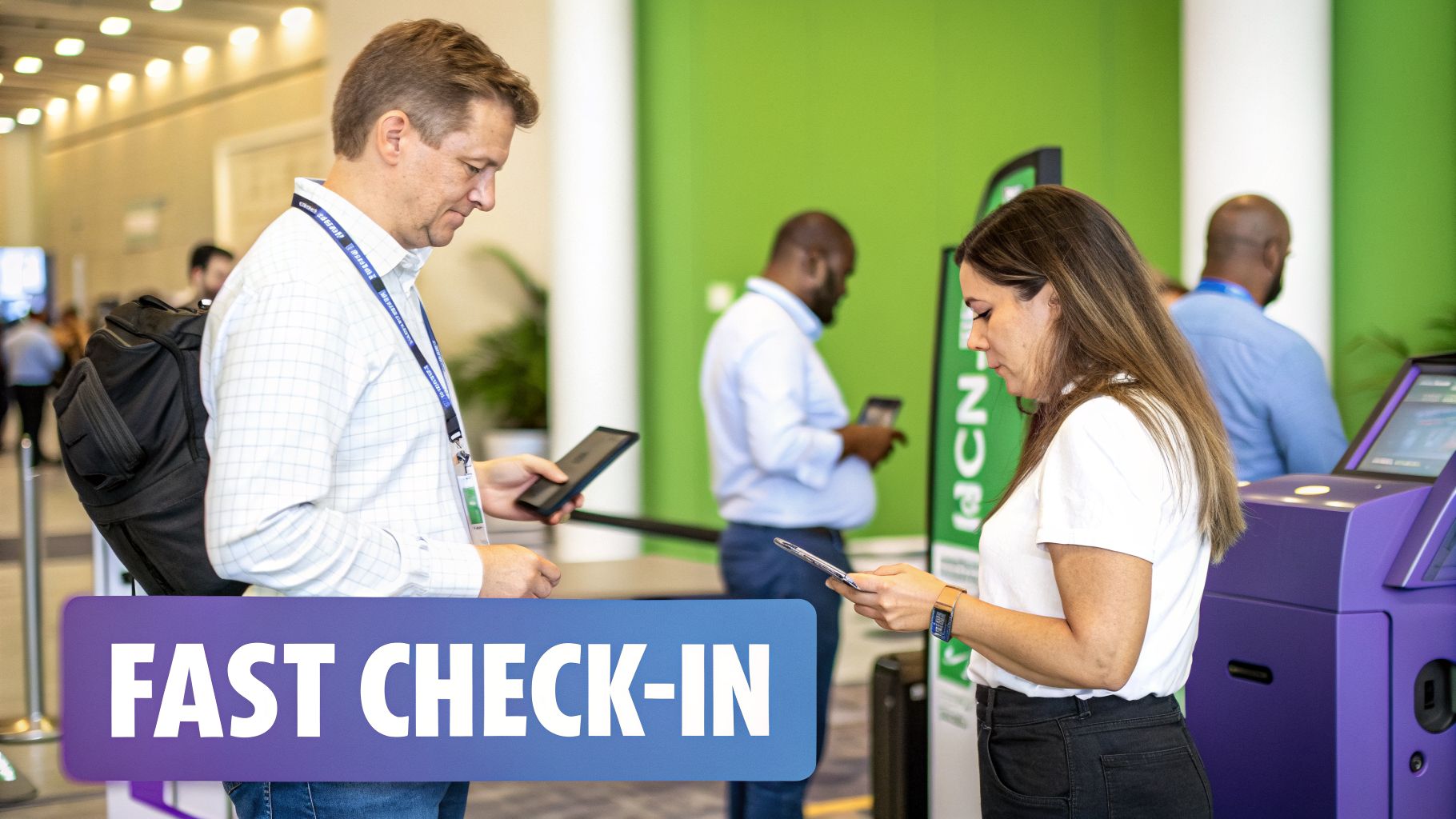
A reconciled data infrastructure bridges this divide. It provides the mechanism to translate operational metrics into strategic KPIs. For example, "attendee check-in speed" is an operational metric. But when reconciled with post-event survey data and renewal rates, it can be tied to "attendee satisfaction" and "customer retention"—metrics that matter at the executive level. Similarly, "sponsor booth scans" become "event-influenced sales pipeline" when integrated with the CRM.

This alignment empowers event leaders to position their portfolios as indispensable strategic assets. It allows for data-backed budget requests, accurate forecasting, and a clear articulation of how the event division contributes to the company's overarching mission. In an increasingly competitive landscape, the ability to demonstrate and quantify this strategic contribution is no longer optional; it is essential for survival and growth. This shift is a core reason why data-driven platforms are replacing traditional event marketing approaches.
Operational excellence remains critical, and automation plays a key role. Automating workflows like badge printing, as seen with organizers who use AI to automate and improve badge printing workflows, frees up teams to focus on these higher-level strategic connections. For more on this, the AI + Events Knowledge Center offers further resources.
Conclusion: The Move from Execution to Architecture
The challenge facing senior event leaders today is not a lack of effort or a shortage of data, but the absence of a strategic framework to make sense of it all. Continuing to invest in isolated tools and dashboards only widens the visibility gap, perpetuating a cycle of reactive, tactical management that cannot deliver predictable growth.
The path forward requires a fundamental re-framing of the problem. It demands a shift from merely executing events to architecting an intelligent system—a decision-making infrastructure that reconciles data, provides cohort-level visibility, and aligns operational activity with strategic revenue outcomes. By closing the gap between visibility and value, leaders can finally unlock the true potential of their event portfolios, transforming them into powerful and predictable engines for business growth.
The path from tactical execution to strategic leadership lies in closing the gap between data visibility and decision clarity. The practices outlined are interconnected components of a single strategic infrastructure. TalkValue was built on this principle to provide not just tools, but the strategic framework needed to turn event portfolios into predictable drivers of business growth. If you are ready to move beyond isolated tactics and build a true clarity engine for your organization, we invite you to book a strategic conversation to explore how this framework can be applied to your unique goals.
FAQ