Every event leader operates under a universal mandate: grow revenue. Whether through ticket sales, exhibitor monetization, or sponsorship value, the pressure to deliver quantifiable financial results is constant. The industry’s default response has been to amplify its promotional activities—more social media, more email blasts, more digital ads. We have become experts at creating noise, assuming that more activity will inevitably lead to more attendees and, therefore, more revenue.
But this assumption is flawed. The relentless focus on tactical execution masks a deeper, structural problem. While our teams are busy managing campaigns across a dozen disconnected platforms, a critical gap emerges between our promotional activities and our strategic revenue goals. We generate vast amounts of data but struggle to find clarity. The result is a cycle of reactive decision-making, budget waste, and missed monetization opportunities that senior leaders can no longer afford to ignore.
The Visibility Gap: Why Activity Doesn't Equal Impact
The modern event promotion ecosystem is a complex web of specialized tools. We use CRM systems like HubSpot for marketing automation, platforms like Eventbrite for registration, and a suite of social and paid media channels to drive awareness. Each platform generates its own dataset, creating isolated pockets of information. An email campaign’s performance lives separately from social engagement metrics, which are disconnected from the final registration data.
This fragmentation is the source of the visibility gap. Senior decision-makers are left with a mosaic of dashboards that report on channel-specific activities but fail to provide a unified view of the customer journey or its true financial impact. We can see how many people opened an email or clicked an ad, but we struggle to answer the more fundamental business questions: Which specific marketing touchpoints are driving our highest-value attendee cohorts? Where is our promotional spend actually generating a positive return on investment? And how do we reallocate resources in real-time to capitalize on emerging opportunities?
Without a system to reconcile this disparate data, we are forced to operate on intuition and historical precedent. We repeat last year’s promotional playbook, hoping for incremental improvements. This approach leaves significant revenue on the table. It prevents us from identifying underperforming channels that drain our budget and from doubling down on the high-impact strategies that could accelerate growth. The core issue is not a lack of effort or data; it is the absence of a decision infrastructure that connects our daily activities to their ultimate revenue consequences.
Key Insight: True strategic control does not come from launching more campaigns. It comes from achieving a single, reconciled view of performance that allows you to see the direct line between promotional spend, attendee acquisition, and revenue realization.
From Data Reconciliation to Decision Clarity
Closing the visibility gap requires a fundamental shift in perspective. Instead of managing individual tools, strategic leaders must focus on building an infrastructure that unifies them. The goal is to create a single source of truth—a clarity engine that ingests data from every touchpoint in the promotional journey and reconciles it into a cohesive, decision-oriented dashboard.
This is not simply about data aggregation; it is about strategic synthesis. A reconciled data environment allows you to move beyond vanity metrics like opens and clicks and focus on the metrics that matter to the business. You can begin to track the cost-per-acquisition (CPA) not just by channel, but by attendee segment. You can see which cohorts—past attendees, new prospects from a specific industry, or C-level executives—are responding to which messages.
This level of cohort visibility is transformative. It turns your promotional strategy from a broad-based broadcast into a series of precise, targeted conversations. For instance, you might discover that while LinkedIn ads are expensive, they are the most effective channel for acquiring high-value enterprise attendees who are more likely to purchase premium tickets. Conversely, a high-volume email campaign might be driving many registrations, but for a lower-value segment with a higher churn rate.
Armed with this clarity, decision-making becomes proactive, not reactive. You are no longer guessing where to allocate your next dollar of marketing spend. The data provides a clear roadmap, enabling you to optimize your budget allocation in real-time to maximize revenue. This is the essence of a data-driven growth strategy: an aligned system where every promotional action is measured against its contribution to the bottom line. Our work on step-by-step event planning emphasizes how this foundational clarity underpins all successful execution.
Activating Growth: The Revenue Impact of Strategic Alignment

Once a decision-making framework is in place, its impact cascades across the entire event lifecycle, directly influencing revenue and long-term portfolio health. Strategic alignment, powered by reconciled data, moves an organization from operational chaos to a state of controlled, predictable growth.
First, it eliminates wasted marketing spend. By identifying and cutting underperforming channels, you can immediately reallocate budget to proven, high-ROI activities. This is not about cutting costs; it is about optimizing investment for maximum impact. A unified view of performance across platforms like Google and Meta reveals which combinations of targeting, messaging, and creative are actually converting prospects into paying attendees, allowing you to scale what works.
Second, it enhances monetization structures. With clear visibility into attendee cohorts, you can develop more sophisticated and targeted pricing and ticketing strategies. You can create tailored offers for loyal past attendees, design premium packages for enterprise buyers, and implement dynamic pricing based on real-time demand. This level of precision allows you to capture more value from every segment of your audience, directly increasing registration revenue.
Finally, and most critically, it strengthens long-term retention. A unified data infrastructure provides deep insights into attendee behavior and satisfaction. By understanding which segments derived the most value from the event, you can refine your content, improve the event experience, and craft highly personalized post-event communication. This focus on value delivery is the key to building a loyal community that returns year after year, forming the stable, recurring revenue base upon which sustainable growth is built. As we explore in our in-depth article on organizing marketing events that deliver real results, this connection between insight and retention is paramount.
The narrative that more activity leads to more growth is a relic of a less sophisticated era. In today's competitive landscape, the organizations that thrive will be those that build a decision infrastructure capable of turning fragmented data into strategic clarity and, ultimately, into measurable revenue.
Building Your Organization's Decision Engine
The transition from a tactically-focused promotion model to a strategic, revenue-driven one is not merely a change in process; it is a structural evolution. It requires moving beyond the limitations of disconnected tools and embracing a unified framework that provides clarity and control. This is not about adding another tool to the stack, but about implementing a system that makes the entire stack work in concert.
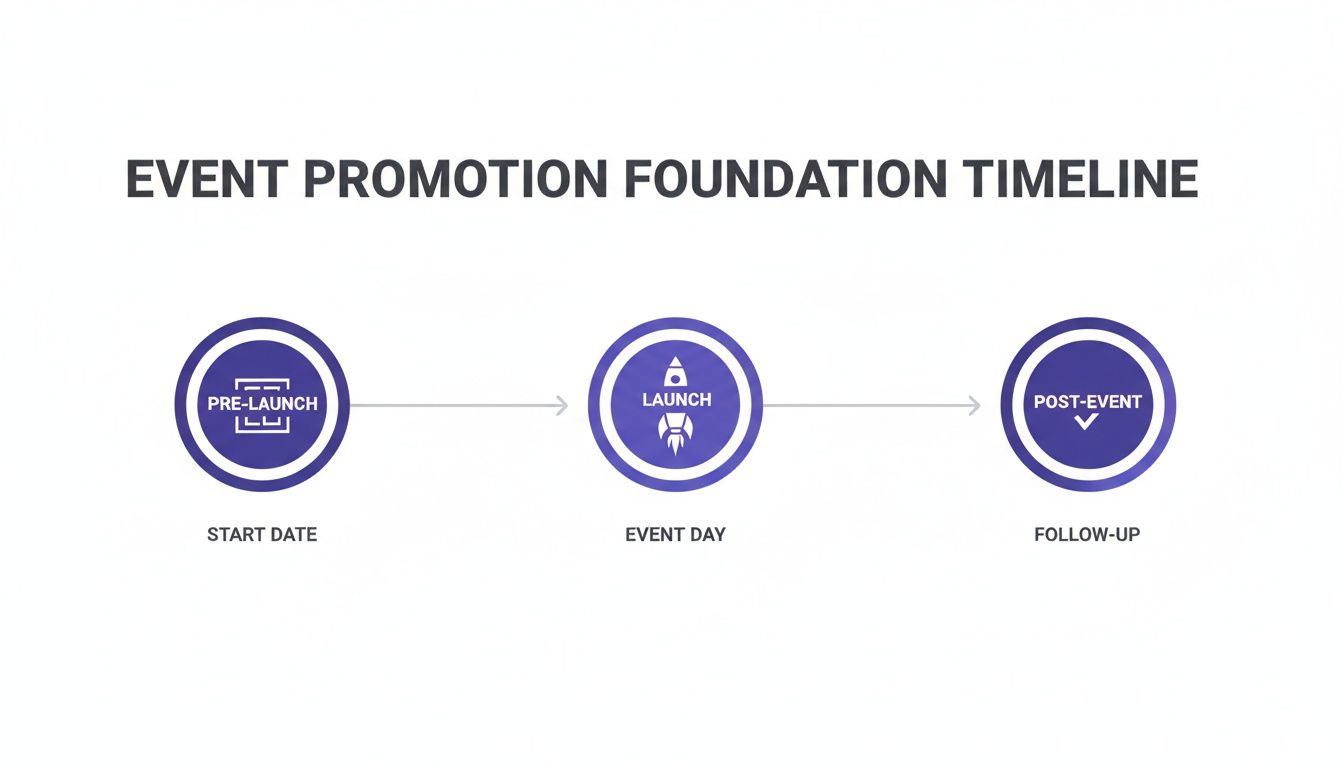
This operational backbone automates the manual, time-consuming work of data reconciliation, freeing your senior teams to focus on high-value strategic initiatives. Instead of spending hours exporting spreadsheets and building manual reports, they can analyze performance trends, identify new market opportunities, and make informed decisions that drive the business forward. This is the difference between managing tasks and orchestrating growth.
This is the principle behind Talk-Value. It is not another piece of software, but a decision infrastructure designed to provide event leaders with the clarity they need to connect promotional activity directly to revenue outcomes. By unifying data from across your marketing and registration ecosystem, it provides a single, reconciled view of performance. It is the clarity engine that enables you to eliminate waste, optimize spend, and make the confident, data-backed decisions necessary for sustainable growth. Other resources on AI for event planning and event technology solutions further underscore the power of integrated systems.

The path to predictable revenue growth is not paved with more activity, but with greater clarity. It requires challenging the assumption that being busy is the same as being effective. For senior leaders tasked with driving the financial success of their event portfolios, the most critical strategic imperative is to build the infrastructure that enables clear, confident, and revenue-focused decision-making.
Turning strategy into a seamless, data-driven operation is the final piece of the puzzle. Talk-Value provides the AI-native toolkit and expert services to unify your event data, automate workflows, and connect every promotional activity directly to revenue.
Explore how TalkValue can become your event's growth engine.

FAQ