
For years, senior event leaders have pursued the "best hybrid event platforms" under the belief that the right technology alone can solve the industry's most persistent challenges. This search has led to an ecosystem of powerful, feature-rich solutions designed to manage complex logistics and engage disparate audiences. Organizations have invested heavily in platforms that promise seamless registration, immersive virtual experiences, and robust mobile applications. Yet, a fundamental structural problem remains, one that directly impacts revenue and long-term growth.
The common industry behavior is to evaluate platforms based on their execution capabilities—their ability to stream content, facilitate networking, or process registrations. We accept that the primary role of this technology is to deliver a successful event. But this view is incomplete. The real challenge is not execution; it is the strategic blindness that follows. The data generated by these powerful systems remains fragmented, locked within siloed dashboards and incompatible reports. This fragmentation creates a critical gap between operational activity and strategic decision-making, obscuring the very insights needed to drive revenue, prove ROI, and secure sustainable growth.
This article challenges the feature-focused evaluation model. The structural gap preventing real progress is not a lack of tools, but the absence of a decision infrastructure capable of reconciling data from multiple sources into a unified view of performance. When attendee behavior, sponsor engagement, and content value remain fractured across physical and digital formats, the ability to make confident, revenue-driven decisions is compromised. We will reframe the discussion from a tactical evaluation of platforms to a strategic analysis of how to build an infrastructure for clarity, connecting operational data directly to monetization, retention, and business growth.
The High Cost of a Disconnected View
Every event, regardless of its format, is a complex system of value exchange. Attendees invest time and money for content and connections. Sponsors invest capital for access and influence. The role of the event leader is to orchestrate this exchange and demonstrate its return. However, without a unified data framework, this task becomes a speculative exercise. You may know how many people attended a virtual session and how many visited a physical booth, but can you connect those behaviors to a single attendee's journey or a sponsor's pipeline impact?
This lack of a reconciled view has direct and severe revenue consequences. When you cannot quantify how different attendee cohorts engage across your portfolio, you are unable to optimize pricing strategies for tickets or sponsorship tiers. Proving sponsor ROI becomes a narrative of impressions and logo placements, rather than a data-backed report of influenced leads and qualified meetings. The inability to segment audiences based on holistic behavior—what they watched online and which sessions they attended in person—prevents targeted post-event marketing, hampering retention and long-term community value. The pressure to deliver measurable ROI grows, yet the systems in place are not designed to provide the necessary proof.
The problem, therefore, is not that your current platform is inadequate. It is that your operational stack lacks a central clarity engine—a strategic layer designed to ingest, unify, and analyze data from every touchpoint. This is the missing infrastructure that transforms operational metrics into a coherent financial narrative.
Assessing Platforms as Components of a Larger Decision Framework
To address this structural gap, the evaluation of hybrid event platforms must evolve. Instead of asking, "What features does this platform have?" the more strategic question becomes, "How does this platform contribute to our unified decision-making framework?" This shifts the focus from standalone capabilities to integration potential, data accessibility, and the ability to feed a central source of truth.
A platform is no longer the endpoint, but a vital data source for a larger analytical engine. In this context, the "best" platforms are those that not only execute flawlessly but also provide clean, accessible data through robust APIs and native integrations. They become components in a broader architecture designed for strategic clarity. Below, we analyze leading platforms through this new lens, assessing their role within a revenue-focused decision infrastructure.
1. TalkValue
Best For: Creating a unified decision infrastructure to drive revenue growth.
TalkValue addresses the core structural problem of data fragmentation head-on. It is not positioned as another all-in-one event execution platform, but as a strategic AI-native infrastructure that sits at the center of your existing technology stack. Its purpose is to reconcile data from disparate systems—your registration platform (like Eventbrite), your engagement app (like Whova), and your CRM (like HubSpot)—to create a single, coherent view of attendee and sponsor engagement. This makes it a powerful choice for event portfolio directors and revenue-focused leaders who are no longer satisfied with operational metrics alone.
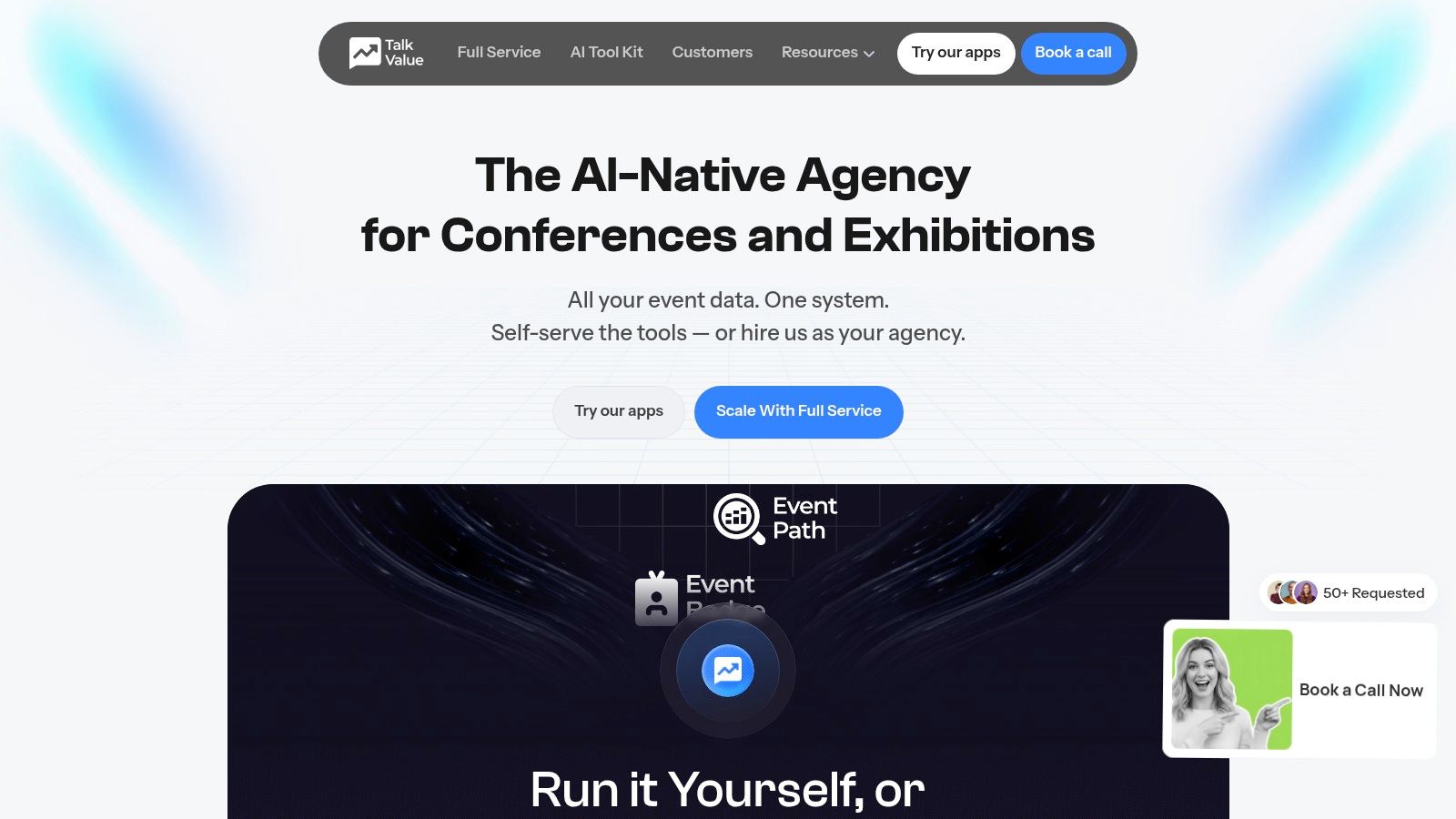
The platform functions as a clarity engine, turning scattered data points into actionable strategic insights. By unifying behavioral data from both in-person and virtual touchpoints, it allows organizers to see which content drives the most valuable engagement, how specific attendee cohorts interact across an event portfolio, and which sponsors are generating tangible pipeline. This visibility directly impacts monetization. Case studies demonstrate its ability to increase average revenue per paid participant by identifying up-sell opportunities based on past behavior. The focus is squarely on connecting event activity to financial outcomes, making it a critical tool for any leader under pressure to prove ROI.
Key Features & Delivery
TalkValue offers a flexible approach. The self-serve Growth AI Toolkit empowers internal teams to build their own decision framework, while the full-service agency provides end-to-end strategic and operational support. This is complemented by an AI + Events Knowledge Center with playbooks designed to elevate strategic thinking. For those beginning to frame this challenge, resources on hybrid event best practices provide a solid foundation.
Pricing & Access
Pricing is customized based on the required level of integration and strategic support. This necessitates a direct conversation to align the solution with specific revenue goals and operational complexities, reinforcing its position as a strategic partner rather than a transactional software vendor.
Pros:
Directly solves the problem of data fragmentation by unifying disparate systems.
Connects event operations to measurable revenue outcomes and ROI.
Offers both a self-serve decision toolkit and full-service strategic partnership.
Provides educational resources to foster a data-driven culture.
Cons:
Requires a strategic commitment to building a unified data architecture.
Custom pricing model necessitates a consultative engagement for budget planning.
2. RingCentral Events (formerly Hopin)
RingCentral Events, built on the legacy Hopin platform, is an enterprise-grade solution for large-scale, multi-track conferences. Its strength lies in its proven ability to manage high-volume virtual attendance while integrating with core business systems like CRMs and marketing automation platforms. For a strategic leader, its value is in its capacity to serve as a robust data source for both virtual engagement and registration funnels.
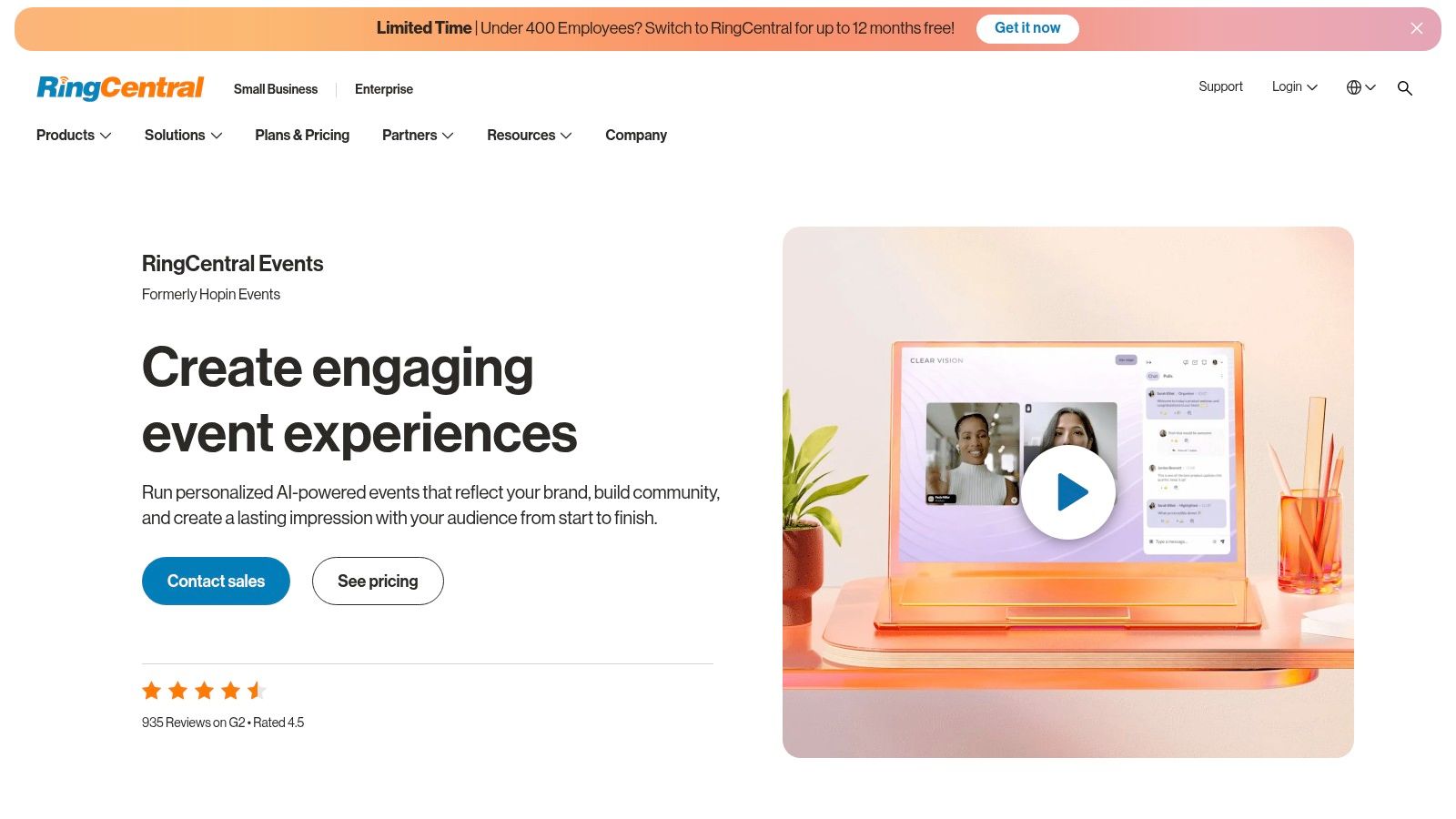
From a decision infrastructure perspective, RingCentral Events provides a wealth of digital interaction data. The challenge is reconciling this with onsite behavioral data, as its physical event capabilities often rely on third-party integrations. A successful implementation requires a clear plan for feeding its output into a central analytics layer to create a holistic view of attendee behavior.
Key Details & Considerations
Best Suited For: Large corporate conferences and trade shows where scalable virtual delivery is a primary requirement.
Pricing: Published pricing tiers are available, but enterprise-level solutions require a sales consultation.
Implementation: While self-serve options exist, maximizing its strategic value requires technical expertise to configure integrations and manage data flows. The platform is one of many potential event technology solutions in a modern stack.
Pros: Robust and scalable virtual event engine; backed by a major enterprise communication provider.
Cons: Onsite capabilities are not as deeply integrated as its virtual features; realizing its full strategic value depends on a strong data integration plan.
3. Cvent Attendee Hub
Cvent represents a true all-in-one ecosystem, designed for large, logistically complex events. Its primary strategic advantage is its unified data model. By managing the entire event lifecycle—from registration and marketing to onsite check-in and mobile engagement—Cvent minimizes the data fragmentation that plagues multi-vendor approaches. This makes it a powerful foundation for a decision infrastructure.
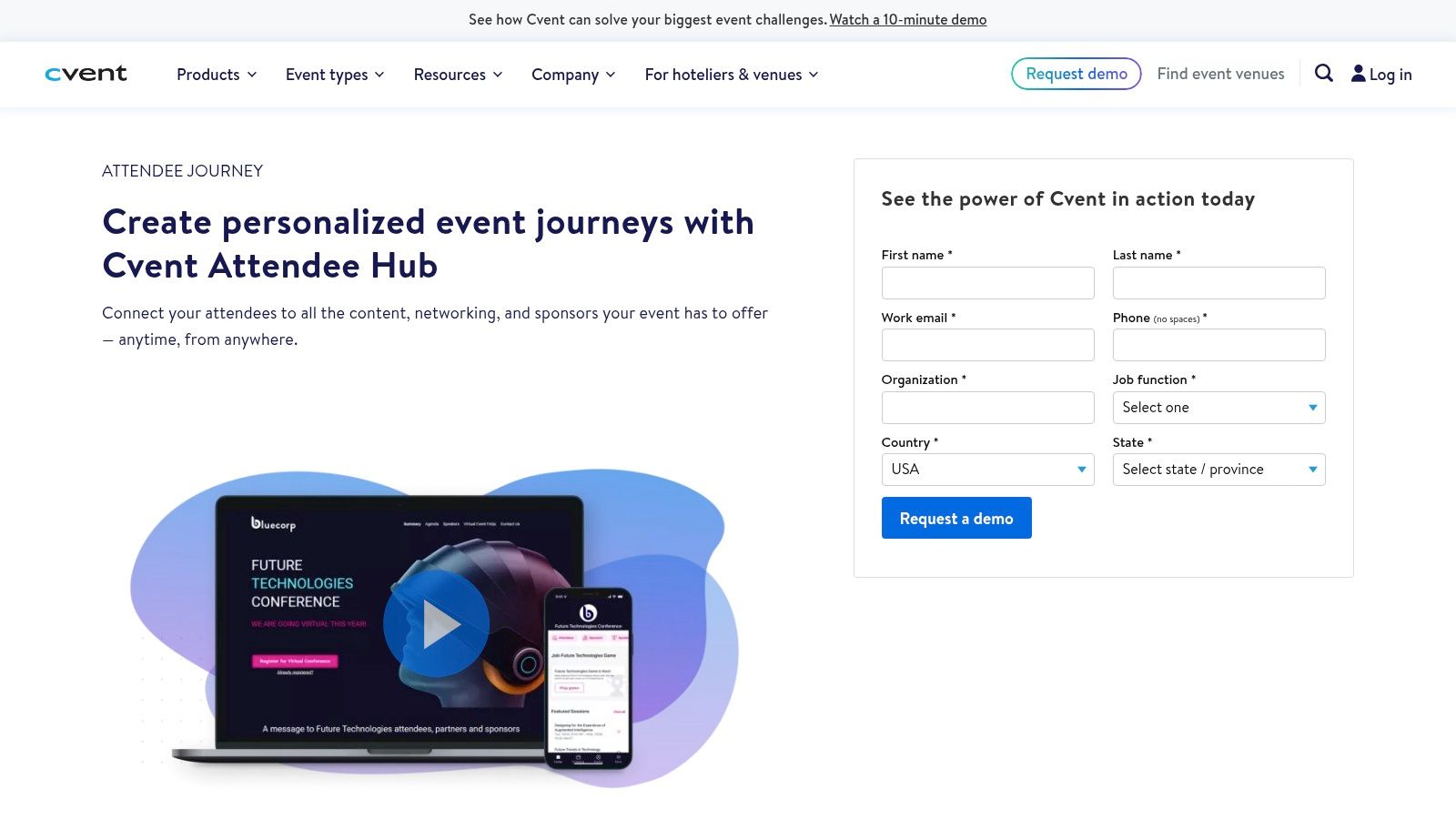
For a revenue-focused leader, Cvent provides a comprehensive dataset within its own walls. The platform's analytics can offer deep insights into attendee journeys and segment performance. The strategic consideration is how this rich, proprietary data integrates with other core business systems, such as a corporate CRM or financial reporting tools, to inform broader business strategy. The effective use of AI for event planning becomes more potent with such a unified dataset.
Key Details & Considerations
Best Suited For: Enterprise-level organizations managing large-scale conferences and exhibitions that require end-to-end logistical control.
Pricing: Custom pricing requires a detailed sales consultation, reflecting its enterprise positioning.
Implementation: The platform's comprehensive nature demands a significant implementation effort and organizational commitment.
Pros: A truly integrated platform that provides a single source of truth for event operations.
Cons: Represents a significant financial and operational investment; its complexity can be a barrier for smaller teams.
4. Webex Events (formerly Socio)
Now part of the Cisco ecosystem, Webex Events is designed for organizations that prioritize security, reliability, and integration with their existing corporate technology stack. Its strategic value lies in its ability to provide a consistent and secure data pipeline from events into the broader enterprise environment. The platform's strong mobile app serves as a unified hub for both in-person and virtual attendees, centralizing engagement data.
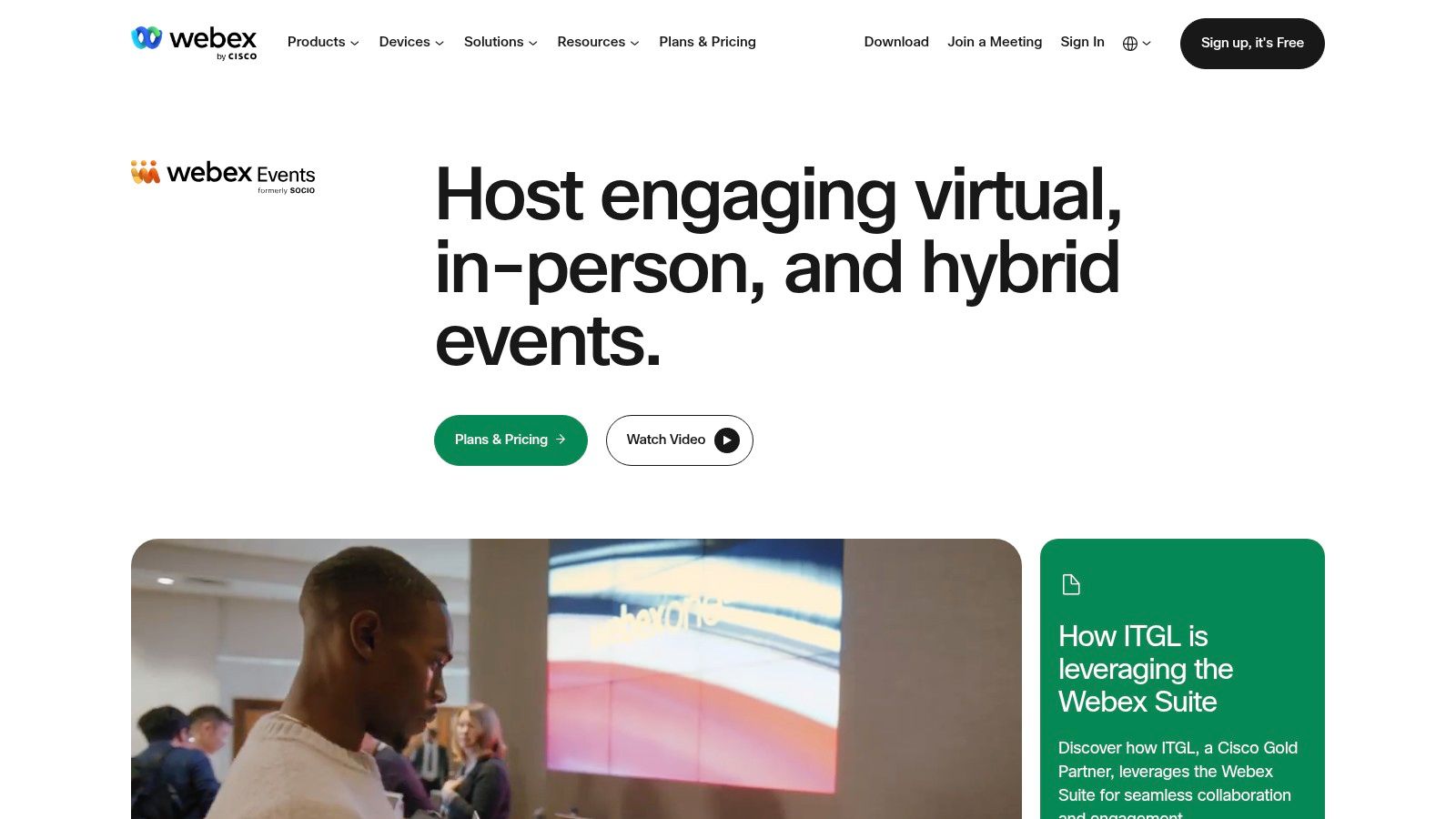
For a senior decision-maker, Webex Events offers a reliable flow of engagement metrics within a secure framework. The key strategic task is to ensure that this data is not isolated within the Webex ecosystem but is actively used to inform revenue-generating activities. This involves connecting its analytics to CRM and marketing automation platforms to track the influence of event participation on the sales funnel.
Key Details & Considerations
Best Suited For: Enterprises standardized on the Cisco Webex suite, where IT governance and security are primary concerns.
Pricing: Integrated into the broader Webex Suite, requiring a quote-based sales process.
Implementation: A clear step-by-step event planning process is needed to leverage its features within a strategic framework.
Pros: Enterprise-grade security and reliability; strong, unified mobile experience.
Cons: Can be less flexible than standalone platforms; pricing is bundled and less transparent.
5. Bizzabo
Bizzabo positions itself as an "Event Experience OS," signaling a focus on data and integration. It is designed for marketing-led organizations that view events as a core component of their revenue engine. The platform's strength is its ability to centralize data from registration, engagement, and onsite interactions, providing a holistic view of the attendee experience.
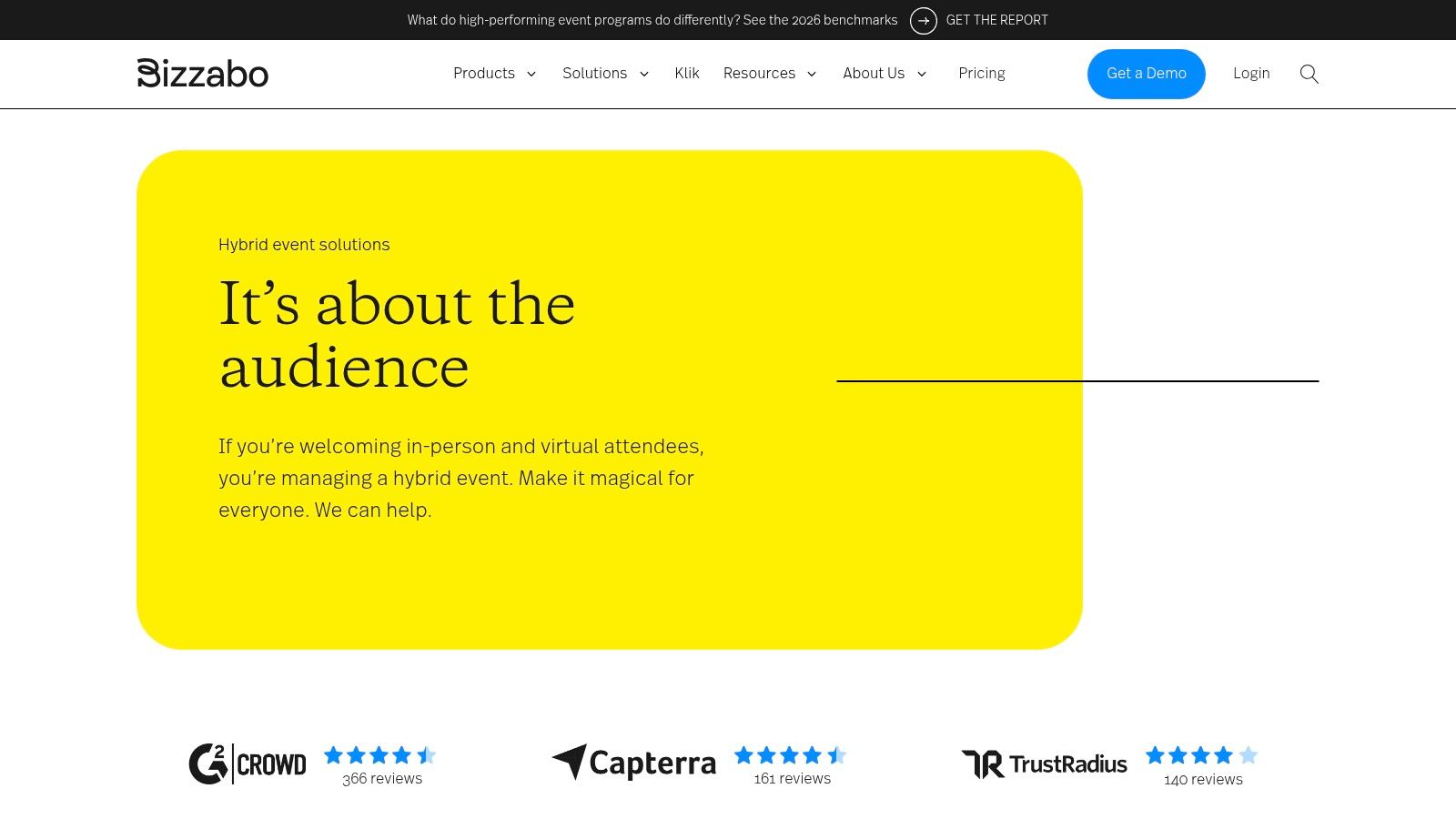
From a strategic perspective, Bizzabo is a strong candidate for feeding a central decision framework. Its focus on providing a unified data layer aligns well with the need for strategic clarity. The platform enables organizers to track engagement and demonstrate ROI, tying event activities to marketing pipeline and revenue. The key is to ensure its data output is fully integrated with the organization’s primary CRM to close the loop on revenue attribution.
Key Details & Considerations
Best Suited For: Mid-to-large organizations where the marketing team owns the event portfolio and is responsible for demonstrating ROI.
Pricing: Quote-based annual packages require a sales consultation.
Implementation: Maximizing its value requires a strategic commitment to using it as a central event data hub. Exploring various networking event ideas can enhance its matchmaking features.
Pros: Data-centric design focused on providing a unified view of the event experience.
Cons: Requires an annual commitment and significant strategic alignment to justify the investment.
6. vFairs
vFairs specializes in creating visually immersive virtual environments, particularly for exhibitions and trade shows. For hybrid events, it extends this capability with a mobile app and onsite services. Its strategic value for revenue-focused leaders lies in its strong feature set for exhibitors, which is designed to maximize lead generation and prove ROI.
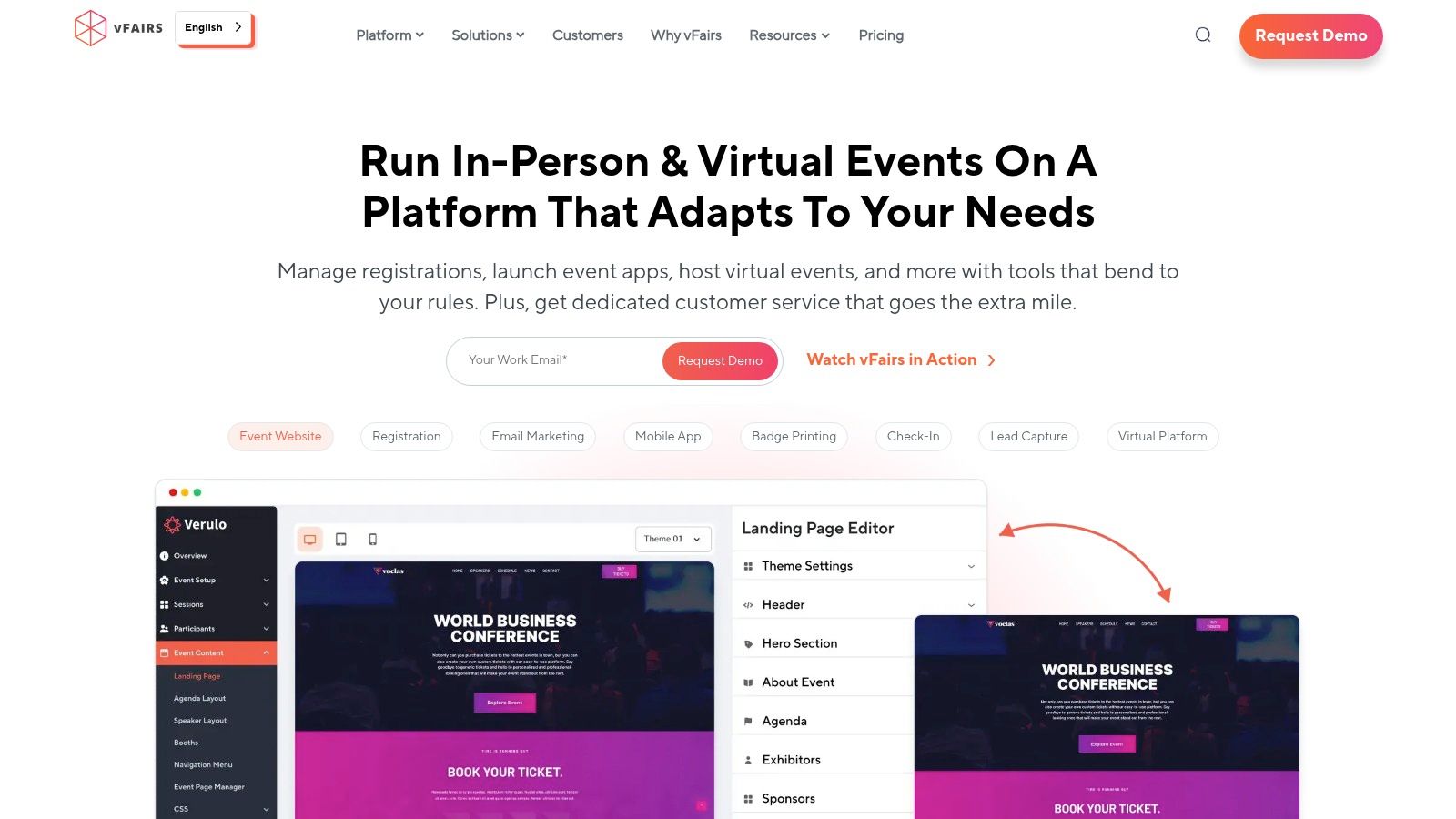
The platform generates rich data on exhibitor-attendee interactions, both in the virtual booths and through its onsite lead capture tools. This data is critical for proving value to sponsors and optimizing sponsorship packages for future events. The strategic challenge is to integrate this exhibitor-focused data with overall attendee engagement data to build a complete picture of event performance.
Key Details & Considerations
Best Suited For: Trade shows, career fairs, and other exhibitor-centric events where sponsor ROI is the primary success metric.
Pricing: Fully quote-based, depending on event complexity and service level.
Implementation: The process is managed by a dedicated project manager, ensuring a high level of support but offering less self-serve flexibility.
Pros: Excellent features for exhibitors that directly support lead generation and ROI measurement.
Cons: Pricing model lacks transparency; primary focus on exhibitions may make it less suitable for content-heavy conferences.
7. Airmeet
Airmeet excels at creating interactive and engaging virtual experiences, with features designed to foster networking and community. For hybrid events, it provides a polished virtual layer that complements a physical gathering. Its strategic value comes from its ability to generate deep engagement data, particularly around audience interaction and networking.
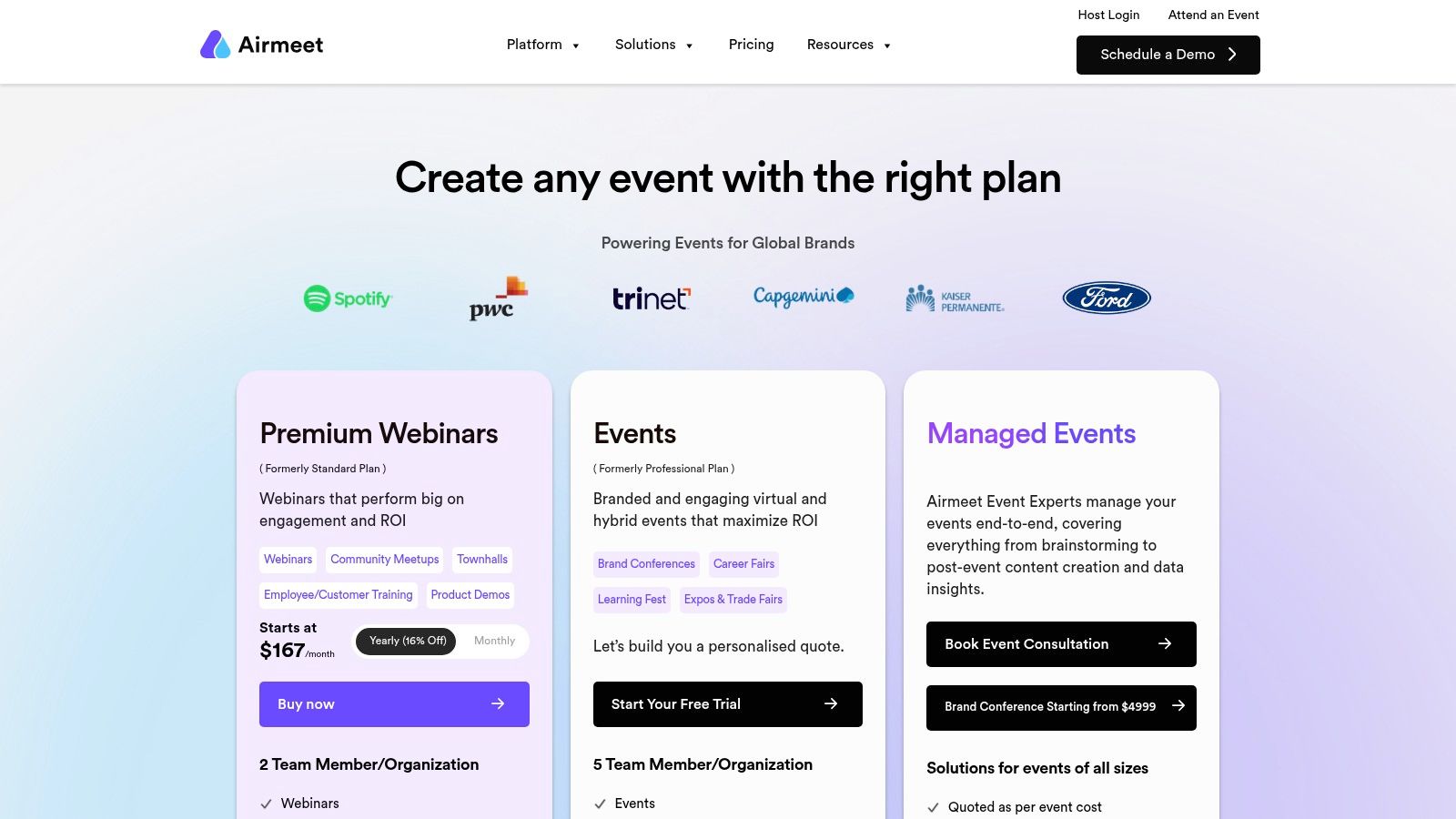
For a leader focused on revenue, this engagement data is crucial for understanding what content and formats resonate with the audience. This insight can inform future programming and sponsorship opportunities. The availability of production services also ensures a high-quality output, which protects brand reputation.
Key Details & Considerations
Best Suited For: B2B marketing events and conferences where audience interaction and a professional broadcast quality are key.
Pricing: Tiered pricing is available on the Airmeet website, offering some transparency for budget planning.
Implementation: The platform is user-friendly, but leveraging its optional professional services can help ensure a smooth execution.
Pros: Strong focus on interactive features that drive audience engagement.
Cons: The most advanced features are reserved for higher-priced plans, which may be a barrier for some organizations.
8. Hubilo
Hubilo provides a solid platform for both webinars and larger hybrid events, making it a versatile choice for marketing teams. Its strength lies in its analytics and branding capabilities, allowing organizations to create professional, data-rich experiences. The platform is designed to track user behavior and provide insights that can be used to qualify leads and measure engagement.
Strategically, Hubilo serves as an effective tool for the top and middle of the marketing funnel, generating engagement data that can inform lead scoring and nurturing campaigns. The key is to ensure seamless integration with a CRM to track the journey from event participant to customer, thereby proving the revenue impact of the event program.
Key Details & Considerations
Best Suited For: Marketing departments that run a mix of webinars and larger annual events and need a single platform to manage both.
Pricing: Hubilo offers transparent pricing for its webinar packages, but larger event plans require a sales consultation.
Implementation: Easy to set up for standard webinars; larger hybrid events require more planning to integrate onsite components.
Pros: Versatile platform for a range of event types; strong analytics for marketing teams.
Cons: Hybrid capabilities are less pronounced than its webinar features; full potential requires careful integration with a CRM.
9. Swapcard
Swapcard is an AI-powered networking and community platform designed for large exhibitions and trade shows. Its core purpose is to facilitate meaningful connections between attendees and exhibitors, and to measure the business value of those interactions. This makes it a powerful tool for proving exhibitor ROI.
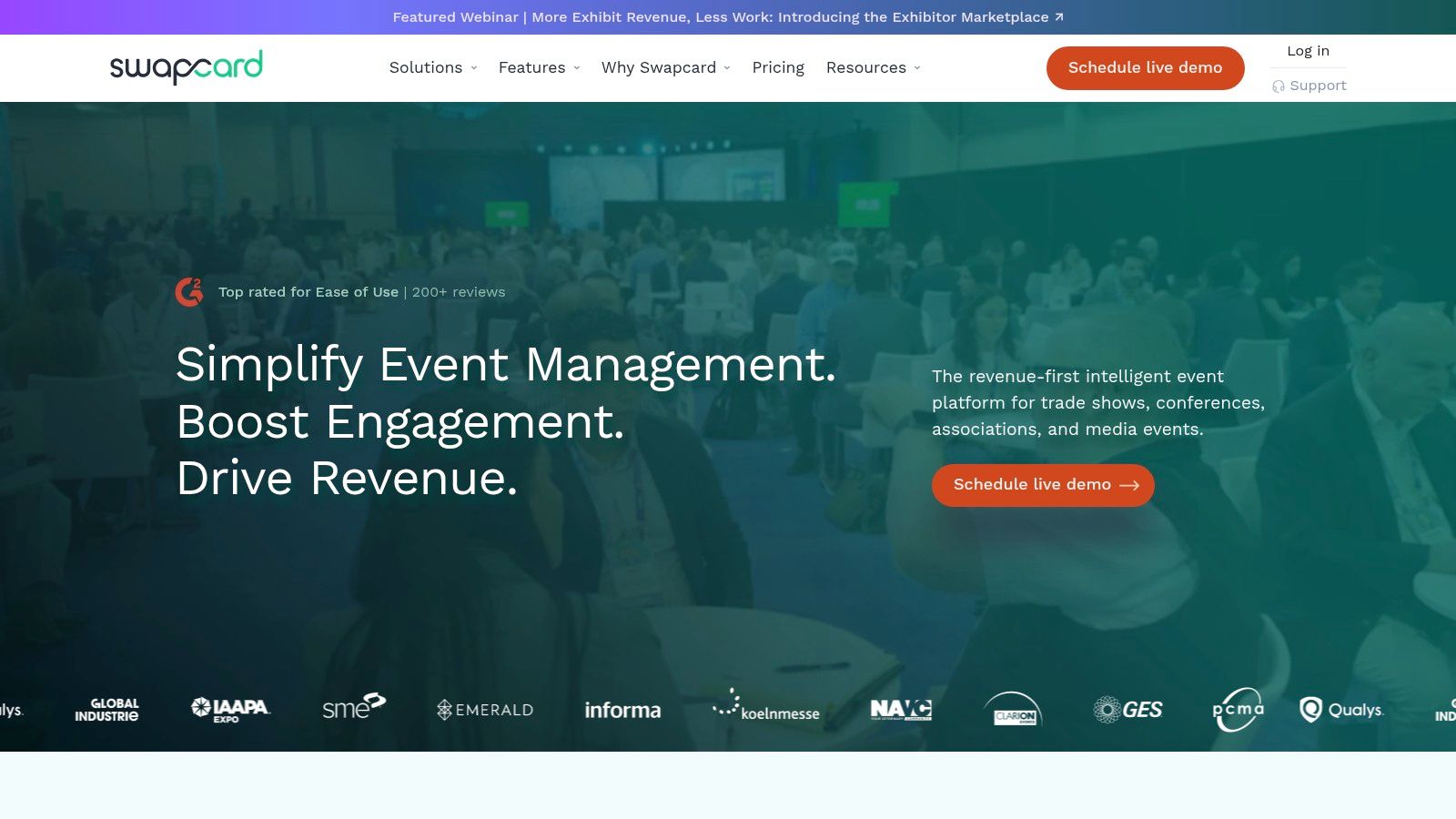
For a revenue-focused leader, Swapcard's strategic value is its ability to generate hard data on meetings scheduled, leads captured, and connections made. This data is essential for renewing sponsorships and justifying event budgets. The platform's annual model also supports year-round community engagement, extending the value of the event beyond a single point in time.
Key Details & Considerations
Best Suited For: Large B2B exhibitions and hosted-buyer events where networking and lead generation are the primary objectives.
Pricing: Quote-based pricing requires a sales consultation with the Swapcard team.
Implementation: Requires careful data preparation to optimize the AI-powered matchmaking features.
Pros: Exceptional networking and lead capture tools that deliver measurable value to exhibitors.
Cons: Pricing model can be complex and lacks transparency.
10. PheedLoop
PheedLoop offers a practical, all-in-one solution with a focus on transparent, modular pricing. It provides a comprehensive suite of tools for both onsite and virtual event management, making it an accessible option for associations and mid-market conferences. Its unified nature ensures that data from registration, mobile app usage, and virtual sessions is connected.
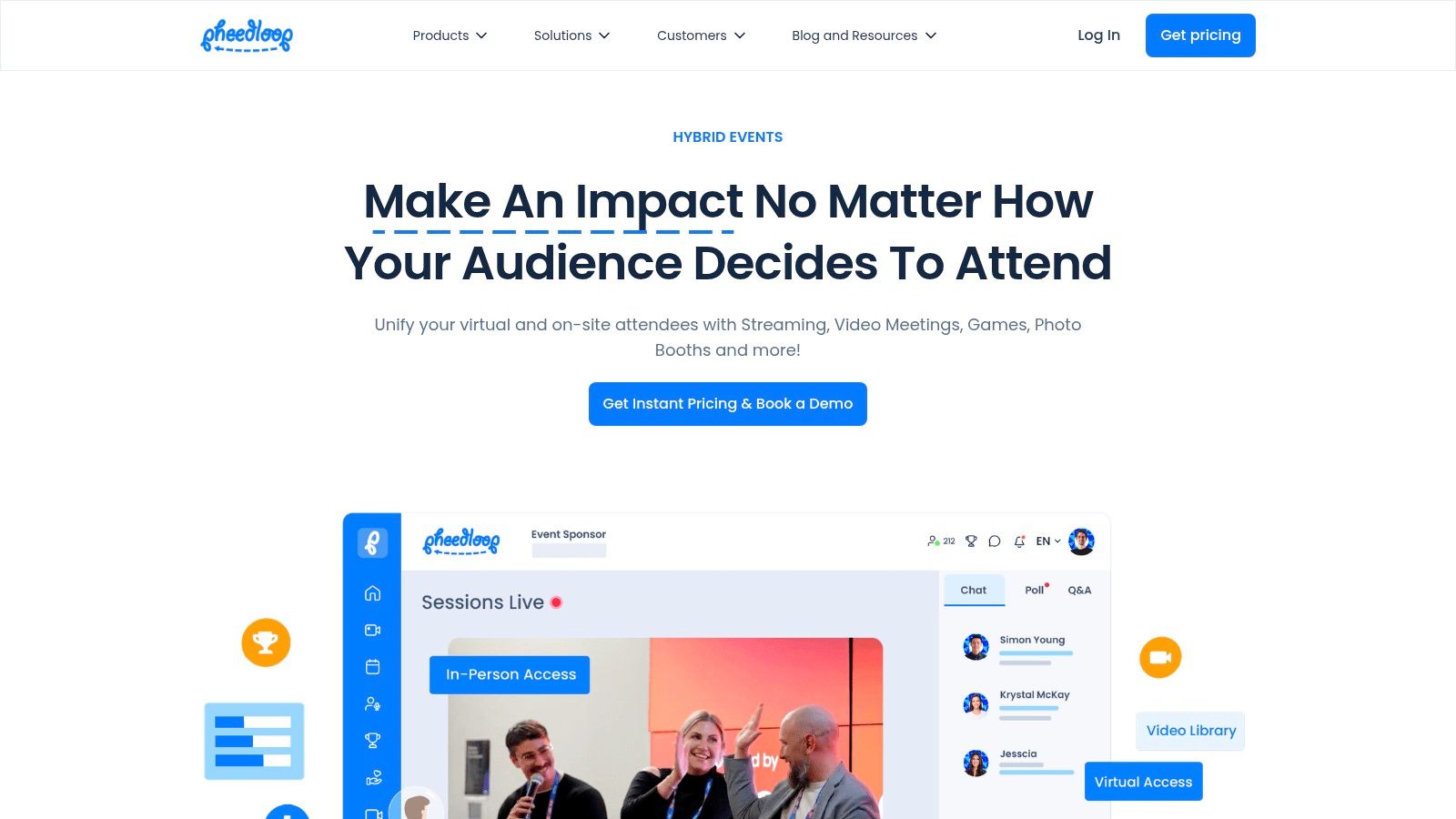
Strategically, PheedLoop provides a solid, integrated data foundation at an affordable price point. This allows budget-conscious organizations to begin building a more unified view of their event performance. The key is to leverage its reporting capabilities to track key metrics and demonstrate value to stakeholders.
Key Details & Considerations
Best Suited For: Associations and mid-sized conferences that need a cost-effective, all-in-one platform.
Pricing: Transparent, publicly available pricing allows for clear budget planning.
Implementation: The self-serve model allows for quick setup, starting with core modules like registration.
Pros: Budget-friendly with clear, modular pricing; integrated onsite and virtual tools.
Cons: May lack some of the advanced enterprise features of higher-priced platforms.
11. Brella
Brella is a networking-first platform that uses AI to facilitate high-value meetings. Its primary purpose is to connect the right people at events and to provide detailed analytics on those interactions. This focus on structured networking makes it a powerful tool for events where business development is the main goal.
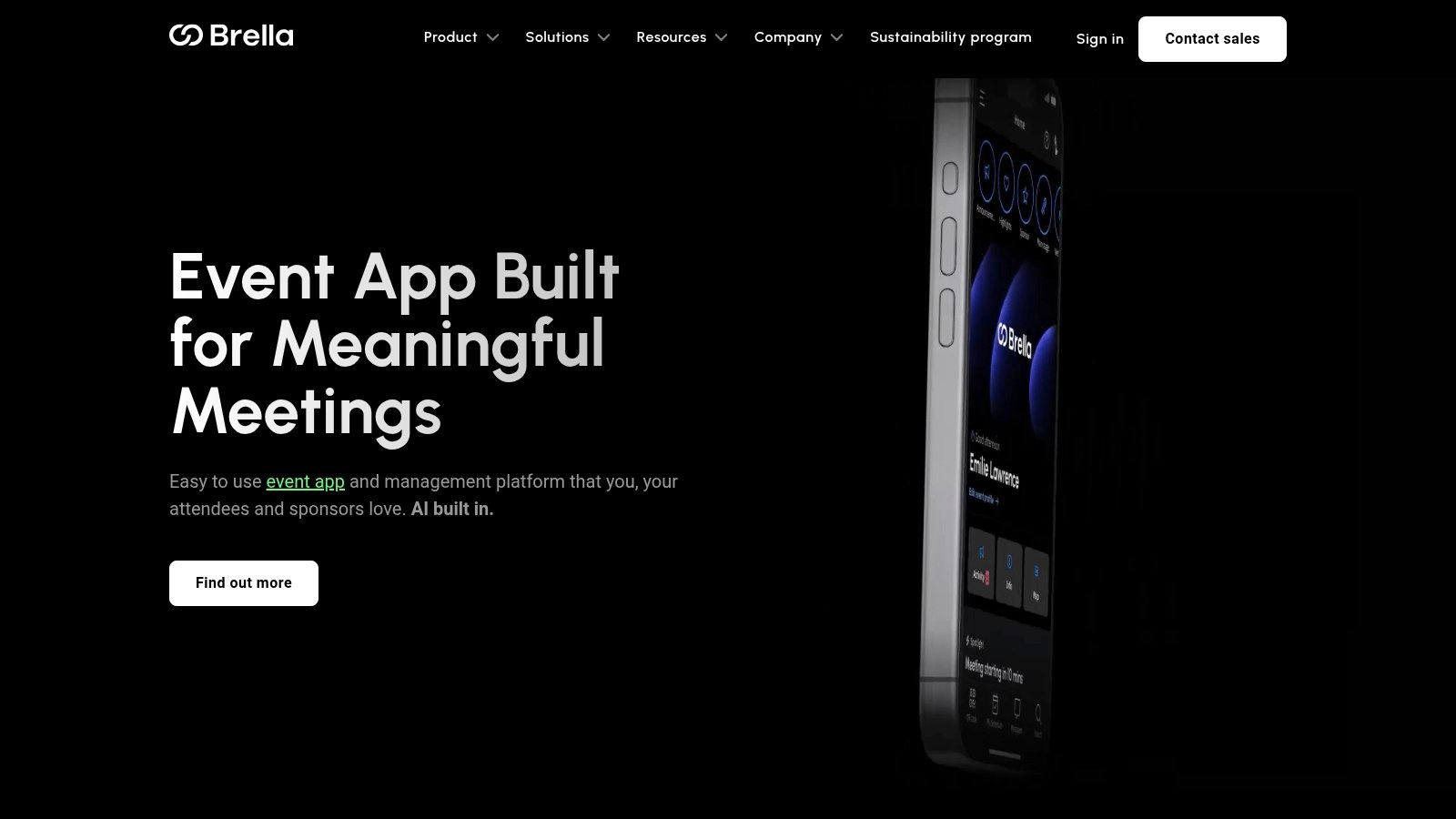
For a leader focused on revenue, Brella provides undeniable proof of networking ROI. It moves beyond vanity metrics to show exactly who met with whom and what the outcomes were. This data is invaluable for proving value to sponsors and demonstrating the business impact of the event.
Key Details & Considerations
Best Suited For: B2B conferences and hosted-buyer events where the primary objective is to facilitate high-quality meetings.
Pricing: Custom pricing reflects its premium, specialized positioning.
Implementation: Guided by the Brella team to ensure the matchmaking algorithms are optimized for the specific event audience.
Pros: Best-in-class AI matchmaking that drives measurable business outcomes.
Cons: Premium pricing and specialized focus may make it unsuitable as a standalone platform for all event types.
12. Accelevents
Accelevents offers a modern, all-in-one event platform with transparent pricing and a user-friendly interface. It provides a comprehensive set of tools for hybrid events, including registration, a mobile app, and onsite check-in, making it a strong contender for teams that value speed and ease of use.
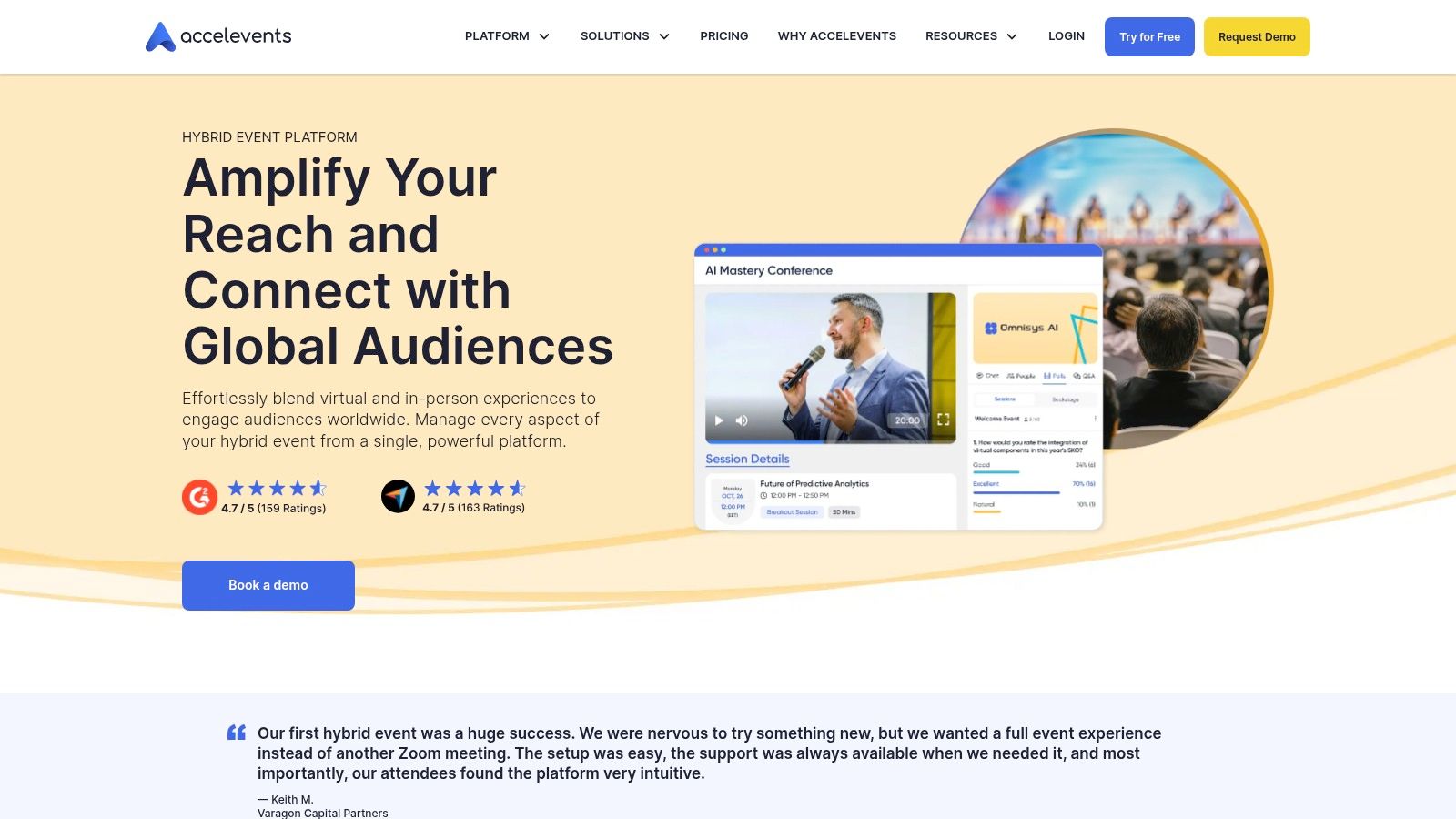
From a strategic perspective, Accelevents provides an accessible way to centralize event data. Its integrated nature reduces fragmentation, and its clear pricing allows for predictable budgeting and ROI calculations. This makes it a good entry point for organizations looking to build a more data-driven event strategy without the complexity of enterprise systems.
Key Details & Considerations
Best Suited For: Mid-sized organizations that need a comprehensive, easy-to-use platform with predictable costs.
Pricing: Public pricing for different tiers is available on the Accelevents website.
Implementation: Designed for rapid deployment, allowing teams to set up events quickly.
Pros: Transparent pricing and fast setup; good balance of features and usability.
Cons: Some advanced features are available only as add-ons, which can increase the total cost.
Moving From Platform Selection to Strategic Architecture
The analysis of these platforms confirms that the market is mature. Powerful tools exist to execute nearly any type of hybrid event. However, this technical capability is not the endgame. The persistent challenge for senior leaders is translating the vast amounts of operational data these platforms generate into a coherent strategic narrative that speaks to revenue, retention, and ROI. The blind spot is not in the execution, but in the reconciliation of data after the event concludes.
A truly strategic approach requires moving beyond the selection of a single platform and toward the design of a resilient decision-making architecture. This involves architecting a technology stack where your chosen hybrid event platform acts as a critical data source, feeding a central clarity engine. This engine’s sole purpose is to ingest, reconcile, and analyze data from all touchpoints—virtual, physical, and digital—and connect it to your core business systems like your CRM and financial software.
This reconciled view is what enables confident, high-stakes decisions. It allows you to:
Connect Sponsor Investment to Pipeline: Move beyond impressions and demonstrate how a sponsor’s participation directly influenced qualified leads and closed-won deals.
Optimize Monetization Models: Use behavioral data to understand which content, speakers, and networking formats drive the highest value, allowing you to price tickets and sponsorships with precision.
Drive Long-Term Retention: Develop detailed profiles of attendee cohorts based on their holistic engagement, enabling personalized communication and fostering a loyal community.
The ultimate goal is to build an infrastructure that delivers predictable growth. This is not about finding one platform to do everything, but about ensuring every component of your tech stack contributes to a unified, revenue-focused view of performance. When evaluating potential platform partners, the critical questions should focus on data accessibility, API robustness, and their ability to integrate into your broader decision framework. The right platform will not only help you deliver an exceptional event experience but will also serve as a vital component of the engine that drives your business forward.
Choosing a powerful event platform is an operational necessity. Building a decision infrastructure around it is a strategic imperative. TalkValue provides the AI-native engine to unify data from across your event ecosystem, delivering the clarity required for confident, revenue-driven leadership. If your goal is to move beyond simply managing events to architecting a system for predictable growth, a conversation about building a unified framework is the logical next step.


FAQ