For senior event leaders, the pressure to demonstrate ROI has never been more intense. Yet, the common approach to evaluating the technology meant to drive that ROI—the event management software comparison—is fundamentally misaligned with the goal. The industry remains fixated on feature-by-feature bake-offs, meticulously comparing registration tools, mobile apps, and ticketing tiers. This process, while seemingly diligent, perpetuates a structural weakness that quietly suffocates revenue potential.
The accepted wisdom is that a comprehensive feature set equates to a superior solution. We build exhaustive spreadsheets, score vendors on tactical capabilities, and select a platform that appears to “do everything.” This logic is flawed. It treats event technology as a logistical toolkit rather than a strategic infrastructure for growth. The result is a patchwork of disconnected systems that excel at isolated tasks but fail to provide the one thing a decision-maker truly needs: a clear, unified view of the entire event portfolio and its direct impact on the business.
This isn’t a tooling problem; it’s a visibility problem. And this visibility gap is the primary structural barrier preventing event portfolios from becoming predictable, scalable revenue engines.
Moving Beyond Features to Strategic Infrastructure
The conventional software comparison process leads organizations to adopt systems that fragment data by design. An attendee’s registration data lives in one system, their on-site engagement data in another, and their long-term customer history in a corporate CRM like HubSpot. Each platform performs its function, but the connections between them are either non-existent or require brittle, manual workarounds.
This fragmentation creates a state of chronic operational drag. Teams spend countless hours exporting spreadsheets, cleaning data, and attempting to reconcile disparate reports—time that should be invested in strategic planning and revenue optimization. More critically, this fractured view makes it impossible to answer foundational business questions. Who are our most valuable attendee cohorts across the entire portfolio? Which sponsorship activations consistently deliver the highest ROI? How does event engagement influence long-term customer retention?
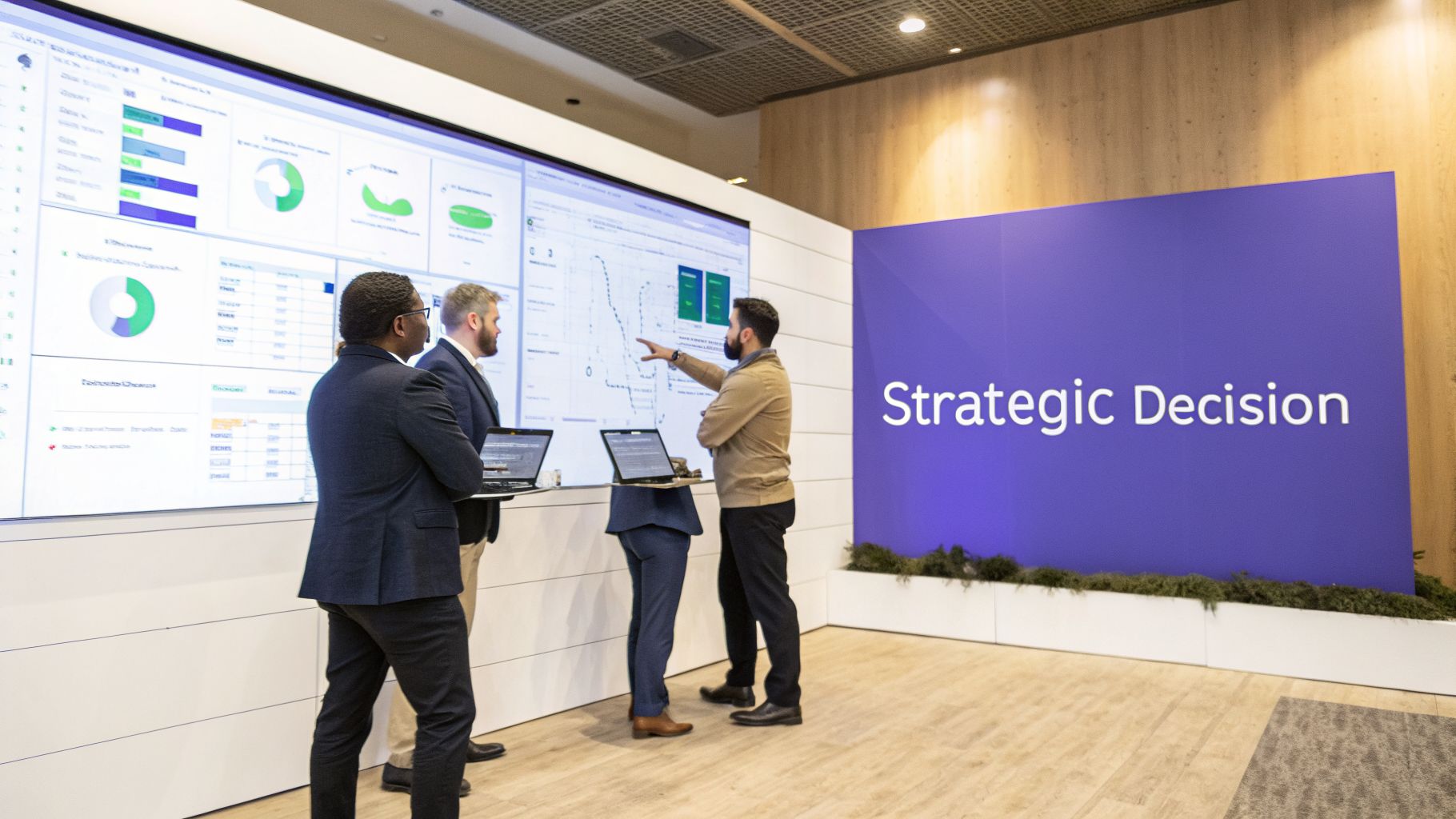
A strategic reframe is necessary. The evaluation must shift from tactical features to the core architectural pillars that enable decision clarity and drive financial outcomes. The critical question is not "What can this tool do?" but "Does this infrastructure unify our data to reveal our most significant growth opportunities?"
This reframing elevates the discussion from a simple software purchase to an investment in the central nervous system of your event business. An effective event infrastructure must be assessed on its ability to deliver three non-negotiable outcomes:
Data Reconciliation: The capacity to automatically consolidate attendee, sponsor, and financial data from all touchpoints into a single, reliable source of truth. This is the bedrock of strategic visibility.
Workflow Automation: The ability to eliminate the high-volume, low-value manual tasks that consume operational resources, freeing teams to focus on high-impact activities like sponsor relations and attendee experience design.
Revenue Intelligence: The power to connect every operational activity directly to a financial result, providing clear, actionable insights into cohort value, monetization efficiency, and future revenue potential.
Evaluating event technology solutions through this lens ensures the chosen platform serves as a foundational component of the organization's growth strategy, not just another subscription line item.
Calculating the True Cost of a Disconnected Decision Framework
In an event management software comparison, the stated subscription cost of a platform is often the most misleading metric. Leaders frequently justify a fragmented technology stack—piecing together disparate tools for registration like Eventbrite, engagement apps like Whova, and marketing automation—under the assumption of cost savings. This calculation is a strategic misstep.
The true cost of a disconnected system is not measured in licensing fees but in the compounded financial impact of operational friction and revenue leakage. Every data silo is a point of value destruction. When registration data is isolated from the CRM, marketing efforts remain generic and inefficient. When sponsor engagement metrics are trapped within a mobile app, renewal conversations lack the concrete ROI evidence needed to justify premium investments.

The Direct Impact of Data Fragmentation on Revenue
A disconnected data architecture actively inhibits revenue growth. Without a unified view of attendee history, it becomes impossible to identify and nurture high-value customer segments. Opportunities for targeted upsells—premium workshops, exclusive networking events, or early access to future conferences—are lost. This isn't a minor oversight; it's a structural flaw that imposes an artificial ceiling on attendee lifetime value and overall event profitability.
The damage extends directly to monetization from sponsorships. Today’s sponsors demand sophisticated, data-backed proof of value. A fragmented system cannot provide a cohesive narrative of engagement. Without a unified profile that links an attendee’s registration data to their session attendance, booth visits, and networking activity, it is impossible to deliver the granular analytics required to secure and grow high-tier sponsorship revenue.
The most significant expense of a fragmented technology stack is not the software itself, but the strategic paralysis it induces. An inability to see the complete picture prevents informed decisions about resource allocation and growth investments.
The operational drag is a further drain on resources. Teams expend significant payroll hours on manual data reconciliation—a low-value task that should be automated. This operational inefficiency also cripples organizational agility. Capitalizing on market opportunities requires clean, accessible data. A patchwork of applications ensures that critical business intelligence is always delayed and unreliable, undermining the capacity for swift, data-driven strategic moves.
As the global event management software market is projected to reach USD 16.11 billion by 2026, the competitive stakes are escalating. An integrated decision-making infrastructure that eliminates manual work and unlocks revenue insights is no longer a competitive advantage; it is a prerequisite for survival and growth. Discover more insights about these market trends from Fortune Business Insights. A responsible event management software comparison must account for this total cost of ownership, looking beyond monthly fees to the lost revenue, wasted resources, and missed strategic opportunities. Learn more about mitigating these costs by using AI for event planning.
The Architectural Divide: Point Tools vs. Unified Platforms
A strategic assessment of event technology moves beyond surface-level features to examine the underlying architecture. This architectural distinction is what separates systems designed for managing logistics from infrastructures built for driving revenue. Most solutions fall into one of two camps: point solutions (or suites of siloed tools) and truly unified platforms. The difference in their ability to impact business outcomes is profound.
The Point Solution and All-in-One Suite Model
Point solutions, like Eventbrite or Luma, are designed to execute a specific task, such as ticketing, exceptionally well. All-in-one suites, such as Whova, bundle multiple functions like registration, a mobile app, and basic engagement tools into a single package. While convenient for managing a single event, this model often creates a closed data ecosystem.
The core limitation is that attendee data generated within these systems—registration details, session check-ins, networking messages—remains isolated. Integrating this valuable information with core business systems like a central CRM (HubSpot, for example) requires manual exports or fragile, third-party connectors. As a result, a comprehensive view of an attendee's journey across multiple events and touchpoints remains elusive. This architectural choice inherently limits the ability to measure lifetime value, personalize long-term engagement, or demonstrate event impact on broader business objectives. It is an architecture optimized for event execution, not for portfolio growth.
The Unified Growth Platform Model
A unified growth platform is architected on a different premise. Its primary function is not just to execute tasks, but to serve as a central hub for all event-related data, integrating natively with the organization's core systems. This model is designed for data reconciliation and strategic visibility.
In this architecture, registration is not merely a transaction; it is the initial data-capture event that builds a rich, persistent attendee profile. Every subsequent interaction—session attendance, sponsor engagement, poll responses—enriches this central record. Because the platform is designed for seamless, bidirectional data flow with the CRM, this intelligence becomes immediately actionable for marketing, sales, and strategic planning.
This unified approach provides the clarity required to answer critical revenue questions. It allows leaders to identify which attendee cohorts are the most profitable, which event formats drive the highest retention, and how sponsor activations translate into measurable business leads. It transforms the event portfolio from a series of disconnected activities into an interconnected, measurable, and optimizable revenue channel. Knowing how to measure event success becomes an integrated function of the business, not a post-event reporting exercise.
Architectural Capability Comparison
The strategic implications of these architectural differences become clear when mapped against core business needs.
Strategic Outcome | Point Solutions / All-in-One Suites | Unified Growth Platforms |
|---|---|---|
Data Visibility | Siloed by event. Creates fragmented attendee records. | Unified across the portfolio. Provides a single, historical view of each attendee. |
Decision-Making | Based on isolated, event-specific reports. | Based on reconciled data, enabling portfolio-level strategic insights. |
Revenue Impact | Limited to direct ticket and sponsorship sales for a single event. | Enables measurement of attendee lifetime value and long-term retention impact. |
Operational Efficiency | Requires significant manual data export and reconciliation. | Automates data flow between events and core business systems (e.g., CRM). |
This distinction is fundamental. While point solutions and all-in-one suites can effectively manage the logistics of an event, only a unified platform provides the decision-making infrastructure required to strategically manage and grow an entire event portfolio. The choice in an event management software comparison is not between features, but between two fundamentally different operating philosophies. For a deeper analysis of registration systems, see our guide to the best event registration software.
A Decision Framework for Strategic Alignment
The final stage of an event software evaluation should not be a frantic rush to sign a contract. It is a moment for calm, strategic assessment. Before committing to a platform that will shape your operational capacity and revenue potential for years, leadership must ensure the choice aligns with the organization's long-term growth objectives. This requires moving past the vendor’s narrative and answering a series of foundational questions.
This framework is designed to expose any misalignment between a platform’s capabilities and your strategic imperatives.
1. The Data Reconciliation Test
A modern event strategy is impossible without a single, reliable source of truth.
Portfolio-Level Visibility: Will this platform provide a unified view of attendee and sponsor engagement across our entire portfolio, or will it perpetuate the existence of isolated data silos for each event?
Historical Clarity: Can we, with this system, instantly access the complete history of any given attendee—every event attended, every session joined, every sponsor interaction—to understand their long-term value?
Integration Integrity: Does the platform integrate natively and seamlessly with our core CRM, or will it rely on manual exports and fragile third-party connectors that create operational bottlenecks and data integrity risks?
2. The Operational Efficiency Test
A platform’s true cost is measured in the operational drag it either creates or eliminates.
The financial value of a platform is not its subscription price, but the sum of the high-cost, low-value manual labor it automates. If it does not reduce operational friction, it is not a strategic asset.
Workflow Automation: Where, specifically, will this platform automate the manual, time-consuming tasks—such as badge printing, check-in management, and post-event reporting—that currently consume our team’s resources?
Scalability: Is this system architected to support our growth? Will its processes and data infrastructure scale seamlessly as we launch larger, more complex events, or will it become an operational constraint?
3. The Revenue Impact Test
Ultimately, an event platform must function as a direct contributor to financial growth.
Sponsor Monetization: Does this platform provide the data-driven reporting and analytics our sponsors require to prove ROI, thereby supporting our ability to retain and grow sponsorship revenue?
Attendee Lifetime Value: Does the platform provide the necessary insights to identify our most valuable attendee cohorts and create targeted monetization opportunities, such as premium offerings and personalized event invitations?
Answering these questions honestly will move the evaluation from a tactical comparison of features to a strategic assessment of a potential long-term partner. If your prospective platforms do not provide clear, confident answers, they are likely not equipped to serve as the growth infrastructure your organization requires. For more on operational strategy, explore our guide to event management best practices.
The global market for event technology is evolving. Cloud-based platforms were valued at USD 3.01 billion in 2023, with analytics emerging as the fastest-growing component. This reflects a clear industry shift: decision-makers are prioritizing systems that convert engagement into measurable financial outcomes. Read the full research about these market dynamics from Technavio.
From Tooling to a Decision-Making Infrastructure
The conventional approach to comparing event management software—focused on features and tactical functions—is no longer sufficient for organizations seeking sustainable growth. This method overlooks the most critical challenge facing senior event leaders today: a structural lack of visibility that prevents data-driven decision-making and inhibits revenue optimization.
The necessary shift is one of perspective: from viewing event technology as a collection of tools to understanding it as the core infrastructure for your event business. The right infrastructure does not simply manage logistics; it unifies disparate data sources, automates low-value work, and provides the clarity needed to connect every operational decision to a financial outcome. It closes the visibility gap.
Choosing this infrastructure requires a disciplined evaluation process centered on architectural integrity and strategic alignment, not feature checklists. By focusing on a platform’s ability to deliver data reconciliation, workflow automation, and true revenue intelligence, leaders can select a system that serves as a powerful engine for long-term portfolio growth.
An event platform should not be a collection of disparate features. It should be the strategic infrastructure you use to drive predictable revenue. TalkValue unifies your data, automates your operational workflows, and provides the decision-making clarity needed to connect every event activity to your bottom line.
Explore how our unified platform can provide the visibility your event portfolio requires. Schedule a conversation to see it in action.


FAQ