
For senior event and exhibition leaders, the conversation around "top virtual event platforms" has become dangerously tactical. The industry defaults to comparing feature matrices—stages, booths, networking lounges—operating under the assumption that the best platform is simply the one with the most capabilities. This approach, however, masks a deeper, more consequential strategic gap.
The relentless focus on platform features and execution overlooks the primary role of an event portfolio: to function as a predictable revenue and growth engine. We invest in complex digital infrastructures but often treat them like disposable webinar tools, focusing on session delivery while attendee data, sponsorship value, and long-term cohort insights remain fragmented across disparate spreadsheets and siloed CRM instances. This structural blind spot prevents organizers from connecting event activity to tangible business outcomes, leaving significant revenue unrealized.
This analysis reframes the selection process. Instead of asking, "What can this platform do?" the strategic question becomes, "What business decisions can this platform enable?" We will assess leading platforms not by their feature count, but by their ability to provide the decision clarity required to drive monetization, increase retention, and build a predictable growth model for your event portfolio.
The following is an analysis of the market's leading options, examined through the lens of strategic decision-making. The goal is to shift from a checklist-driven choice to a strategic investment in a decision infrastructure that directly supports your revenue objectives. We will explore how each platform captures and surfaces the critical data needed by sponsors, sales teams, and leadership, empowering you to select a system that fuels sustainable growth rather than just delivering another event.
1. RingCentral Events (formerly Hopin)
RingCentral Events inherits a robust architecture from the well-known Hopin platform, positioning it as a strong contender among top virtual event platforms for complex, multi-track events. Many production partners are familiar with its backend, which can simplify execution for large-scale conferences and trade shows. The platform is engineered to replicate distinct digital spaces, offering dedicated stages for keynotes, breakout sessions, an expo area for sponsors, and structured networking.
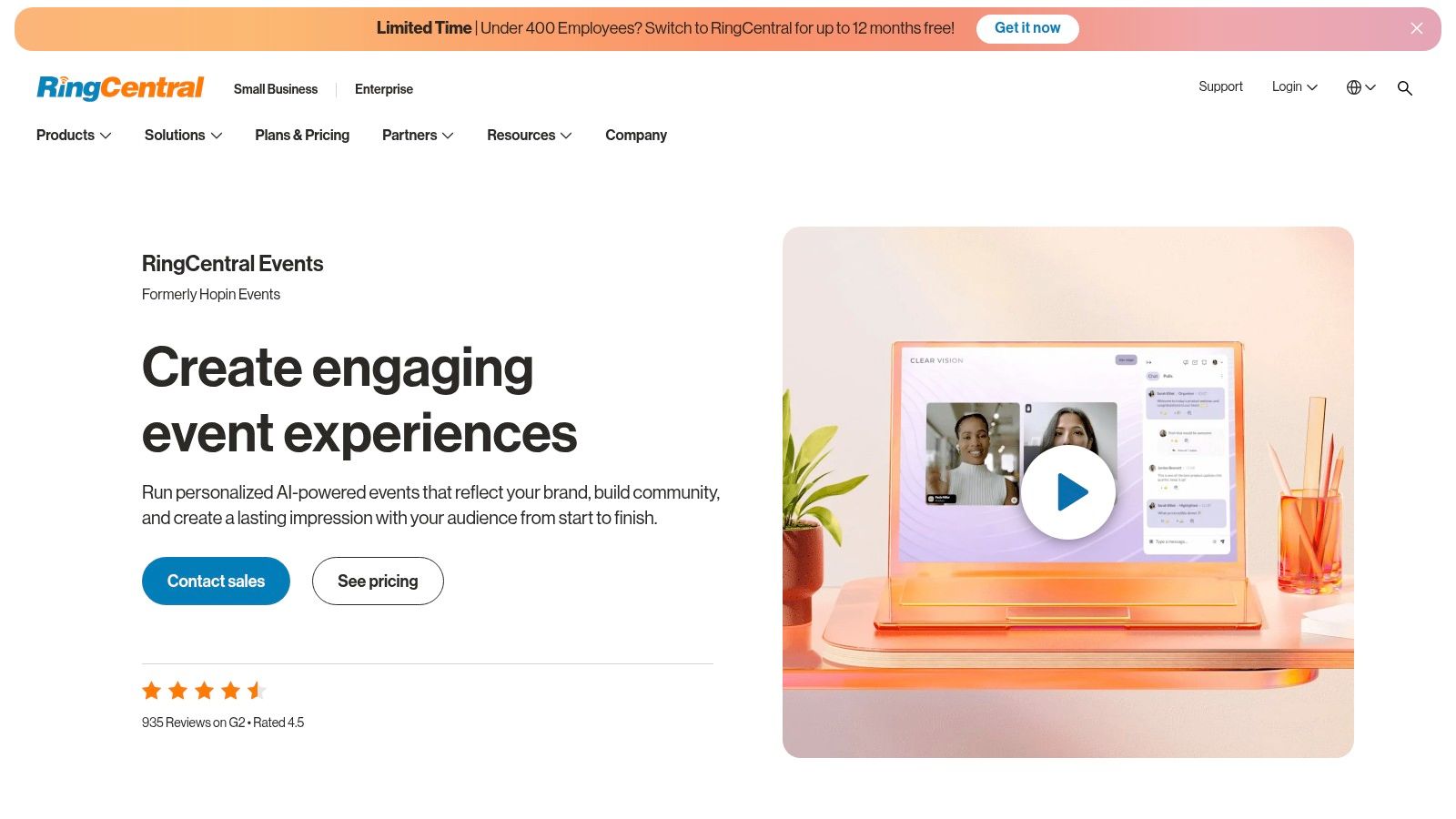
From a decision-making standpoint, its value lies in providing granular engagement data across these varied environments. For a portfolio director, this allows for analysis of which event formats—keynotes, interactive workshops, or exhibitor interactions—drive the most significant attendee engagement, informing future programming and investment. AI-driven tools for content generation and moderation aim to increase operational efficiency, freeing up strategic resources.
Key Considerations
Strategic Fit: Best suited for organizations running multi-day conferences or virtual expos where sponsor ROI and community interaction are key revenue drivers.
Monetization Structure: Attendee-based tiers and a business plan with predictable pricing for unlimited events (up to 100 attendees) support organizations with frequent, smaller-scale programs in their portfolio.
Operational Constraints: Achieving a high-end broadcast aesthetic often requires third-party production tools, which must be factored into the total cost of ownership and operational complexity.
With strong analytics and integration capabilities, RingCentral Events can provide the data needed to measure engagement and justify event spend. Understanding the full spectrum of available event technology solutions is key to selecting a platform that aligns with your strategic goals.
Website: RingCentral Events
2. Zoom Events and Zoom Sessions
Built upon the ubiquitous Zoom Meetings infrastructure, Zoom Events offers a dedicated management layer for multi-session virtual and hybrid gatherings. Its primary strategic advantage is familiarity, which reduces the friction of adoption for both attendees and internal teams. For global organizations standardized on Zoom, it represents a path of least resistance for scaling event programs, from internal all-hands meetings to large public conferences.
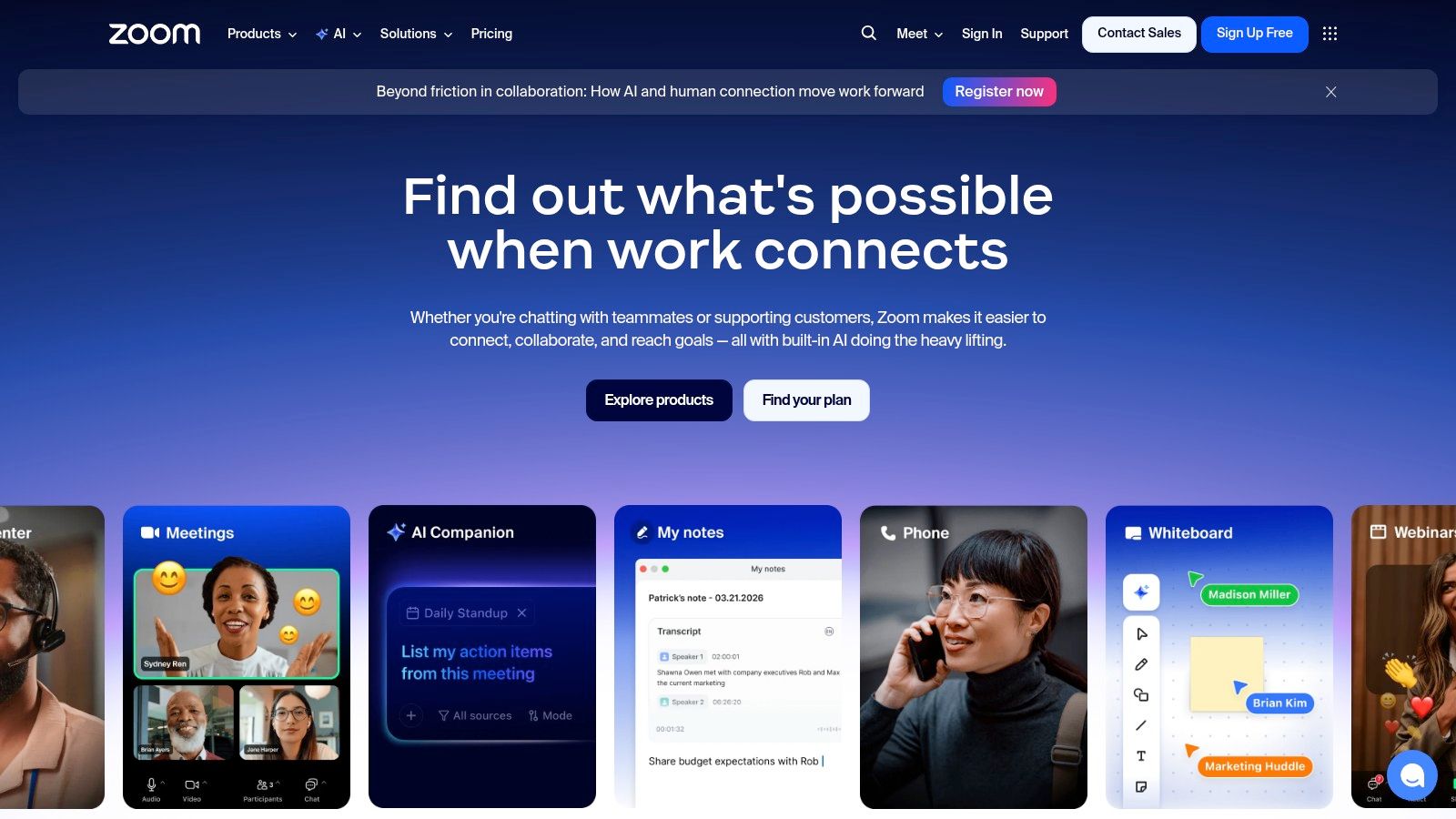
The platform introduces crucial event-centric features like a persistent lobby, customizable registration, and detailed analytics. Its ability to scale to very large audiences makes it one of the top virtual event platforms for major broadcasts. For decision-makers, this translates to a reliable, secure, and globally consistent delivery mechanism, but the strategic value depends on how effectively its engagement data can be extracted and integrated into broader business intelligence systems.
Key Considerations
Strategic Fit: Ideal for companies deeply integrated into the Zoom ecosystem, those executing single-track broadcasts to massive audiences, and organizations prioritizing enterprise-grade security.
Monetization Structure: Offers flexible plans, but the complexity of the pricing matrix necessitates a direct sales conversation to accurately forecast costs for a diverse event portfolio.
Operational Constraints: Accessing advanced event management capabilities requires a specific Zoom Events license. The event setup interface, while powerful, is less intuitive than more specialized event management competitors.
For planners exploring mixed-format events, understanding the nuances of different providers is crucial. You can see how Zoom and others compare by reading guides on the best hybrid event platforms.
Website: Zoom Events
3. Webex Events (formerly Socio)
Webex Events, originating from the acquisition of Socio, embodies Cisco's enterprise-grade approach to the event technology stack. It is architected as an end-to-end solution designed to manage the entire event lifecycle. For leaders of large, complex event portfolios, particularly within associations and B2B enterprises, its strategic appeal lies in its capacity for robust security, scalability, and deep integration into corporate IT ecosystems.
The platform’s strength is its unified nature, combining a powerful mobile app with a seamless virtual experience. This makes it a prime choice for hybrid events where reconciling data from in-person and online audiences is a significant challenge. Features like structured networking and video rooms are backed by Cisco's formidable scale and enterprise support, offering a high degree of reliability for mission-critical events and justifying its place among top virtual event platforms.
Key Considerations
Strategic Fit: Enterprise-level organizations and large associations hosting hybrid or virtual conferences that demand strong governance, security, and a polished mobile app experience.
Monetization Structure: Operates on an enterprise sales model with custom quotes. The investment is significant, reflecting its positioning as a comprehensive management system.
Operational Constraints: The extensive feature set can be overly complex and costly for smaller organizations or simple event formats. The lack of transparent pricing necessitates a formal sales consultation for budgeting.
The detailed analytics within Webex Events help organizers demonstrate value, a critical component when you need to measure event success and report on attendee engagement to stakeholders.
Website: Webex Events
4. vFairs
vFairs specializes in creating immersive, visually rich virtual environments, making it a distinct choice for expos, career fairs, and trade shows. The platform is designed to mirror the structure of a physical event, with customizable lobbies, exhibition halls, and auditoriums. For organizers whose revenue model is heavily dependent on sponsorship and exhibitor ROI, vFairs positions itself as one of the top virtual event platforms by prioritizing sponsor visibility within a visually engaging framework.
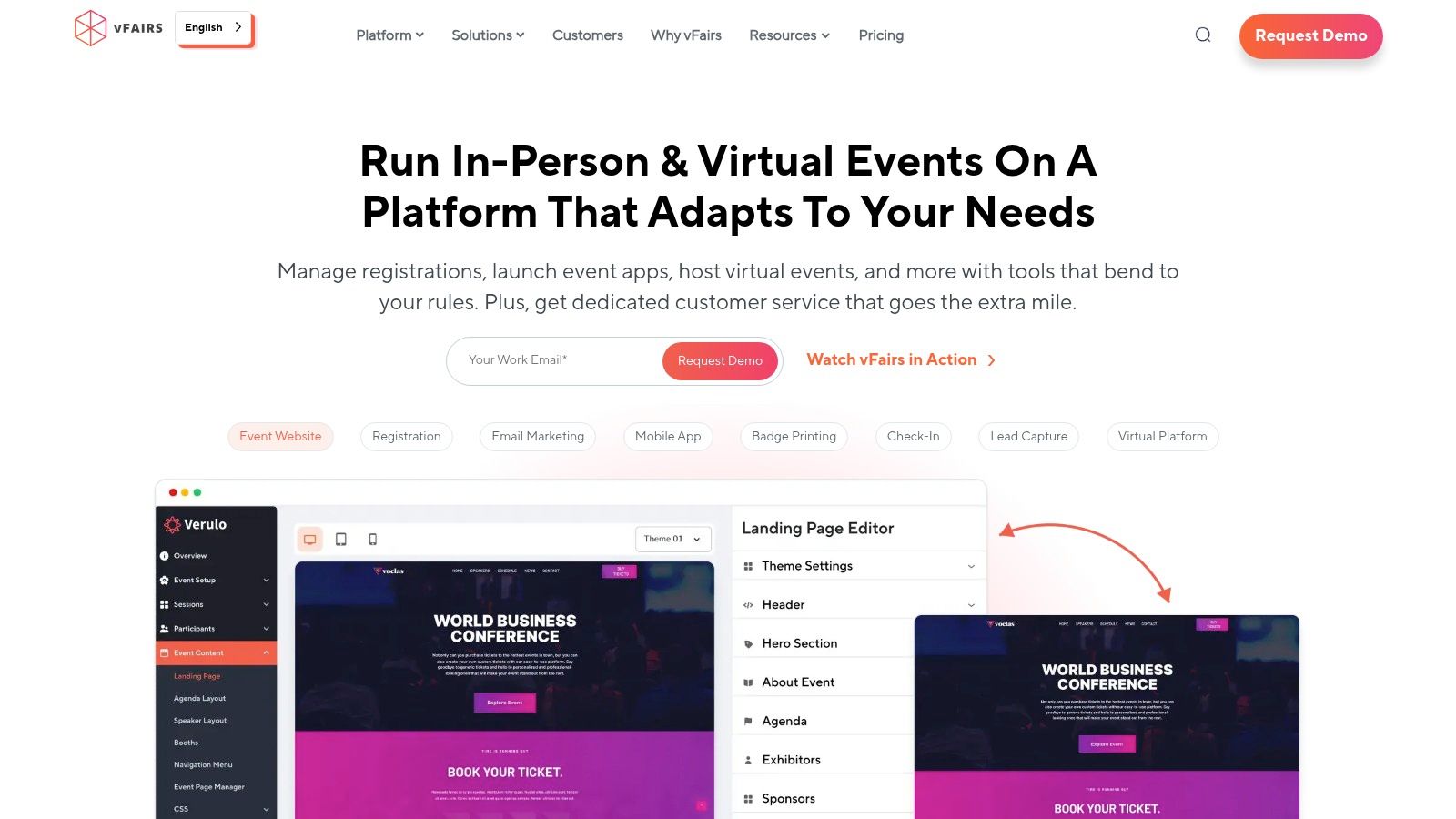
A key differentiator is its hands-on support model, assigning a dedicated project manager to each client. This reduces the technical burden on event teams, but more strategically, it acts as an extension of the operational team for custom builds. For decision-makers, this translates to a lower internal resource cost for execution. The platform’s analytics on attendee traffic and booth interactions provide direct evidence of sponsor value.
Key Considerations
Strategic Fit: Virtual job fairs, university open days, and trade shows where exhibitor lead generation and ROI are the primary measures of success.
Monetization Structure: Custom, quote-based pricing that reflects the managed-service model. The cost is higher than self-service platforms but includes significant operational support.
Operational Constraints: The high degree of customization and hands-on support requires longer lead times. Its specialization in exhibitor-focused events may make it a less optimal choice for content-centric or simple webinar formats.
Website: vFairs
5. Airmeet
Airmeet has carved out a position among top virtual event platforms by focusing intently on attendee interaction as a driver for lead generation. It is engineered to convert passive viewers into active participants, making it a strong strategic choice for marketing leaders whose event goals are tied to pipeline acceleration and community building. Its value proposition is built around creating structured, measurable interactions.
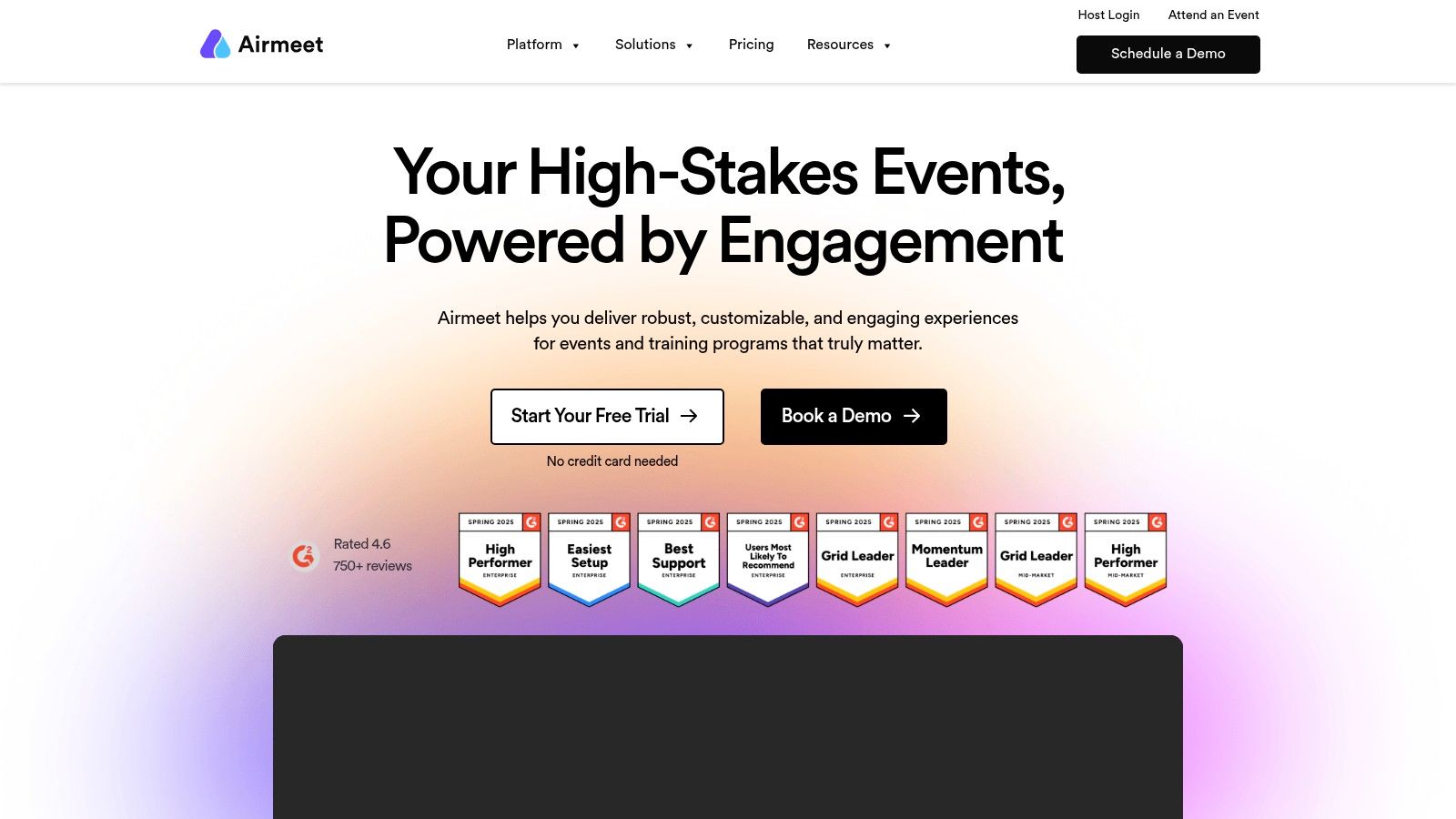
The platform's architecture includes networking-first formats like the Social Lounge and Speed Networking, which facilitate fluid conversations and one-on-one meetings. For a revenue-focused leader, these are not just features; they are mechanisms for creating qualified interactions that can be tracked and passed to a sales team. Transparent, accessible pricing models also allow teams to test and scale their event programs with predictable costs.
Key Considerations
Strategic Fit: Marketers focused on demand generation, community managers, and organizations where attendee-to-attendee and attendee-to-sponsor interaction is a primary KPI.
Monetization Structure: Flexible attendee-based pricing with pay-as-you-go options that support teams with variable event schedules and budgets.
Operational Constraints: While capable, executing very large or complex expo-style events may require more careful planning. The most advanced enterprise-grade features are reserved for higher-tier plans.
Airmeet's focus on structured networking helps organizers deliver measurable value to both attendees and sponsors. For those planning a mix of physical and digital experiences, understanding hybrid event best practices is crucial for a cohesive audience journey.
Website: Airmeet
6. Hubilo
Hubilo positions itself as a webinar and virtual events platform built for B2B marketers aiming to create a reliable lead generation engine. Its strategic strength lies in turning events into a systematic process for pipeline acceleration. The platform is designed for marketing teams that see virtual conferences and webinars as central to their demand generation strategy, not as isolated marketing tactics.
It provides branded event experiences with a focus on behavioral analytics and content repurposing, allowing marketing leaders to maximize the ROI of their event content. The inclusion of unlimited admin seats supports collaboration across larger marketing organizations. Deep, two-way CRM and marketing automation integrations are a core part of its value, enabling clear attribution and timely sales follow-up, which is why it is considered one of the top virtual event platforms for revenue-focused teams.
Key Considerations
Strategic Fit: B2B marketing teams running frequent webinars and virtual conferences where lead generation, sales pipeline attribution, and CRM integration are primary goals.
Monetization Structure: Offers clear packaging that delivers the best value for organizations with a high volume of webinars, making it a strategic choice for programmatic event marketing.
Operational Constraints: The most powerful analytics and integration features are often gated behind higher-tier plans, which is a key consideration for smaller businesses.
Hubilo’s marketer-centric workflows and data integrations enable faster lead management and clearer ROI reporting, directly connecting event activity to revenue outcomes.
Website: Hubilo
7. ON24
ON24 operates as an enterprise-grade digital experience platform designed for demand generation and professional education. It extends beyond simple event hosting to offer a suite of tools for creating webinars, virtual conferences, and persistent content hubs. For B2B marketing leaders, its strategic value is rooted in its ability to deliver deep engagement analytics, allowing for precise measurement of prospect interest and the handover of qualified leads to sales.
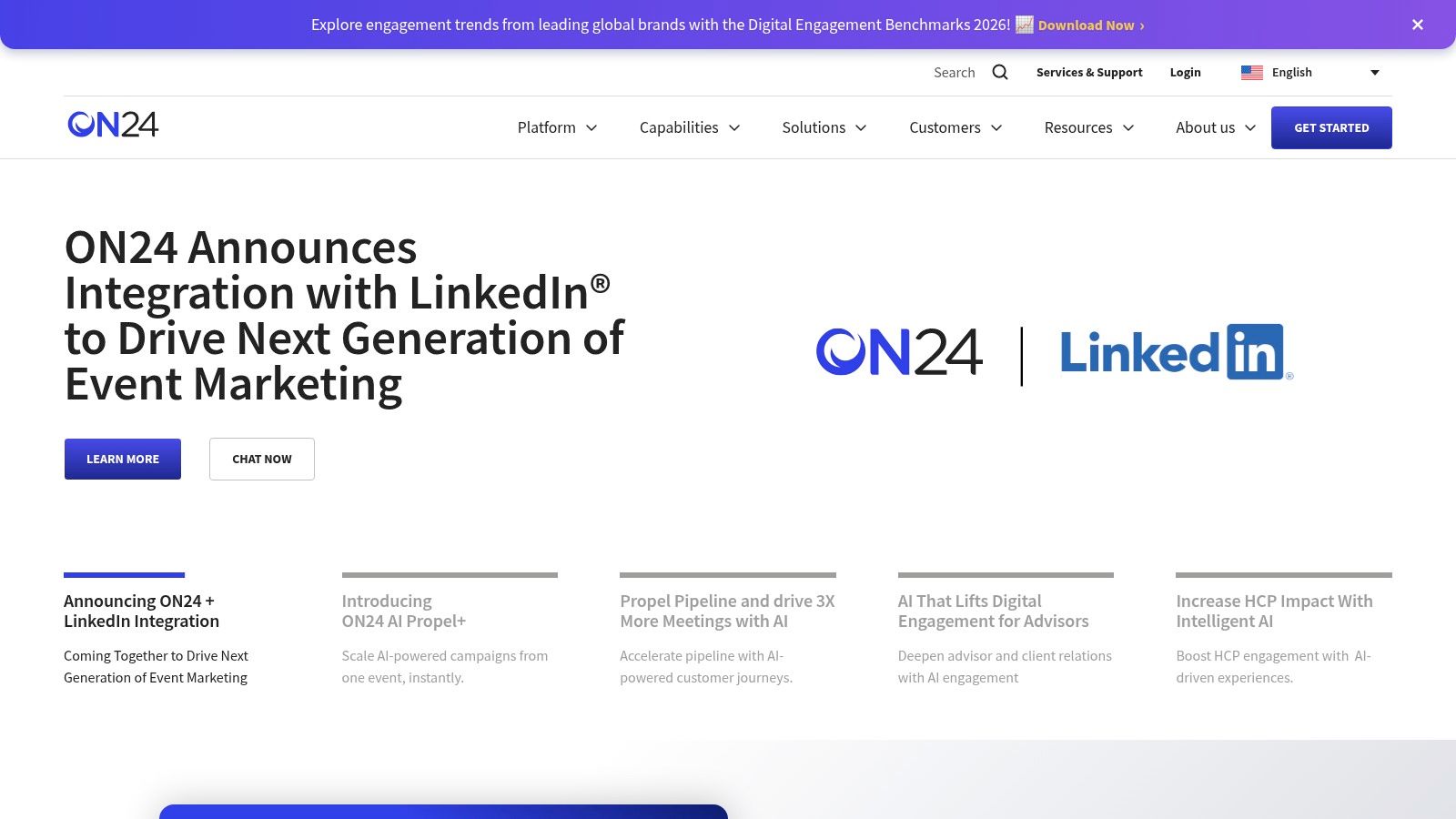
Its core strength is translating audience interactions—from poll responses to resource downloads—into actionable data, consolidated into an engagement score. This data-centric approach solidifies its position as one of the top virtual event platforms for organizations focused on demonstrating marketing ROI and pipeline contribution. The platform treats every interaction as a signal of intent.
Key Considerations
Strategic Fit: B2B companies focused on lead generation, customer marketing, and continuing education (CE) programs that require robust tracking and compliance.
Monetization Structure: Follows a custom enterprise pricing model. The total cost of ownership is significant and often includes production and support services, reflecting its enterprise focus.
Operational Constraints: Its strength in structured, data-rich webinars makes it less flexible for events centered on open networking. The enterprise pricing model makes it less accessible for businesses without a dedicated event marketing budget.
ON24's deep integrations with major CRM and marketing automation platforms solidify its position as a strategic infrastructure for serious demand generation.
Website: ON24
8. Bizzabo Event Experience OS
Bizzabo positions itself as an all-in-one Event Experience OS, designed to manage virtual, hybrid, and in-person events from a single, integrated platform. For event portfolio directors managing a mixed calendar of events, its strategic value lies in providing a consistent system for registration, marketing, and data management, reducing operational complexity and data fragmentation across different event formats.
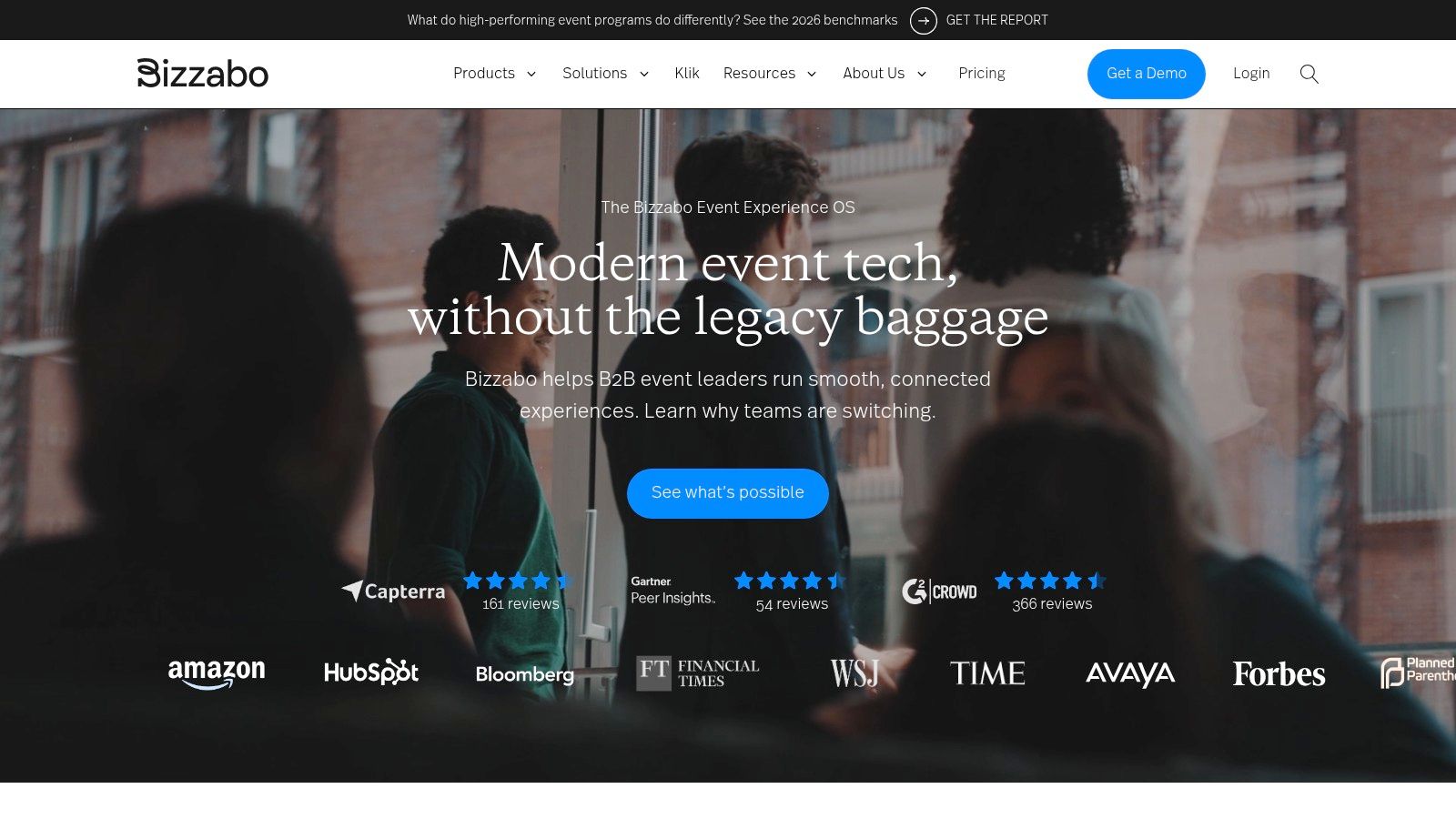
The platform’s strength is its modularity. Core functionality can be augmented with add-ons for dedicated virtual production support, advanced onsite solutions, and specialized portals for speakers and sponsors. This allows organizers to scale capabilities based on the specific revenue and engagement goals of each event, from a simple webinar to a complex international hybrid conference.
Key Considerations
Strategic Fit: Event teams managing a diverse annual calendar of in-person, virtual, and hybrid programs who need a unified data and management system to operate efficiently.
Monetization Structure: Offers transparent software pricing but requires a three-user minimum commitment. The total cost increases with the addition of modules for production or onsite services.
Operational Constraints: The sheer breadth of the OS presents a significant learning curve. Organizations must invest in training to extract the full strategic value from the platform.
Bizzabo is a notable platform among the top virtual event platforms due to its focus on unifying the event experience across all formats, backed by deep CRM and marketing automation integrations for robust analytics.
Website: Bizzabo
9. Cvent Attendee Hub
As a core component of Cvent's extensive ecosystem, the Attendee Hub is one of the top virtual event platforms for organizations already embedded within the Cvent universe. It functions as the virtual and hybrid layer for a powerful, all-in-one management suite. For leaders at large enterprises and associations, its strategic value is providing a single source of truth for registration, logistics, video delivery, and a unified mobile app experience at global scale.
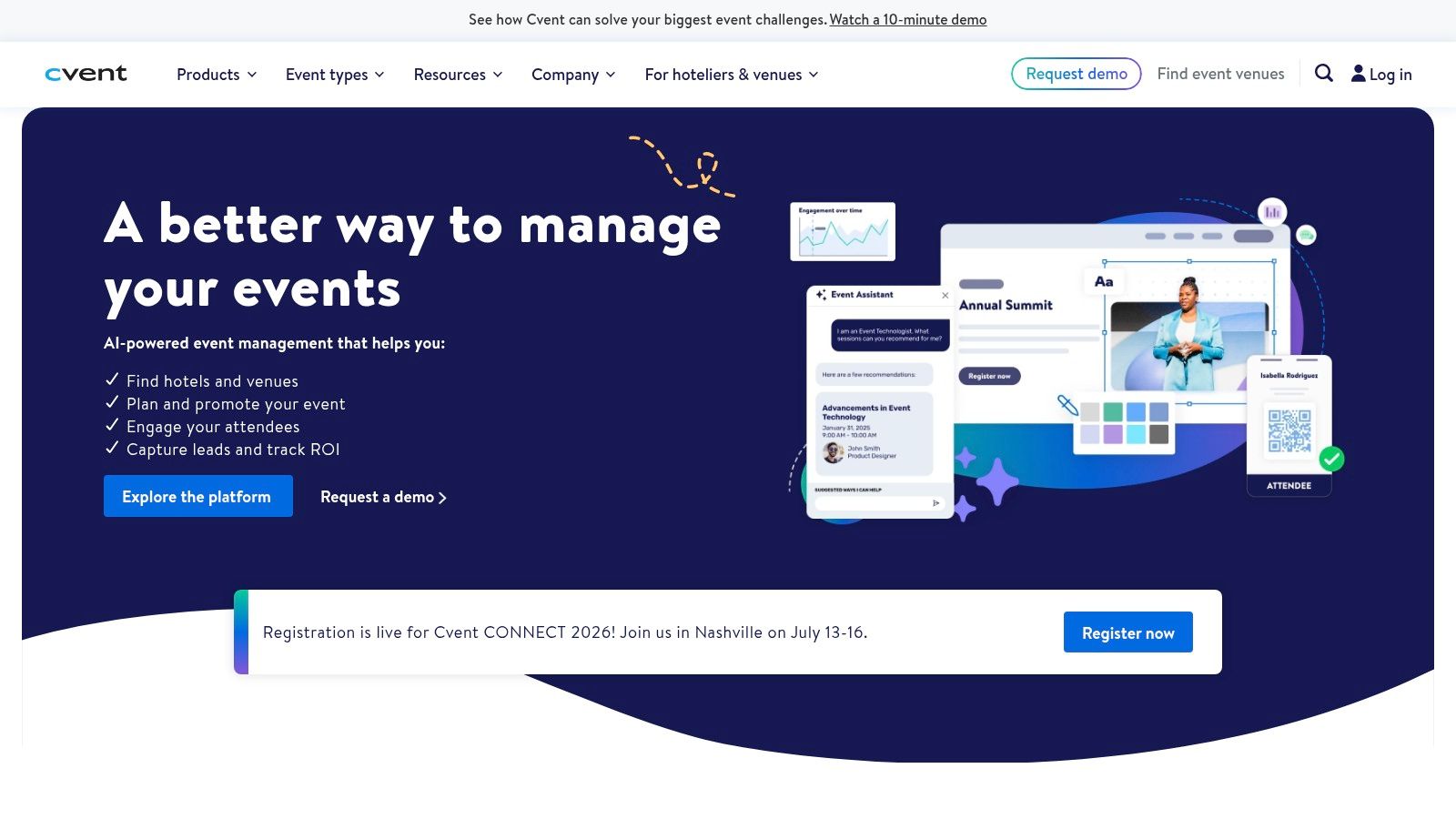
The platform’s strength is its deep integration with the broader Cvent stack, ensuring seamless data flow from registration and payment through post-event analytics. It provides a cohesive attendee journey with a virtual venue that supports live and on-demand video, interactive features, and robust tools for sponsor activation. This unified approach simplifies complex event operations and provides leadership with a consolidated view of a large, multifaceted event portfolio.
Key Considerations
Strategic Fit: Existing Cvent customers, large-scale conferences, and complex hybrid events requiring end-to-end management from a single, powerful vendor.
Monetization Structure: Enterprise-level sales cycle with custom pricing. The investment is substantial, reflecting its position as an all-in-one solution for complex event operations.
Operational Constraints: The pricing structure is not transparent and requires direct sales engagement. Video streaming usage may incur overage fees beyond contract limits, impacting budget predictability.
For organizations seeking a comprehensive system, Cvent provides undeniable power. Exploring the full landscape of the best event management software can help determine if this integrated model fits your specific needs.
Website: Cvent Attendee Hub
10. Goldcast
Goldcast is a marketing-led event platform designed for B2B leaders who must demonstrate direct revenue impact from their event programs. It functions as a central hub for webinars, virtual summits, and field marketing events, with a strong emphasis on turning live engagement into reusable content and measurable pipeline. The platform is built with enterprise needs in mind, offering controls for brand consistency and deep CRM integrations to connect event activity to sales opportunities.
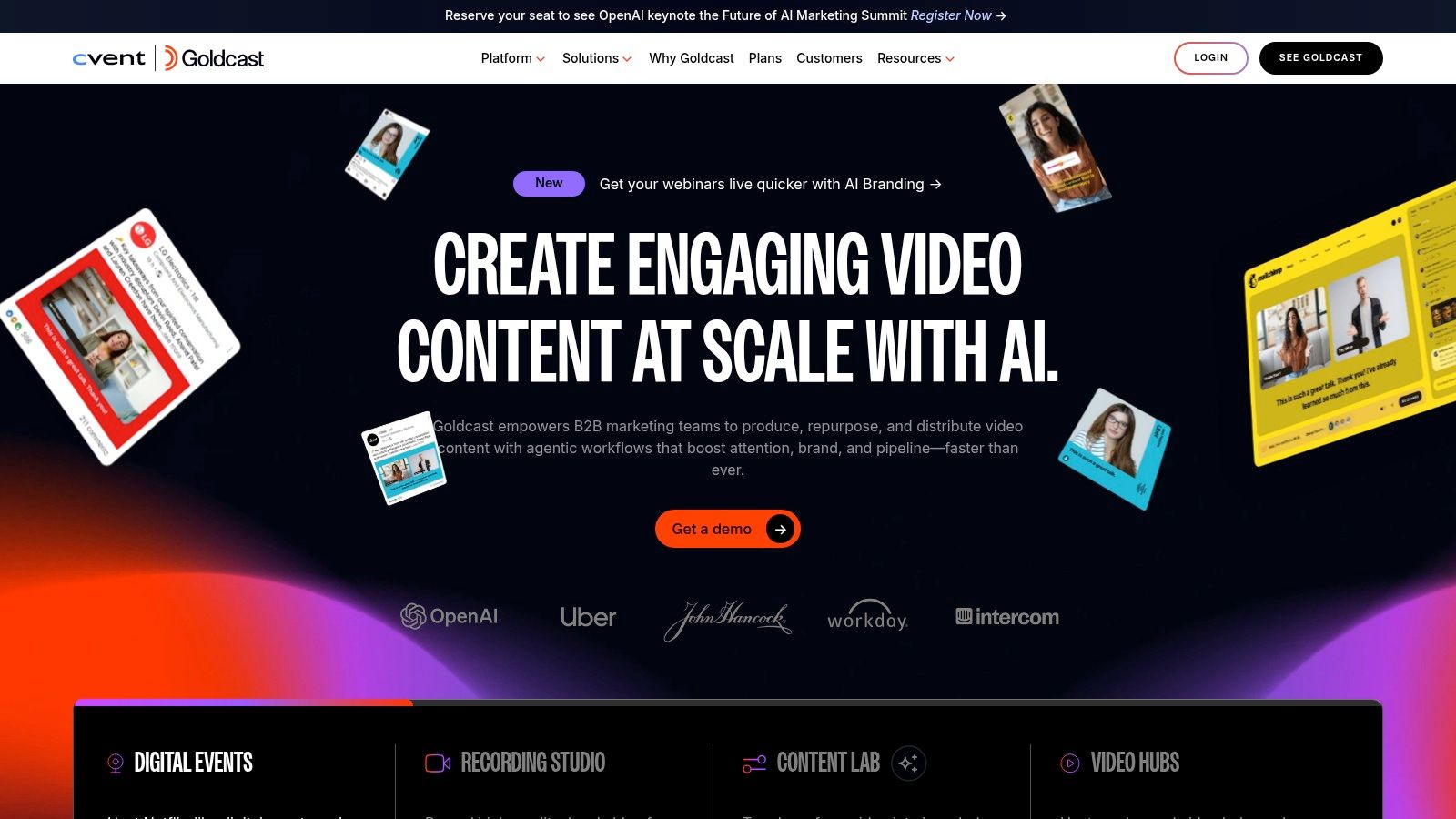
Its built-in studio features allow marketing teams to produce high-quality broadcasts without heavy reliance on third-party tools, controlling both brand and cost. A key strategic differentiator is its automated content repurposing workflow, which helps teams create on-demand video clips from a single event. This extends the content's lifecycle and maximizes the return on the initial event investment.
Key Considerations
Strategic Fit: B2B marketing teams focused on demand generation, pipeline acceleration, and creating a library of on-demand content from live events.
Monetization Structure: Pricing is managed through a direct sales process. Total cost can be affected by add-ons like dedicated "Content Seats" for team members focused on post-event operations.
Operational Constraints: Its sharp focus on B2B marketing makes it less ideal for internal or community events where intricate, open networking is the primary objective.
Goldcast's firm alignment with revenue goals makes it a strong contender among top virtual event platforms for teams needing to prove ROI. Its integrations with HubSpot, Salesforce, and Marketo ensure that attendee data flows seamlessly into existing marketing and sales systems.
Website: Goldcast
11. BigMarker
BigMarker establishes its place among top virtual event platforms with its remarkable flexibility, serving a wide spectrum of formats from single webinars to complex, multi-day conferences. The platform provides an end-to-end workflow, integrating registration, ticketing, and even onsite capabilities. This makes it a strong choice for organizations seeking a single, versatile system to manage a diverse event portfolio without committing to a more rigid, all-in-one enterprise suite.
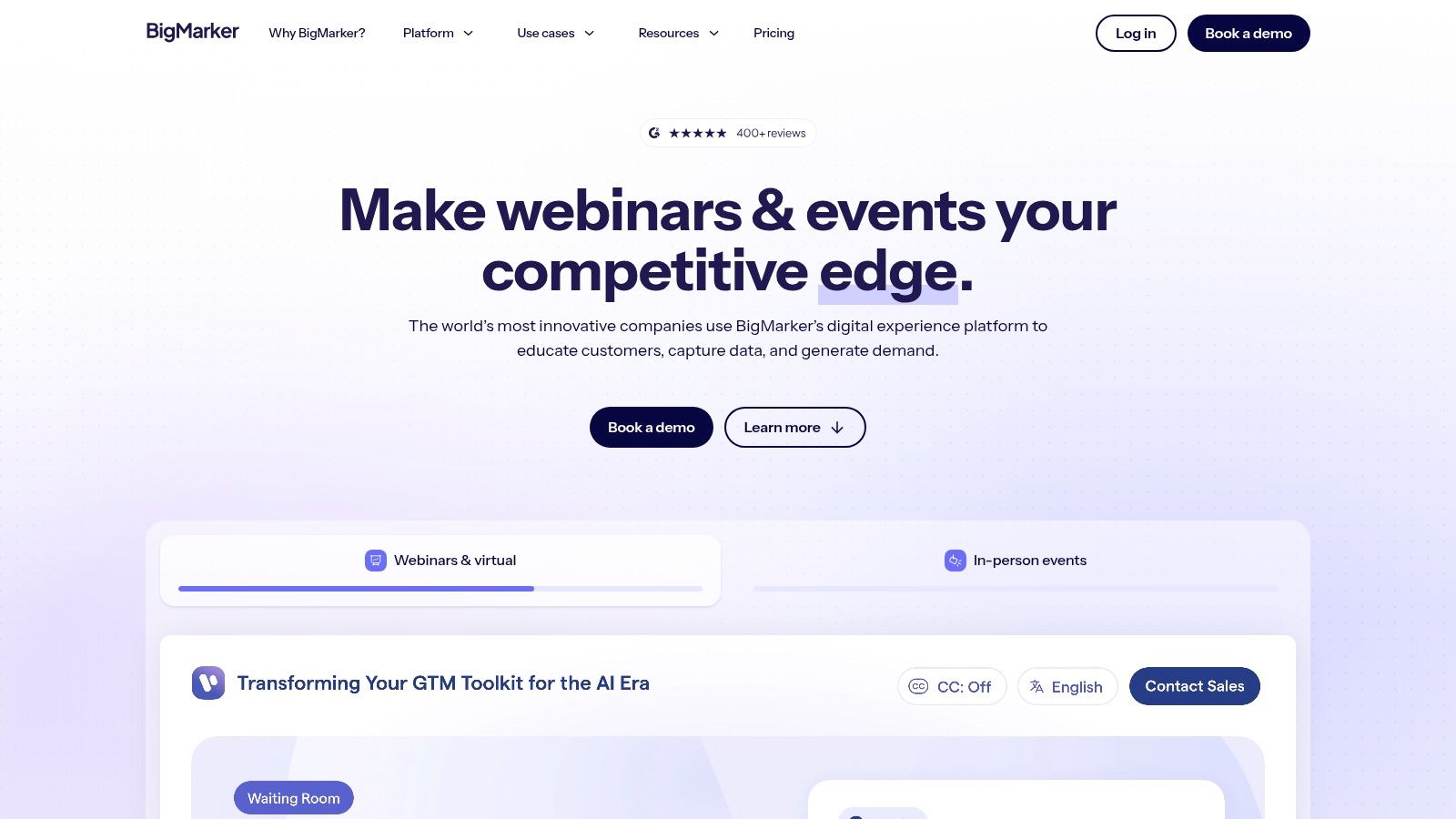
Its ability to create branded media hubs for hosting on-demand content allows organizers to extend the value of their events and continue generating engagement long after the live day. Native payment processing simplifies monetization for paid events, offering a direct path to revenue. For a strategic leader, BigMarker represents a highly adaptable infrastructure capable of supporting various business models, from lead generation to paid educational content.
Key Considerations
Strategic Fit: Marketing teams running webinar programs, associations managing continuing education, and companies hosting both internal and external hybrid events that require a flexible platform.
Monetization Structure: Pricing is primarily quote-based, tailored to specific event needs, though free trials are available to explore core functionality.
Operational Constraints: The lack of public pricing can make initial budget planning difficult. Executing large-scale, bespoke virtual environments may require support from BigMarker's professional services, adding to the total cost.
Website: BigMarker
12. SpotMe
SpotMe is an enterprise-grade event platform designed for organizations that prioritize security, deep CRM integration, and a consistent experience across all event formats. It provides a robust framework for building fully branded web and mobile event applications. The platform's architecture is particularly suited for security-conscious industries like finance and healthcare, where data governance is a primary consideration.
A key strategic differentiator for SpotMe is its predictable pricing model, which is not tied to the number of virtual attendees. For a finance leader or event director managing an annual budget, this approach removes a major variable and simplifies cost forecasting across an entire event program. Its commitment to compliance, holding certifications like SOC 2, offers the assurance required by large corporations.
Key Considerations
Strategic Fit: Enterprise clients in regulated industries needing a secure, scalable platform for a portfolio of internal and external events with deep marketing automation and CRM integration.
Monetization Structure: Custom enterprise pricing with a model independent of virtual attendee counts, which provides significant budget predictability.
Operational Constraints: The platform's depth and extensive customization options can present a learning curve for teams. Its enterprise focus means pricing may not be accessible for smaller organizations.
SpotMe stands as one of the top virtual event platforms for companies that require a secure, integrated ecosystem for their entire event strategy, not just a meeting tool.
Website: SpotMe
Top 12 Virtual Event Platforms Comparison
Platform | Core Features | UX / Quality ★ | Value / Pricing 💰 | Target Audience 👥 | Unique Selling Points ✨🏆 |
|---|---|---|---|---|---|
RingCentral Events (formerly Hopin) | Multi-session stages, expo booths, networking, 40+ integrations | ★★★★ | 💰$ Predictable entry / unlimited events | 👥 Mid→large conferences, communities | ✨ AI promo & Q&A moderation · 🏆 Strong analytics |
Zoom Events & Sessions | Lobby, multi-session agendas, sponsor areas, large broadcast scale | ★★★★ | 💰$$ Flexible plans; sales-led pricing | 👥 orgs standardized on Zoom / large broadcasts | ✨ Massive scale & enterprise delivery · 🏆 Familiar UX |
Webex Events (Socio) | Registration, mobile app, virtual venue, Video Rooms, enterprise governance | ★★★★ | 💰$$$ Enterprise sales pricing | 👥 Large conferences, enterprises | ✨ Deep mobile/onsite pairing · 🏆 Cisco security & support |
vFairs | Virtual expo halls, booths, gamification, managed services | ★★★★ | 💰$$$ Managed-service pricing (no free plan) | 👥 Expos, job fairs, high‑volume exhibitions | ✨ Hands‑on PM & custom expo builds · 🏆 Exhibition specialist |
Airmeet | Social Lounge, Speed Networking, polls, pay‑as‑you‑go plans | ★★★★ | 💰$–$$ Transparent entry & Flex plans | 👥 Marketers, community events, small→mid teams | ✨ Advanced networking formats · 🏆 Engagement‑first UX |
Hubilo | Branded experiences, behavior analytics, CRM/MA integrations | ★★★★ | 💰$$ Best value at higher webinar volume | 👥 B2B marketers focused on lead gen | ✨ AI repurposing & marketer workflows · 🏆 Two‑way CRM sync |
ON24 | Webinars, content hubs, deep engagement analytics, CE use cases | ★★★★ | 💰$$$ Enterprise / custom pricing | 👥 Demand-gen teams, compliance/CE orgs | ✨ Deep engagement scoring · 🏆 Enterprise analytics |
Bizzabo Event Experience OS | Registration, websites, mobile app, virtual & onsite, add‑ons | ★★★★ | 💰$$ Transparent software pricing; add‑ons apply | 👥 Year‑round mixed‑format organizers | ✨ All‑in‑one Event OS · 🏆 Rich OOTB features |
Cvent Attendee Hub | Virtual venue, mobile app, registration, sponsor activation, streaming | ★★★★ | 💰$$$ Enterprise sales & complex configs | 👥 Enterprises, associations, global events | ✨ End‑to‑end ecosystem · 🏆 Large‑scale reliability |
Goldcast | High‑quality live production, repurposing workflows, CRM integrations | ★★★★ | 💰$$$ Sales‑led pricing; content add‑ons | 👥 Revenue/content ops & field marketing | ✨ Auto‑repurposing workflows · 🏆 Studio‑grade production |
BigMarker | Webinars, webcasts, registration/ticketing, onsite check‑in | ★★★★ | 💰$$ Quote‑based; trials available | 👥 Flexible use cases: webinars→virtual programs | ✨ Customization & payment options · 🏆 Versatile platform |
SpotMe | Web & mobile experiences, lead capture, SOC 2 security, integrations | ★★★★ | 💰$$$ Predictable non‑attendee‑based pricing | 👥 Security‑conscious enterprises | ✨ Pricing not tied to attendee counts · 🏆 Enterprise compliance |
From Platform to Decision Engine: Closing the Revenue Gap in Your Event Stack
The journey through the industry's top virtual event platforms reveals a critical truth: modern event technology is powerful but inherently siloed. Each system offers a distinct approach, from the complex conference environments of RingCentral Events and Bizzabo to the revenue-focused engines of Goldcast and Hubilo. Yet, selecting a platform is not the final decision; it is the foundational one. The most significant challenge—and the greatest opportunity for revenue growth—lies not within any single platform’s dashboard but in the operational space between them.
Your event platform is an execution venue. Your CRM is your system of record. True event ROI is lost in the data disconnects and manual reconciliation efforts required to bridge these systems. We measure success by what happens inside the platform—attendance, session views, poll responses—while business value is determined by what happens across the entire customer journey, long after the event concludes. This is the structural gap that prevents event portfolios from becoming predictable growth drivers.
The Strategic Question: From "What?" to "How?"
Making a final selection requires shifting the evaluation from a feature comparison to a strategic assessment of integration and data flow. The optimal choice is not the platform with the most features, but the one that best fits your existing technology stack and allows for seamless data reconciliation. A more strategic question is, "How will this platform's data integrate into our CRM and analytics infrastructure to provide a unified, actionable view of performance?"
This decision framework depends on your primary business objective. For large-scale exhibitions, the key is demonstrating sponsor ROI, which requires linking booth traffic and lead scans back to specific accounts in your CRM. For B2B demand generation, the focus is pipeline acceleration, which hinges on passing granular engagement data—like questions asked and resources downloaded—to sales teams for timely, context-aware follow-up. Without a clear data strategy, even the best platform becomes an operational island.
The Path to a Cohesive Growth Engine
Ultimately, this analysis of the top virtual event platforms underscores a universal need for a central intelligence layer. Without one, event teams are left manually stitching together spreadsheets, struggling to prove sponsorship value, and presenting fragmented reports to leadership. This operational friction directly impacts revenue. It prevents leaders from identifying the most engaged attendee cohorts, understanding which content drives conversions, and making agile decisions to optimize the event portfolio for maximum financial return.
The final step isn't just picking a tool; it's architecting a system. A successful event strategy treats the virtual platform as one component of a larger, interconnected growth engine. By prioritizing data unification and process automation, you move from simply managing events to strategically building a predictable revenue channel. This is the shift that separates proficient event execution from exceptional business results, turning your event program into a sustainable, scalable, and provably valuable asset.
Ready to close the gap between your event platforms and your CRM? TalkValue acts as the strategic infrastructure that unifies your fragmented event data into a single source of truth for clear decision-making and revenue growth. Explore a conversation to see how our clarity engine provides the automation your team needs to scale. Visit us at TalkValue.


FAQ